
I Was Reincarnated as the 7th Prince so I Can Take My Time Perfecting My Magical Ability Season 2
The second season of Tensei Shitara Dai Nana Ouji Dattanode, Kimamani Majutsu wo Kiwamemasu.
After a victorious battle against Guisarme in the Lordost region, Lloyd’s pursuit of magic knows no bounds. His next goal? Holy Magic! To learn this sacred art, Lloyd and his companions visit a church, but what awaits them there…?
(Source: I Was Reincarnated as the 7th Prince so I Can Take My Time Perfecting My Magical Ability Official Site)
📺Anime Details
📝Editorial Analysis
The scent of burnt incense hangs thick in the church’s nave—not holy, not pure, but charged, humming with latent mana as Lloyd traces a sigil onto marble with fingertip-light precision. His breath is steady. The stained-glass saints watch, silent and fractured. Behind him, a chimera shifts its three heads uneasily; a reanimated knight stands motionless, armor faintly glowing with necrotic luster. No fanfare. No battle cry. Just the quiet, devotional intensity of a man recalibrating divine grammar—holy magic not as dogma, but as another dialect to master. That’s the heart of I Was Reincarnated as the 7th Prince so I Can Take My Time Perfecting My Magical Ability Season 2: not conquest, but craft—a slow, deliberate, almost sacred tuning of self against a world that treats magic like artillery.

What makes this anime vibrate differently isn’t its medieval setting or even its necromancy tag—it’s the weightlessness of urgency. Lloyd isn’t racing to save the kingdom. He’s not haunted by past lives screaming for redemption. He’s curious. And that curiosity has texture: the rustle of spellbook parchment, the low thrum when he stabilizes a zombie’s decay rate mid-conversation, the way he adjusts his gloves before attempting a holy-light infusion—not for show, but because precision matters. It’s fantasy without fever pitch. You feel the warmth of sun on castle stone between skirmishes, the tactile satisfaction of taming a skittish forest wraith not through dominance, but calibrated resonance. This isn’t escapism as distraction—it’s escapism as deep focus, where power grows not from trauma, but from patience. It makes you think about mastery as quiet accumulation, not explosive revelation. About magic as labor, not lore.
That emotional signature—the reverence for process amid dark-fantasy trappings—echoes sharply in Sacred Gold, where players “battle blood-thirsty orcs & lumbering ogres… Destroy unde[ad]” amid a kingdom choked by shadow. The description frames conflict as inevitable, almost geological—but the player review confesses it’s “full of jank, bugs and is not very stable.” That instability mirrors Lloyd’s own magical experiments: messy, iterative, prone to flicker and feedback. You don’t win Sacred Gold cleanly—you persist, tweak, adapt. Like Lloyd adjusting a failed holy incantation three times before the light finally holds true.
Then there’s Dark Messiah of Might & Magic, described as delivering “ferocious combat in a dark and immersive world,” powered by Valve’s Source Engine. Its player review calls it “a fantastic melee combat game that still holds up pretty well today”—but adds, crucially, “it needs a patch to get the game running properly.” That gap between raw, visceral potential and the quiet, necessary work of calibration? That’s Lloyd’s entire arc. His swordplay isn’t flashy choreography—it’s applied physics, his necromancy not horror spectacle but controlled entropy management. Both demand respect for systems, not just spectacle. You feel the same grit in swinging a pipe-wrench in Dark Messiah’s cramped alleyways as you do watching Lloyd stabilize a chimera’s volatile core with trembling, sweat-beaded concentration.
Even Alice: Madness Returns, with its “grim reality of Victorian London” and “beautiful yet ghastly Wonderland,” resonates—not in tone, but in structure. Its review notes you must “edit the FPS cap manually in a config file” to make it run right. That act—tinkering under the hood to align mechanics with intention—is deeply Lloydian. His magic isn’t pre-packaged spells; it’s custom-compiled syntax. Alice’s world fractures and reforms based on psychological logic, just as Lloyd’s magic bends holy doctrine into something personal, functional, his. Neither offers seamless immersion—they invite you into the workshop, not the throne room.
This pairing sings for the viewer who replays the same boss fight five times—not to break it, but to understand its rhythm; for the player who reads patch notes like scripture; for anyone who’s ever paused a cutscene just to admire how light catches off a freshly enchanted blade. Not the rush-seeker, but the lingerer. The one who finds awe not in the explosion, but in the breath before ignition—and the quiet, satisfying click when the rune finally glows just right.
🎮21 Games That Match the Vibe



Match Dimensions Explained
❓Frequently Asked Questions
Why is Sacred Gold recommended for fans of I Was Reincarnated as the 7th Prince Season 2?
Because both lean hard into dark fantasy worldbuilding with royal intrigue and slow-burn magical mastery—like Prince Lugh refining spells in his secluded tower, Sacred Gold drops you into Ancaria’s crumbling kingdom where you gradually unlock devastating arcane abilities while navigating political shadows. The janky but immersive combat and emphasis on solo character growth (plus that moody, gothic atmosphere) mirror the show’s deliberate pacing and magical escalation.
Is there a game adaptation of I Was Reincarnated as the 7th Prince Season 2?
No official game adaptation exists—but if you’re craving that exact vibe (reincarnated nobility, methodical magic training, dark fantasy stakes), Dark Messiah of Might & Magic nails it: you play as a half-demon heir mastering brutal melee *and* forbidden sorcery in the grim Might & Magic universe, just like Lugh balancing princely duty with secret spellcraft. Its Source Engine physics even let you kick enemies into spell traps—very ‘7th Prince’ energy.
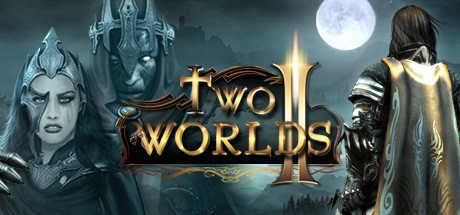
How does Two Worlds II HD compare to Alice: Madness Returns for dark fantasy action?
Two Worlds II HD leans into expansive world-hopping, faction politics, and RPG systems—think Kyra’s disappearance pulling you into orc-human wars—while Alice: Madness Returns goes full psychological horror with Victorian London/Wonderland duality and surreal platforming. Both hit that ‘dark fantasy + action spectacle’ sweet spot, but Alice trades open-world quests for intimate, haunting storytelling—more ‘Lugh unraveling palace secrets’ than ‘Lugh commanding armies.’
What’s the best game like I Was Reincarnated as the 7th Prince Season 2 for when I want slow, atmospheric magical progression?
Sacred Gold is your best bet—it’s all about grinding, experimenting, and slowly unlocking layered spell trees in a decaying world, much like Lugh’s meticulous rune-crafting sessions. Even with its jank and instability (players report bugs across Win 10/11), that sense of earned power—casting firestorms after hours of tweaking incantations—feels deeply true to the show’s ‘take my time perfecting’ ethos.