
Kemono Jihen
Special detective Kohachi Inugami is sent to investigate a grisly phenomenon involving animal corpses near a remote mountain village. But after meeting a strange boy who agrees to help, he discovers cursed supernatural forces at work. Little by little, Inugami uncovers the truth behind the killings and the boy who may not even be human.
(Source: Funimation)
📺Anime Details
📝Editorial Analysis
The smell of wet earth and copper hangs thick in the air as Kohachi Inugami kneels beside the mangled fox corpse—its fur matted, ribs splayed like broken branches, eyes gone milky and unblinking. His gloved hand hovers, not quite touching. Behind him, the boy stands silent—not shivering, not flinching—just watching the wound like he recognizes it. That stillness is louder than any scream.

Kemono Jihen doesn’t trade in spectacle first. It trades in weight: the weight of a child’s silence when asked where he came from; the weight of animal bones arranged just so beneath a rusted shrine gate; the weight of a detective’s notebook filling with sketches of claw marks that don’t match any known youkai—but do match the boy’s bare feet when he forgets to pull his socks up. This isn’t urban fantasy dressed up as action—it’s urban grief, draped in kemonomimi ears and stitched with Shounen pacing. You feel the chill of isolation not because the world is hostile, but because no one speaks the same language—not even the humans. The mystery isn’t who did it. It’s what counts as a life, and who gets to decide when it ends.
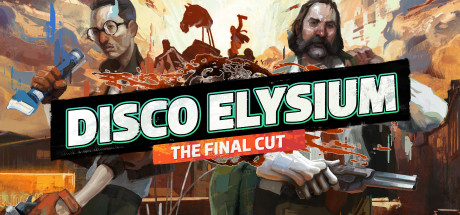
That emotional DNA—the slow burn of moral erosion masked by procedural rigor—pulses strongest in Disco Elysium - The Final Cut. Its description names “a detective with a unique skill system” and “a whole city to carve your path across.” But read between the lines: this is a man whose mind fractures under the pressure of truth, whose thoughts spiral into self-accusation while he interviews witnesses who’ve already been hollowed out by systems they can’t name. Just like Inugami, who uncovers layers of cursed complicity buried beneath village folklore, the player in Disco Elysium doesn’t solve crimes—they witness collapse. And the player review nails it: “Capital has the ability to subsume all critiques into itself. Even those who would critique capital end up reinforcing it instead.” That’s the quiet horror of Kemono Jihen too—the way exploitation hides in tradition, how “protecting the village” becomes synonymous with silencing the boy who remembers what was done to the village. Both works make you feel the exhaustion of being the only one who sees the pattern—and realizing the pattern was designed to exhaust you.
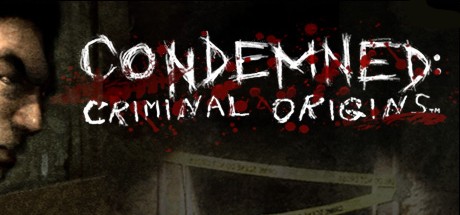
Then there’s Condemned: Criminal Origins, where the description asks: “What twists the mind of an ordinary human into a serial killer?” Not “who killed,” but what breaks the threshold. That question echoes in every frame where the boy stares at his own reflection and doesn’t blink back. The game’s dim pairing—Body Horror & Occult—isn’t about gore for shock. It’s about violation made visible: skin stretched wrong, joints bending backward, the uncanny valley of something almost-human holding a knife. In Kemono Jihen, the horror lives in the restraint: the boy swallowing a growl, Inugami choosing not to draw his weapon when the boy’s pupils slit—not because he’s safe, but because drawing it might be the final step in confirming he’s not human. The player review calls it “a gem”—and it is, precisely because its dread isn’t externalized in cutscenes, but built into the clench of your jaw as you inch down a blood-smeared hallway, hearing breath that shouldn’t be yours.
And though it seems absurd on paper, Strong Bad's Cool Game for Attractive People: Season 1 lands with eerie resonance. Its description promises “wacky comedic adventures,” yet its dim alignment includes Emotional Narrative, Body Horror & Occult. The dissonance is the point. Like Kemono Jihen, it uses tonal whiplash not to undercut gravity, but to heighten it—the sudden quiet after a joke lands like a stone in water. The player review’s nostalgic plea—“With the recent remake of Poker Night, I hope Skunkape considers bringing this game back next…”—carries the same ache as Inugami watching the boy try, and fail, to tie his shoelaces like a normal kid. It’s about characters performing normalcy while something deep inside them itches, sheds, watches back. The humor isn’t relief. It’s armor. Thin. Cracked. Worn daily.
This pairing isn’t for fans of “monster-of-the-week” or “detective power fantasies.” It’s for the ones who pause mid-episode when the boy eats an apple too slowly—mouth closed, eyes down—and wonder if he’s tasting memory or mourning. For players who replay Condemned’s opening corridor just to hear that distorted whisper again—not to scare themselves, but to recognize it. For readers who highlight lines in Disco Elysium’s internal monologues not because they’re clever, but because they hurt like truth. These are stories that trust you to hold two things at once: the softness of a child’s wrist, and the sharpness of the bone beneath. They ask nothing more than that you stay still—and listen.
🎮43 Games That Match the Vibe






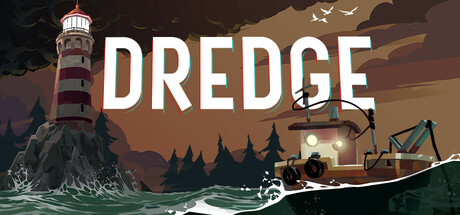
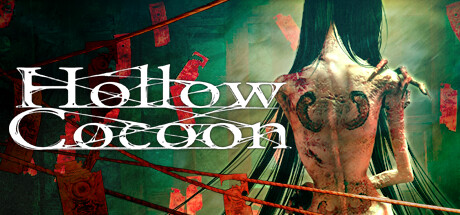



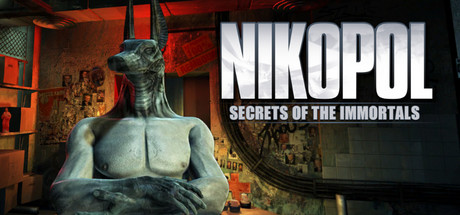


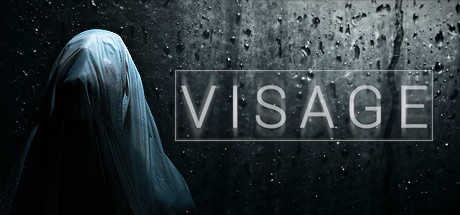

Match Dimensions Explained
❓Frequently Asked Questions
Why does Condemned: Criminal Origins feel so much like Kemono Jihen’s darker episodes?
Because both lean hard into psychological unraveling and visceral body horror—like when Detective Ethan Thomas confronts the cult’s mutilated victims in the asylum, mirroring Kemono Jihen’s scenes with the Hollowed or Kuroda’s grotesque transformations. The oppressive atmosphere, forensic investigation mechanics, and slow-burn descent into occult dread (especially during the ‘Cultist’ chapter) hit the same nerve as Kemono Jihen’s blend of detective work and supernatural trauma.
Is there a Kemono Jihen video game adaptation?
No—there’s no official Kemono Jihen game yet. But if you’re craving that mix of occult mystery and emotional weight, Sherlock Holmes: The Awakened (2008) nails it: you investigate Lovecraftian horrors across Victorian London, interrogate suspects like Kuroda would, and even face sanity-draining visions reminiscent of Inari’s fragmented memories or the Hollowed’s psychic bleed.
How does Disco Elysium compare to Sherlock Holmes: The Awakened for occult detective vibes?
Disco Elysium trades overt body horror for deep psychological mystery—think Martina’s case file echoing Kemono Jihen’s moral ambiguity—but lacks The Awakened’s explicit occult set-pieces like the dream-logic asylum sequences or Cthulhu-esque entities. Still, both use dialogue trees to shape your investigator’s identity: Harry DuBois’s skill checks (like ‘Logic’ or ‘Empathy’) parallel Holmes’s deduction minigames, just with more existential dread and fewer tentacles.
What’s the best game like Kemono Jihen if I want something emotionally raw but not overly grim?
Strong Bad's Cool Game for Attractive People: Season 1—it sounds absurd, but hear me out: beneath the cartoonish humor, Episode 3 (‘The Ballad of Mr. Egg’) dives into grief, identity, and hidden trauma with surprising tenderness, much like Kemono Jihen’s quieter moments with Akira or Nodoka. Plus, its branching dialogue and quirky detective work (e.g., interrogating Coach Z about ‘the Egg’) deliver emotional resonance without leaning into body horror or despair.