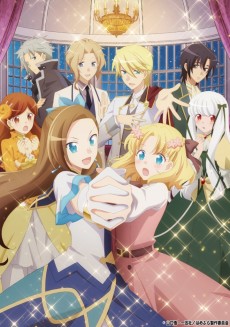
My Next Life as a Villainess: All Routes Lead to Doom!
Wealthy heiress Katarina Claes is hit in the head with a rock and recovers the memories of her past life. It turns out the world she lives in is the world of the game Fortune Lover, an otome game she was obsessed with in her past life... but she's been cast as the villain character who tries to foil the protagonist's romances! The best ending the game has for Katarina is exile, and the worst, death! She'll have to find a way to avoid triggering the flags of doom, and make her own happy future!
(Source: Crunchyroll, edited)
📺Anime Details
📝Editorial Analysis
The thunk of a rock hitting Katarina’s temple—then the dizzy, warm rush of memory flooding back like spilled honey: not just who she was, but how she was doomed. Not by fate, not by gods—but by code. By branching paths in an otome game she’d once devoured on her phone during lunch breaks, where every flirtation, every glance, every misplaced rose petal could lock her into exile—or worse. That moment isn’t tragedy. It’s relief. Because for the first time, she knows the rules. And knowing them means she can play.
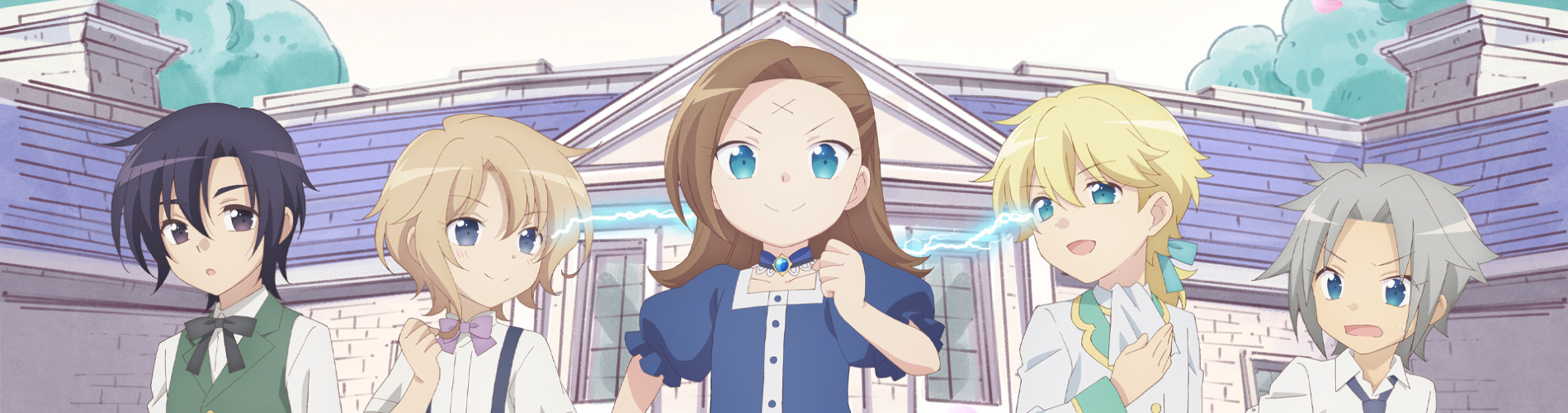
That’s the heartbeat of My Next Life as a Villainess: All Routes Lead to Doom!—not escapism, but reclamation. It doesn’t feel like fantasy because of the magic or the gowns; it feels like fantasy because it treats emotional labor as mechanical, legible, even tweakable. Every sigh from Alan, every frosty stare from Maria, every accidental slip into villainess speech patterns—they’re not mood pieces. They’re flags, and Katarina treats them like debug logs. The show’s warmth comes from how seriously it takes softness as strategy: baking cookies to defuse tension, tripping over her own skirts to break up a tense confrontation, practicing “elegant disdain” in front of a mirror while her maid watches, deadpan. It’s slapstick as salvation, romance as system optimization, medieval etiquette as user interface. You don’t just root for Katarina—you sync with her rhythm, learning to read social cues like skill trees, measuring affection like XP bars. It makes you feel capable, seen, and quietly, fiercely hopeful—even when the stakes are exile.
That same feeling hums in The Sims™ 4, not despite its bugs, but because of how its chaos mirrors Katarina’s world: a sandbox where love, ambition, and disaster are all editable variables. The player review calls it “no fun without DLC”—but that’s precisely the joke. Katarina is the base game trying to thrive before the expansion packs arrive: no royal bloodline DLC, no “Tragic Past Redemption” quest line—just raw, unpolished agency. She builds relationships like Sims build houses—room by room, interaction by interaction—until the structure holds, however wobbly. Her world is playful simulation, not rigid narrative—and TS4, for all its flaws, remains the purest distillation of that ethos: life as something you arrange, test, redo.
Then there’s Persona 5 Royal, where the “seamless transition between daily life” isn’t just gameplay—it’s emotional architecture. Like Katarina, Joker balances schoolwork, confessions, and heists—all while tracking relationship meters that glow like status effects. The review praises its “stunning soundtrack,” and yes—the jazz-slick confidence of P5R mirrors Katarina’s defiant cheerfulness when she declares, “I will not be exiled!” But deeper down? Both treat intimacy as labor with rewards: leveling up Confidants is like Katarina rehearsing polite laughter until it becomes genuine; navigating Tokyo’s rainy alleys feels kin to walking the Claes estate’s marble halls, reading micro-expressions like dialogue trees. Romance here isn’t grand passion—it’s consistency, attention, showing up—exactly how Katarina wins over Geoffrey by remembering his tea preference, or disarms Sophia by sharing jam recipes.
Even Disco Elysium - The Final Cut, with its brutal, philosophical weight, shares DNA—not in tone, but in structure. That player review quotes capital subsuming critique? Katarina lives inside the critique: she knows the game’s logic is rigged, yet she refuses to let it define her. Like Harry DuBois, she talks to her own mind—only hers is full of panicked internal monologues about “DOOM FLAG DETECTED: MAID SAW YOU SMIRK AT HEROINE.” Both use absurdity as armor. Both weaponize self-awareness. And both find comedy in the sheer, exhausting effort of staying human inside a system designed to flatten you.
This pairing isn’t for people who want tidy endings or flawless heroes. It’s for the ones who’ve ever reloaded a save three times to get a conversation right—because they knew, deep down, that kindness is a skill, that love is a practice, and that sometimes, the most radical act is choosing to bake another batch of cookies—even when the recipe says “villainess” on the box.
🎮22 Games That Match the Vibe













Match Dimensions Explained
❓Frequently Asked Questions
Why is The Sims 4 listed as similar to My Next Life as a Villainess?
Because both lean hard into romantic shoujo tropes and comedic parody—like Catarina’s over-the-top charm maneuvers or the absurdly dramatic love triangle fallout—but TS4 lets you *live* that chaos by designing your own 'Catarina' (or scheming Duke) and scripting romances with characters like Klaus or Alan through custom traits, relationships, and even wedding cutscenes. Just be warned: the base game feels barebones without DLCs like 'Romance' or 'High School Years', which add flirtation mechanics and rival dynamics that nail the VN’s energy.
Is there a visual novel adaptation of My Next Life as a Villainess?
No official visual novel exists yet—but Disco Elysium nails the *spirit* of Villainess in unexpected ways: its darkly witty writing, layered romance options (like the morally messy bond with Kim Kitsuragi), and self-aware parody of tropes ('I am literally a walking trauma response') echo Catarina’s fourth-wall-breaking charm. One player even said it ‘feels like if Villainess got drunk on existential dread and rewrote itself as a noir detective story’.
How does Persona 5 Royal compare to Dragon Age: Origins for Villainess fans?
P5R is your go-to if you crave Villainess’s glittery romance arcs and school-life rhythm—think building Confidants like Ann or Makoto while juggling exams and heists, mirroring Catarina’s balancing act between charm points and doom avoidance. DA:O trades that sparkle for gothic weight: its romance with Morrigan or Leliana has emotional stakes and consequence-heavy choices, more like Catarina’s darker routes where love means sacrifice—not just blushing at tea parties.
What’s the best game like Villainess if I want that ‘chaotic good, laugh-while-dodging doom’ vibe?
Disco Elysium—hands down. Its razor-sharp comedy, absurd dialogue trees (‘Roll Persuasion to convince the pigeon you’re not a threat’), and protagonist who constantly talks himself into and out of disaster? That’s pure Catarina energy. One reviewer even quoted its self-referential irony—‘Capital has the ability to subsume all critiques…’—as the kind of meta wit that makes you snort-laugh mid-doom-spiral, just like when Catarina accidentally charms the villain *because she misread the script*.