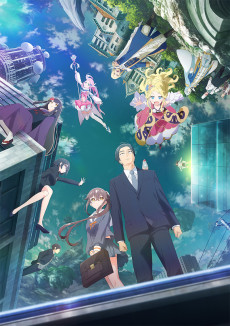
Sasaki and Peeps
📺Anime Details
📝Editorial Analysis
The smell of instant ramen steam rising into a dim Tokyo apartment, the soft clink of a bowstring being drawn—not in battle, but to test wind resistance on a lazy Sunday—and the quiet, unspoken weight of a salaryman’s exhaustion dissolving not into fantasy escape, but into shared grocery lists with a talking pigeon who quotes Adam Smith. That’s Sasaki and Peeps: not a portal to another world, but magic leaking sideways into the cracks of rent deadlines, commuter trains, and the quiet dignity of showing up—even when your familiar is a sarcastic, economics-obsessed avian consultant who critiques your 401(k) allocation.
What makes this anime vibrate at a frequency no other mahou shoujo or isekai does is its grounded warmth. It doesn’t romanticize magic—it bureaucratizes it. Spells require permits. Familiars negotiate contracts. A swordplay lesson happens mid-shift break, sweat mixing with soy sauce. There’s no grand prophecy—just the low hum of interdependence: Sasaki’s tired hands learning archery not for glory, but because Peeps insists compound bows improve posture and long-term labor productivity. You don’t feel awe—you feel recognized. Recognized in the way you calculate bus fare, rehearse small talk before a meeting, or quietly mourn a canceled lunch break. It’s fantasy that breathes with the same rhythm as your own pulse after a ten-hour day—slow, tender, unhurriedly real.
That emotional DNA pulses strongest in Prince of Persia, where healing isn’t resurrection—it’s the deliberate, almost meditative slowing of time to retrace a misstep, to catch a falling tile, to breathe before the next leap. The game’s “Healing & Slow Life” dimension mirrors how Sasaki and Peeps treats magic: not as explosive power, but as reparative rhythm. When the Prince rewinds seconds to avoid death, it echoes Sasaki recalibrating his entire schedule after Peeps points out his sleep debt—both acts are quiet rebellions against relentless forward motion. And the player review calling it “an all-new epic journey” with “new lands and a brand new story” resonates precisely because Sasaki and Peeps also builds its world from scratch—not through lore dumps, but through rent receipts, tax forms, and the gentle absurdity of negotiating magical liability insurance over bento boxes.
Then there’s The Sims™ 4, where “Healing & Slow Life” isn’t a gameplay mode—it’s the core architecture. You don’t conquer kingdoms; you water plants, hug your roommate, watch sunlight shift across a floorboard. Its description—“Play with life and discover the possibilities”—isn’t aspirational fluff; it’s the show’s thesis. Sasaki doesn’t “win” magic—he lives it, one mundane, lovingly rendered interaction at a time: adjusting Peeps’ perch, debating whether enchanted rice cookers qualify for corporate wellness reimbursements, choosing which kind of tea to share during a rare quiet hour. The player review’s bitterness about DLC and bugs ironically underscores what Sasaki and Peeps achieves without monetization: a world rich because it refuses spectacle, because its magic lives in the unglamorous, unbroken continuity of daily care.
And Prince of Persia: Warrior Within? Its “Time & Memory” and “Dark Fantasy” dimensions feel like the shadow-side of Sasaki and Peeps’ warmth—the acknowledgment that exhaustion has teeth, that systems fail, that even pigeons carry trauma. The Dahaka’s relentless chase mirrors the unseen pressures Sasaki shoulders: the fear of failing his team, the quiet dread of burnout, the weight of being the only one holding certain kinds of knowledge (like how to file a cross-dimensional tax amendment). Yet both works treat darkness not as nihilism, but as texture—the grit against which small, defiant acts of tenderness (a shared meal, a rewound jump, a peep’s dry joke at 2 a.m.) shine brighter.
This pairing sings for the person who saves voicemails from loved ones just to hear their laugh again, who bookmarks recipes they’ll never make but love imagining, who finds profound comfort in the click of a mechanical keyboard at midnight—not because they’re escaping, but because they’re choosing, deliberately, to stay present in the beautiful, exhausting, deeply human clutter of now.
🎮13 Games That Match the Vibe




Match Dimensions Explained
❓Frequently Asked Questions
Why does Prince of Persia keep showing up in 'Games Like Sasaki and Peeps' lists?
Because both lean hard into Healing & Slow Life *and* Romance & Shoujo vibes—think quiet moments like the Prince tending to injured villagers or sharing tender glances with Farah amid sun-drenched ruins. It’s not just about combat; it’s the gentle pacing, emotional weight, and soft-focus intimacy that mirror Sasaki and Peeps’ tone—especially compared to Warrior Within’s grittier, Dahaka-chase intensity.
Is there an anime or manga adaptation of Sasaki and Peeps?
No official adaptation exists yet—but fans often compare its cozy, slice-of-life-with-magic warmth to what you get in The Sims™ 4 when you roleplay slow-brewing romance between Sims like Bella Goth and Mortimer Goth, or build a serene Kyoto-inspired neighborhood where daily rituals (tea ceremonies, garden care) feel as meaningful as Sasaki’s quiet peep-watching.
How does Baldur’s Gate 3 compare to Prince of Persia for Sasaki and Peeps fans?
BG3 nails the Romance & Shoujo dimension with deep, choice-driven relationships (like Astarion’s guarded vulnerability or Shadowheart’s quiet devotion), but lacks Prince of Persia’s Healing & Slow Life focus—it’s more high-stakes drama than peaceful rhythm. If you love Sasaki’s gentle pacing and emotional safety, PoP’s sunlit temples and restorative time loops hit closer than BG3’s morally fraught tavern brawls.
What’s the best game like Sasaki and Peeps if I want something calming but still with light action?
Prince of Persia (2024) is your sweet spot: its Healing & Slow Life + Action Spectacle combo means you’ll glide across crumbling pillars and rewind time mid-fall—then pause to watch fireflies rise over the Oasis, just like Sasaki watching peeps at dusk. It avoids Warrior Within’s relentless Dahaka chases and TS4’s DLC-heavy grind, keeping the vibe grounded, warm, and gently kinetic.