
Spice and Wolf
The peddler Kraft Lawrence travels through the world selling all kinds of things. After visiting a village, he discovers a sleeping girl under the pelts in his cart. She has wolf ears and a tail. The wolf girl explains that she has been called a "god", but that her name is Holo and nothing more. Lawrence teases the girl a little, but after hearing more of her story, he is moved and decides to accompany her further north. On their travels the two have many adventures, often getting into trouble, but the bond between them grows stronger.
📺Anime Details
📝Editorial Analysis
The scent of warm rye bread, the creak of wagon wood settling under a late autumn sun, the soft thump of a wolf tail against straw — that’s the first breath of Spice and Wolf, not as spectacle, but as presence. Not a battle cry or a spell incantation, but Kraft Lawrence counting coins in his palm while Holo watches from the cart’s edge, her ears twitching at the distant chime of a chapel bell. Her voice is low, dry with age and irony: “You count so carefully… yet you let me ride with you without asking my price.” In that stillness — no magic flare, no sword drawn — the entire world tilts. It’s the weight of a decision made not for glory, but because something mattered, quietly, irrevocably.
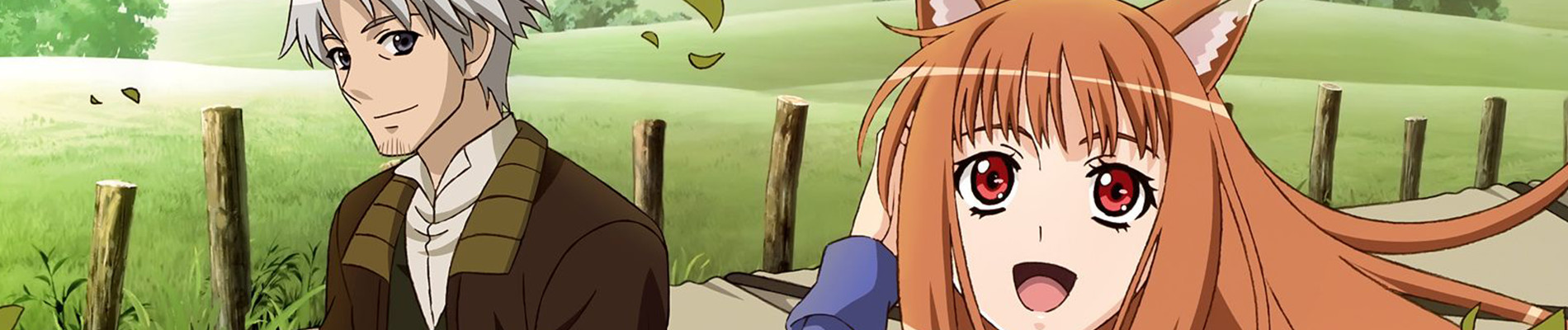
What makes Spice and Wolf vibrate at this frequency isn’t its medieval setting or kemonomimi charm — it’s the gravity of small things. Every contract negotiated, every grain price shift, every shared meal under a roadside oak carries emotional heft because nothing is abstract. Economics here isn’t charts — it’s hunger deferred, trust bartered, futures weighed like wheat in a sack. The romance isn’t grand declarations; it’s Holo choosing to stay when she could vanish, Lawrence learning to read the tremor in her voice when she speaks of forgotten shrines. It’s melancholic warmth: the ache of time passing, of gods fading, of roads narrowing — all wrapped in the comfort of a shared fire, a well-worn ledger, a hand hesitating before it reaches out. You don’t feel excited watching it — you feel attentive, tender, grounded in consequence.
That same resonance hums in Hollow Knight, where exploration isn’t about conquest but unearthing silence. Its description calls it an “epic action adventure through a vast ruined kingdom of insects and heroes” — but the player review doesn’t praise combat first. It names the “Beautiful art style,” “Great OST,” “Lovely story.” That loveliness isn’t brightness — it’s the sorrow in a crumbling cathedral carved by long-dead bugs, the quiet dignity of a hollow knight kneeling in dust. Like Lawrence and Holo moving through villages where old rites fray at the edges, Hollow Knight’s world feels lived-in and lapsed, where meaning persists not in dogma, but in fragments — a mural, a half-remembered chant, a single flower pushing through cracked tile. Both ask you to move slowly, to listen, to feel the weight of what’s been left behind.
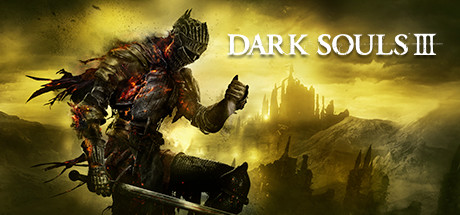
DARK SOULS™ III shares that same melancholic exploration, its description promising you’ll “Embrace The Darkness!” — but the player review cuts deeper: “Why Do We Still Reach for the Fire When It Is Dying?” That line isn’t about despair — it’s about devotion in decay, the stubborn, tender act of tending something fragile amid collapse. Holo is a harvest deity whose worship has thinned to superstition; Lawrence is a man whose pragmatism slowly softens into reverence. Neither fights to restore a golden age — they walk forward, carrying embers. The fire in Dark Souls isn’t power — it’s memory, warmth, continuity. Just as Lawrence negotiates not for profit alone, but to preserve a fair price, a just debt, a name remembered, so too does the player in Dark Souls III kindle bonfires not to win, but to witness, to rest, to say, “This place mattered. I was here.”
Even Assassin's Creed™: Director's Cut Edition, buried beneath dated textures, carries that pulse — its description frames it as a “Political Thriller” rooted in “Melancholic Exploration.” The player review begins with flaws, then stops short: “no issues with me but I can…” — trailing off, as if the immersion overrode critique. That’s the Spice and Wolf feeling: when the texture of the world — the stone of Jerusalem’s walls, the hush of a Templar archive, the weight of a hidden blade — becomes more vital than polish. It’s not about flawless systems, but about presence, about walking a real street where history bleeds into the mortar, just as Lawrence walks roads worn smooth by centuries of pilgrims and peddlers, each step echoing with trade, faith, and quiet loss.
This pairing isn’t for those chasing adrenaline or lore dumps. It’s for the person who pauses mid-game to watch rain gather on a virtual windowsill, who re-reads a merchant’s ledger entry twice, who feels a lump in their throat when a god admits, “I am tired of being remembered only as a symbol.” It’s for the listener who hears the rustle of parchment and the sigh of a wolf-tail against wool and thinks, Yes — that’s where the heart lives.
🎮23 Games That Match the Vibe







Match Dimensions Explained
❓Frequently Asked Questions
Why does Hollow Knight keep coming up in 'Games Like Spice and Wolf' lists when it has no merchants or economics?
Great question — it’s not about the trading mechanics, but the shared melancholic exploration and quiet, world-weary storytelling. Like Spice and Wolf’s snowy roads and lingering silences between Holo and Lawrence, Hollow Knight’s Hall of Gods or City of Tears evoke that same hushed, reflective mood — plus characters like Zote or the Pale King carry that bittersweet weight of legacy and loss. Reviewers even call out its 'lovely story' and 'beautiful art style' as emotional anchors, just like the show’s atmospheric pacing.
Is there a Spice and Wolf anime adaptation with game tie-ins?
No — there’s never been an official Spice and Wolf video game adaptation (anime or otherwise). All the matches — like Assassin’s Creed: Director’s Cut Edition or Sacred Gold — are *thematic* parallels only: they share dimensions like 'Dark Fantasy' and 'Melancholic Exploration', not lore or characters. Even though Assassin’s Creed has political intrigue and layered dialogue (think Altair navigating Templar factions like Lawrence negotiating guilds), it’s purely coincidental resonance — no licensing or crossover exists.
Hollow Knight vs. DARK SOULS™ III — which is closer to Spice and Wolf’s vibe?
Hollow Knight wins on tone — its gentle melancholy, environmental storytelling (like the silent, crumbling ruins of Dirtmouth echoing Pasloe’s quiet villages), and emotionally restrained characters (e.g., Hornet’s quiet dignity vs. Holo’s guarded warmth) mirror Spice and Wolf’s rhythm far more than Dark Souls III’s relentless intensity. While both share 'Melancholic Exploration' and score 84, Dark Souls III leans harder into combat-as-metaphor ('Embrace The Darkness!'), whereas Hollow Knight’s OST and 'beautiful art style' — praised by players — better match the show’s contemplative, lyrical pacing.
What’s the best 'Spice and Wolf'-like game if I just want that cozy, thoughtful travel vibe — not combat or dark fantasy?
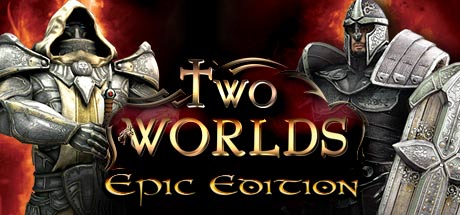
Honestly? None of these nail the *cozy* part — all four top matches (Hollow Knight, DARK SOULS™ III, Sacred Gold, Two Worlds Epic Edition) lean hard into 'Dark Fantasy' and 'Melancholic Exploration', with zero lighthearted merchant banter or warm inn scenes. Even Assassin’s Creed: Director’s Cut Edition scores 85 for 'Political Thriller' but trades Holo’s wit for Altair’s grim resolve. If you crave that specific warmth, you’ll need to look outside this list — these are mood-adjacent, not tonal twins.