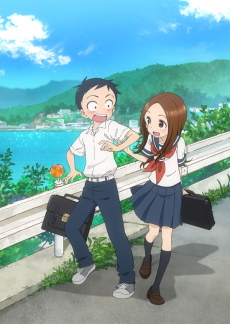
Teasing Master Takagi-san
Having a friend that knows you inside out should be a good thing, but in Nishikata's case, the opposite is true.
His classmate Takagi loves to tease him on a daily basis, and she uses her extensive knowledge of his behavior to predict exactly how he will react to her teasing, making it nearly impossible for Nishikata to ever make a successful comeback. Despite this, Nishikata vows to someday give Takagi a taste of her own medicine by making her blush out of embarrassment from his teasing.
📺Anime Details
📝Editorial Analysis
The chalk dust hangs in the afternoon light like suspended time—Nishikata’s hand frozen mid-air as Takagi leans just so, her voice dropping to that quiet, knowing lilt right behind his ear: “You’re blushing again.” He doesn’t turn. He can’t. His ears burn. His fingers tighten around his pencil—not in anger, not even in frustration—but in the warm, helpless weight of being seen, completely and tenderly, by someone who’s memorized the exact millisecond his breath catches when she tilts her head.

That’s the heartbeat of Teasing Master Takagi-san: not romance as grand confession or dramatic tension, but romance as recognition. It lives in the rural school’s creaking floorboards, the dappled shade of maple trees during lunch break, the way silence between them isn’t empty—it’s thick with unspoken history, shared glances, and the soft, persistent hum of mutual attention. This isn’t about growing up away from each other; it’s about growing alongside, in tiny, sunlit increments—where every failed prank, every flustered stammer, every shared bento box is a stitch in something quietly enduring. It makes you feel safe, yes—but more than that, it makes you feel known, down to the rhythm of your own pulse. It’s nostalgia not for a place or era, but for the fragile, luminous certainty of being understood before you’ve even spoken.
Which is why, against all logic, Prince of Persia resonates—not with its sandstorms or swordplay, but with its melancholic exploration. The description calls it “an all-new epic journey” built on return and reinvention, and the player review notes how it introduces “a new prince, new lands and a brand new story completely separate from the sands…”—yet still carries the lineage, the quiet weight of legacy. Like Takagi studying Nishikata’s tells, the game moves with studied grace through spaces both unfamiliar and deeply familiar. There’s the same hushed reverence for small gestures—the way the Prince catches himself mid-fall, adjusts his footing, leaps again—not for spectacle, but because he knows how his body moves, just as Takagi knows how Nishikata’s face will flush at the word “blush.” It’s melancholic not in sorrow, but in tenderness—the ache of paying such close, loving attention to something fleeting.
Then there’s Bully: Scholarship Edition, where adolescence isn’t mythologized—it’s lived, messy and awkward and hilariously specific. Its description nails it: “Beat the jocks at dodge ball, play pranks on the preppies, save the nerds.” That’s Takagi’s entire repertoire—pranks calibrated to Nishikata’s pride, social navigation so precise it borders on choreography. And the player review? Not about graphics or bugs—but about embodiment: “I played this game on my Steam Deck and it worked great…” That tactile, personal, almost intimate relationship with the world—how Jimmy feels in his sneakers, how Nishikata feels the heat rise in his neck—that’s the shared frequency. Both works treat teenage social physics like sacred geometry: every glance, every shove, every whispered tease has mass, velocity, consequence.
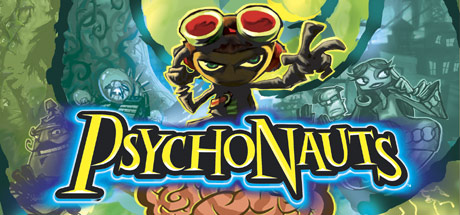
Even Psychonauts, with its “Psychic Odyssey Through the Minds of Misfits,” taps into that same emotional architecture. Its description frames it as a journey through “misfits, monsters, and madmen”—but what are Nishikata and Takagi, if not two misfits orbiting each other with exquisite, gentle precision? The player review’s odd phrasing—“milking of certain highly creamy men, his utters are beautifully rendered”—is unintentionally revealing: it’s about texture, about lingering on the sensory detail of presence—the warmth of a shoulder brush, the timbre of a laugh caught mid-exhale. Like Raz diving into a classmate’s psyche to untangle their fears, Takagi doesn’t tease to wound—she teases to map, to understand, to stay close.
This pairing isn’t for fans of high stakes or sweeping arcs. It’s for the person who replays the cafeteria scene from episode 4 three times just to watch how Takagi’s hair catches the light when she smiles sideways. For the player who spends twenty minutes in Garry’s Mod not building weapons or vehicles—but arranging two ragdolls at opposite ends of a classroom desk, nudging one ever so slightly closer, over and over, until they finally, softly, touch. It’s for anyone who’s ever held their breath waiting—not for a kiss, but for the exact, perfect, shared second when the world narrows to just two people, a sunbeam, and the quiet, thrilling certainty of being known.
🎮31 Games That Match the Vibe
























Match Dimensions Explained
❓Frequently Asked Questions
Why does Prince of Persia show up in 'Games Like Teasing Master Takagi-san' matches?
It’s all about that playful, teasing dynamic—Prince of Persia’s new reboot leans hard into comedic banter and lighthearted romantic tension between the Prince and Zahra, especially during puzzle sequences where she outsmarts him with sly remarks and timed reversals. The 'Melancholic Exploration' + 'Comedy & Parody' dual dimension match mirrors Takagi-san’s blend of tender awkwardness and cheeky, escalating pranks.
Is there a Bully: Scholarship Edition anime or visual novel adaptation?
No official anime or visual novel adaptation exists—but Bully’s DNA *feels* like a Takagi-san spinoff: Jimmy Hopkins’ school-day mischief (pranking preppies, dodging jocks, awkwardly flirting with girls like Zoe and Mandy) hits the same sweet spot of cringe-comedy and coming-of-age charm. Fans often mod Garry’s Mod to recreate Bullworth Academy scenes with Takagi-style teasing mechanics.
How is Psychonauts different from Bully for capturing that Takagi-san vibe?
Psychonauts leans into surreal, internalized teasing—like when Raz uses clairvoyance to overhear Coach Oleander’s secretly insecure inner monologue, then gently rib him in dialogue—whereas Bully puts you *in* the hallway, physically tripping jocks or swapping lunch trays with Jimmy. Both nail the 'Comedy & Parody' + 'Melancholic Exploration' combo, but Psychonauts is more metaphorical teasing; Bully is tactile, schoolyard-level playful antagonism.
What’s the best game like Takagi-san if I just want low-stakes, joyful teasing energy?
Garry’s Mod is your go-to—it’s pure sandbox joy: slap a physics ragdoll on a chair, record Takagi-style ‘gotcha!’ moments with voice lines, or build a replica of Nanako’s classroom to prank NPCs endlessly. No story pressure, no fail states—just the same gleeful, consequence-light teasing energy fans love, backed by its strong 'Comedy & Parody' + 'Melancholic Exploration' match score.