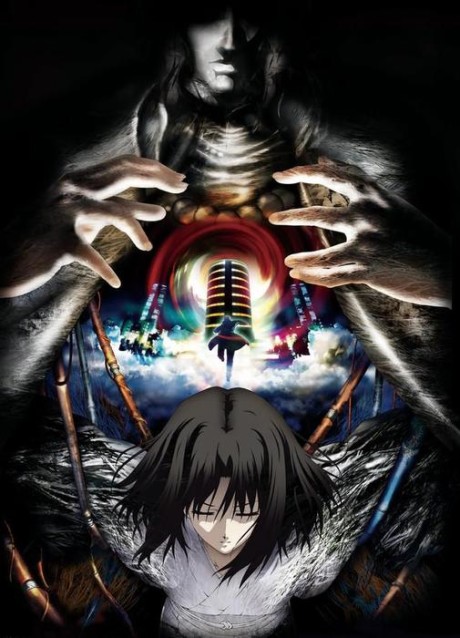
the Garden of sinners Chapter 5: Paradox Paradigm
November, 1998: Shiki meets a boy named Tomoe Enjou, a runaway who claims to be a murderer. Shiki allows Tomoe to use her apartment as his hideout, but one day, Tomoe sees his mother whom he's sure he's killed.
(Source: Aniplex USA)
📺Anime Details
📝Editorial Analysis
The flicker of a fluorescent light in Shiki’s apartment—buzzing, uneven, casting long, trembling shadows across Tomoe’s face as he freezes mid-step, breath catching—not because he hears footsteps, but because she’s standing there: his mother, pale and silent in the hallway doorway, though he buried her himself. That single, suspended second—where memory isn’t recalled but re-embodied, where grief wears the shape of a living person who shouldn’t exist—is the core of the Garden of sinners Chapter 5: Paradox Paradigm. Not a flashback. Not a vision. A paradox made flesh, breathing in the same air as him.
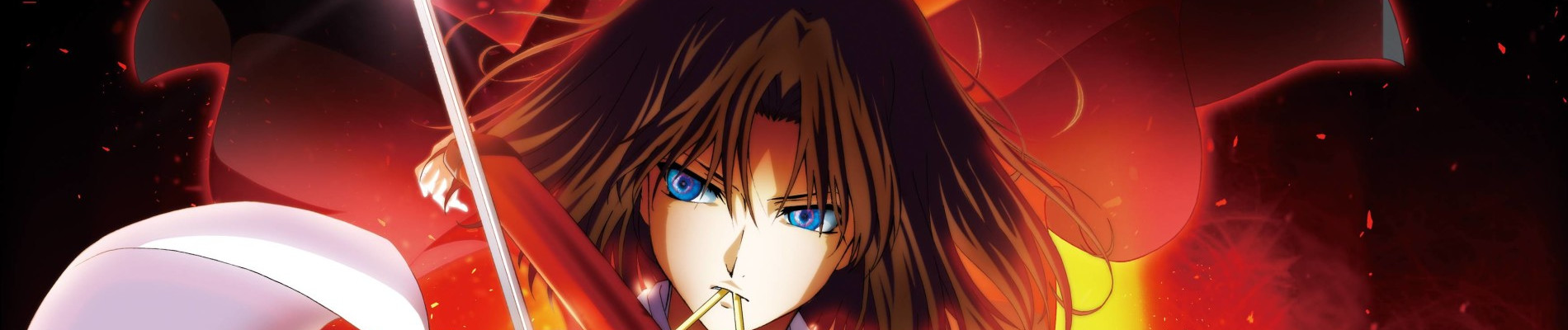
This isn’t just urban fantasy with magic—it’s memory as architecture. The world feels thin, like old film stock warped by humidity: November 1998 doesn’t glow with nostalgia; it sweats with unresolved time. Every corridor Shiki walks is lined with doors that don’t open to rooms—but to versions of truth she’s already walked through, or hasn’t yet. The gore isn’t spectacle; it’s tactile consequence—the sticky weight of blood on skin, the way a knife trembles not from fear, but from the effort of holding two timelines at once. You don’t watch this chapter—you stumble through it, disoriented by chronology, unsettled by how quietly devastation settles: no music swells, no tears fall. Just silence, and the unbearable clarity of someone realizing their guilt might be real, even if their victim is standing right there. It makes you feel vertiginous, unmoored, hypervigilant—like your own memories might betray you at any turn.
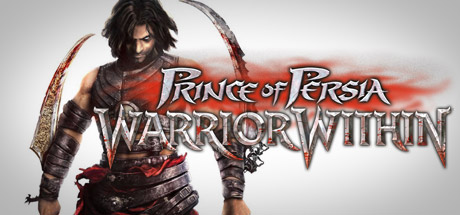
That same vertigo lives in Prince of Persia: Warrior Within. Its description names “Time & Memory” as core dimensions—and the player review nails the feeling: “Dahaka chase is still as goated as it was before.” That relentless, inescapable pursuit mirrors Tomoe’s panic when his mother appears—not as a ghost, but as time itself refusing to stay linear. Dahaka isn’t just an enemy; it’s consequence given claws and velocity, bending corridors, warping platforms, turning every escape into a confrontation with what you’ve done and what you’re about to do. Like Shiki’s apartment becoming a liminal trap, Babylon’s crumbling towers and shifting sands force the Prince to move through time’s fractures—not around them.
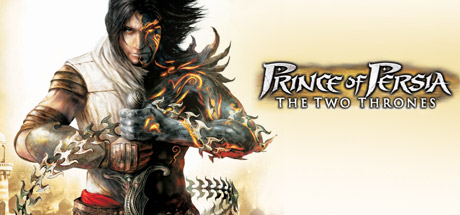
Then there’s Prince of Persia: The Two Thrones, tagged “Neon Noir,” its description describing the Prince returning home only to find Babylon “ravaged by war.” The player review calls it “one of my best childhood games…still plays great”—but the resonance isn’t in the nostalgia. It’s in the dissonance: the Prince carries Kaileena, his love, while another voice—dark, mocking, his own—whispers from within. That duality—love and rot sharing one body, peace and ruin occupying the same city—is Tomoe’s exact condition: the boy who shelters in Shiki’s quiet apartment while carrying the corpse of his mother in his skull. Both stories treat identity as unstable terrain, where tenderness and violence aren’t opposites—they’re phases of the same collapse.
And Vampire: The Masquerade - Bloodlines, described as blending “brutal combat” with RPG depth in a “Dark Fantasy” setting, echoes Paradox Paradigm’s moral texture. Its player review insists: “*BUY IT ON GOG; if you want to use the steam version you need to download the unofficial patch…”—a plea born of devotion to something broken but essential. Like Shiki’s kuudere stillness or Tomoe’s hollow-eyed confession, Bloodlines refuses clean answers: every dialogue choice bleeds into consequence, every feeding leaves stains on your humanity, every neon-lit alley in Santa Monica hums with the tension between control and hunger. There’s no “good path”—only survival calibrated in shades of compromise, just as Shiki doesn’t “solve” Tomoe’s paradox; she holds space* for it, her silence heavier than any spell.
This pairing isn’t for fans of action set-pieces or romance arcs. It’s for the ones who replay scenes just to sit with the silence after the gunshot. For players who pause Thief: Deadly Shadows not to plan the next takedown—but to watch a guard’s torchlight ripple across wet cobblestones, wondering if they’d remember the sound of their own footsteps if they’d killed someone they loved. It’s for people who don’t seek resolution—they seek resonance. Who understand that the most terrifying supernatural power isn’t flight or fire, but the quiet, unblinking certainty that your most cherished memory might be the lie that undoes you.
🎮9 Games That Match the Vibe

Match Dimensions Explained
❓Frequently Asked Questions
Why is Prince of Persia: Warrior Within such a common match for Garden of Sinners Chapter 5?
Because both lean hard into psychological time loops and grim, inescapable consequences—like the Dahaka’s relentless chase mirroring Shiki’s fragmented perception of causality during the 'Paradox Paradigm' climax. The game’s crumbling architecture, shifting sands, and oppressive sense of fate (especially in the Hourglass Chamber scenes) echo the chapter’s themes of memory decay and recursive guilt.
Is there a visual novel or anime adaptation of Paradox Paradigm that plays like a game?
No—there’s no official interactive adaptation of Chapter 5 itself. But Vampire: The Masquerade – Bloodlines nails the *vibe*: its branching dialogue with morally grey choices (like negotiating with the Nosferatu in the Asylum), layered lore dumps, and slow-burn dread around identity and vampiric corruption feel like stepping into Shiki’s fractured introspection—just without the anime’s exact plot.
How does Thief: Deadly Shadows compare to Assassin’s Creed Director’s Cut for Paradox Paradigm fans?
Thief leans into quiet, claustrophobic tension—Garrett’s heartbeat thumping as he hides in shadows while guards debate philosophy echoes Shiki’s hyper-observant, almost clinical detachment. Assassin’s Creed, by contrast, uses parkour and crowd-blending in Jerusalem’s neon-tinged alleys (yes, even in 2007—the game’s lighting and fog give it that noir glow) to mirror the chapter’s disorienting shifts between reality and subjective truth.
What’s the best game like Paradox Paradigm if I want that heavy, rain-soaked, late-night existential mood?
Vampire: The Masquerade – Bloodlines—hands down. Think of the rain-lashed streets of Santa Monica at 3am, the flickering neon of the Asylum sign, and talking to a jaded Malkavian who whispers truths you’re not sure you should hear. It’s got the same weighty silence between lines, the moral ambiguity of every choice, and that unmistakable feeling that reality is thinning—just like Shiki staring at her own reflection in the rain-slicked pavement before the paradox collapses.