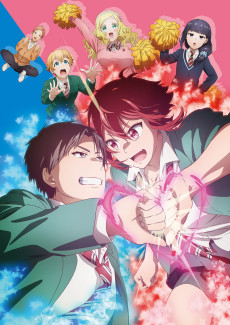
Tomo-chan Is a Girl!
Tomboy Tomo couldn’t have picked a more awkward high school crush ’cause it’s on her childhood friend, Junichiro, but he only sees her as one of the guys. Despite her pretty looks and signals, nothing gets through to this meathead! Will Junichiro ever realize Tomo’s into him and see her for the cutesy girl she actually is?!
(Source: Crunchyroll)
📺Anime Details
📝Editorial Analysis
The slapstick sting of Tomo’s fist connecting with Junichiro’s jaw—again—hangs in the air like a held breath. Not because it hurts him, but because he blinks, rubs his cheek, and says, “Whoa, Tomo, you’re strong,” like she just impressed him with a pull-up instead of trying to knock sense into his skull. That moment isn’t just physical comedy—it’s the quiet, aching pivot where her frustration curdles into something tender: she hits him because he doesn’t flinch, because he doesn’t read her, because he still sees her as the kid who wrestled him in the sandbox, not the girl who rehearses “Hey, wanna get bento together?” in the shower mirror.
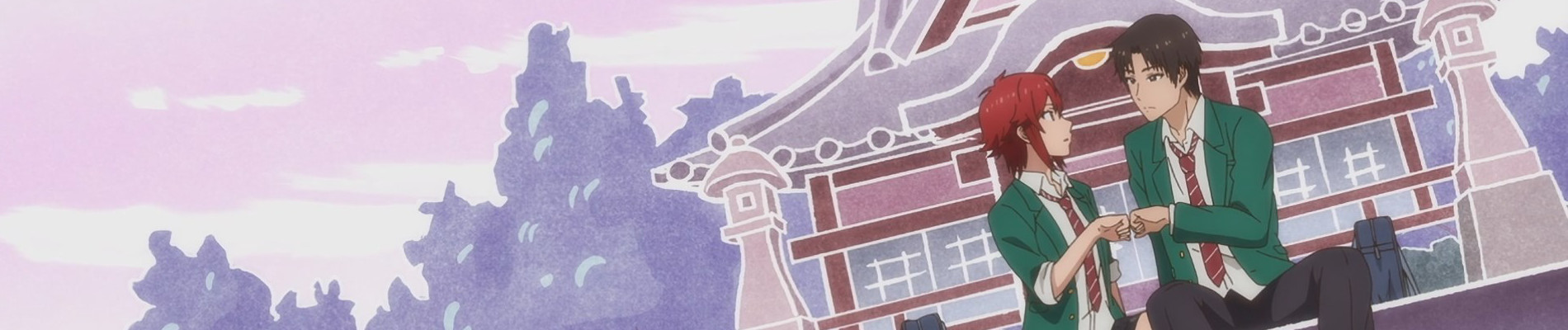
What makes Tomo-chan Is a Girl! vibrate with such particular warmth isn’t its genre checklist—it’s the melancholy of being perpetually misread. It’s the emotional friction between visibility and invisibility: Tomo is right there, vibrant and physically present, yet emotionally translucent to the one person whose gaze matters most. The show doesn’t wallow—it bounces, stumbles, trips over its own shoelaces—but beneath every pratfall and failed confession is a soft, stubborn ache: I am whole. I am here. Why can’t you see me—not as a friend, not as a fighter, but as someone who trembles when you laugh? That duality—slapstick surface, vulnerable core—is its atmosphere: lightness holding weight, laughter threaded with longing, familiarity that somehow deepens the loneliness.
That exact emotional DNA flickers in Prince of Persia—not in its acrobatics or sand magic, but in its melancholic exploration and Romance & Shoujo dimension. The description calls it “an all-new epic journey” built on return and reinvention—much like Tomo’s daily re-entry into Junichiro’s orbit, trying again despite no narrative guarantee of change. A player review notes it’s “the 3rd reboot… completely separate from the sands”—echoing how Tomo isn’t just repeating old gestures; she’s rewriting her own story within the same frame, insisting on evolution even when the world (and Junichiro) treats her as static. There’s poetry in that persistence—the kind that lives in the space between a leap and a landing, between “I love you” and “Huh? Did you say something?”
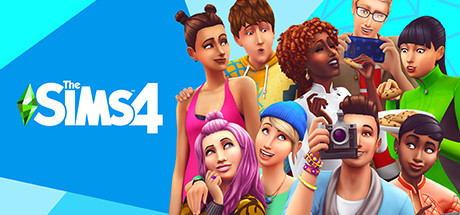
Then there’s The Sims™ 4, where the Romance & Shoujo and Comedy & Parody dimensions align with eerie precision. Its description invites players to “Play with life and discover the possibilities”—exactly what Tomo does, day after day: tweaking outfits, rehearsing lines, staging accidental run-ins, treating romance like a sandbox of what ifs. Yet the player review cuts deeper: “TS4 has become awful… you can barely do a…”—a raw, frustrated whisper that mirrors Tomo’s unspoken exhaustion. She can do everything right—be kind, funny, capable, beautiful—and still hit the game’s invisible wall: Junichiro’s obliviousness. Both exist in systems where effort doesn’t always map to outcome, where love feels less like destiny and more like modding your own reality, one fragile, hopeful save file at a time.
Even Disco Elysium - The Final Cut, with its melancholic exploration and Romance & Shoujo framing, hums with kinship. Its description positions you as a detective carving a path across a city—just as Tomo navigates the social architecture of her school, reading micro-expressions, decoding group dynamics, interrogating silence itself. A player review quotes: “Capital has the ability to subsume all critiques into itself…”—which lands like a gut-punch next to Tomo’s quiet rebellion against the “just friends” script, a script so pervasive it feels structural, almost economic. Her love isn’t grandiose—it’s forensic, patient, insistently human in a world that keeps reducing her to category.
This isn’t about matching tropes. It’s about recognizing the same heartbeat: the tenderness of trying, the humor born of refusal to break, the dignity in small, repeated acts of self-assertion. You’d love these pairings if you’ve ever laughed while crying in a public hallway, if you collect tiny victories like pressed flowers—Junichiro remembering her favorite soda, the Sims finally sharing a kiss after three failed attempts, the Prince choosing mercy over vengeance in a sun-drenched courtyard. If your idea of romance includes sweat, stubbed toes, and the unbearable sweetness of being seen, not all at once—but in increments, like light returning after rain.
🎮17 Games That Match the Vibe








Match Dimensions Explained
❓Frequently Asked Questions
Why does Prince of Persia show up in 'Games Like Tomo-chan Is a Girl!' matches?
Because both lean hard into romantic tension wrapped in sharp, self-aware comedy—like when the Prince stumbles through awkward palace banter while trying (and failing) to impress characters who see right through his swagger, mirroring Tomo’s over-the-top bravado masking genuine vulnerability. Its 'Romance & Shoujo' + 'Comedy & Parody' dimensions align tightly with Tomo-chan’s tone, even if the setting’s ancient Persia instead of modern Japan.
Is there a visual novel or anime-style game adaptation of Tomo-chan Is a Girl!?
No official visual novel or game adaptation exists yet—but The Sims™ 4 comes closest in spirit: you can create Tomo-like characters (short, energetic, stubborn), set up chaotic roommate dynamics with a 'Jun' analog, and trigger hilarious, relationship-driven scenarios—especially using custom mods or the 'Get Together' pack for group hangouts and miscommunication gags.
How is Disco Elysium similar to Tomo-chan Is a Girl! when they seem so different?
Don’t let the grimy rain-soaked streets fool you—both use melancholic exploration to deepen comedy and romance: Disco Elysium’s detective spirals into existential rants mid-flirtation (like trying to ask Cuno out while doubting his entire moral framework), just like Tomo’s loud confidence cracks open during quiet moments—say, staring at her reflection after Jun calls her ‘just a girl’. Their shared 'Romance & Shoujo' + 'Melancholic Exploration' + 'Comedy & Parody' DNA makes the tonal whiplash feel intentional, not jarring.
What’s the best game like Tomo-chan Is a Girl! if I want something light, silly, and full of chaotic friendship energy?
Thrillville®: Off the Rails™ is your pick—it’s pure, unapologetic chaos with zero stakes: build a rollercoaster that launches your park guests into orbit while they scream, then flirt awkwardly with the snack bar attendant between test rides. That same goofy, high-energy camaraderie—think Tomo dragging Jun onto a spinning teacup ride just to watch him panic—is baked into every minigame and park interaction.