
Vinland Saga Season 2
The second season of Vinland Saga.
After his father's death and the destruction of his village at the hands of English raiders, Einar wishes for a peaceful life with his family on their newly rebuilt farms. However, fate has other plans: his village is invaded once again. Einar watches helplessly as the marauding Danes burn his lands and slaughter his family. The invaders capture Einar and take him back to Denmark as a slave.
Einar clings to his mother's final words to survive. He is purchased by Ketil, a kind slave owner and landlord who promises that Einar can regain his freedom in return for working in the fields. Soon, Einar encounters his new partner in farm cultivation—Thorfinn, a dejected and melancholic slave. As Einar and Thorfinn work together toward their freedom, they are haunted by both sins of the past and the ploys of the present. Yet they carry on, grasping for a glimmer of hope, redemption, and peace in a world that is nothing but unjust and unforgiving.
(Source: MAL Rewrite)
📺Anime Details
📝Editorial Analysis
The smell of wet earth and burnt thatch hangs in the air—not as a memory, but as a presence. Einar kneels in the mud where his mother’s hand last touched his cheek, her voice still echoing: “Be kind.” Not a plea. Not a prayer. A command buried under ash and silence. His fingers dig into the soil, not to plant, but to hold on—to something softer than vengeance, something slower than survival.
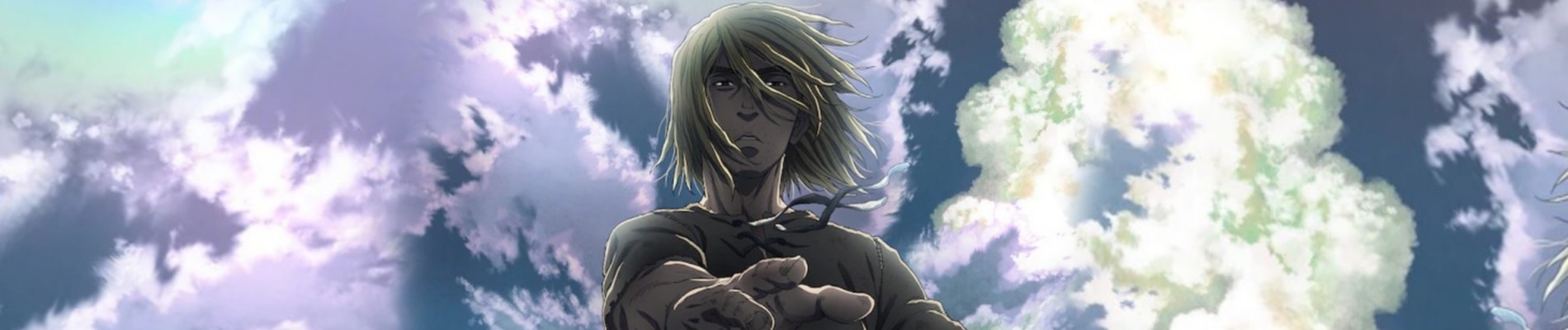
That’s the atmosphere of Vinland Saga Season 2: not the roar of battle or the clang of steel, but the weight of breath held too long—of a boy learning how to exhale without shame. It’s the ache of rebuilding a barn only to watch it collapse again—not from storm, but from human will. It’s the quiet horror of being chained not just by iron, but by expectation: that slaves endure, that Vikings conquer, that trauma repeats unless you interrupt the rhythm. This isn’t coming-of-age as ascent—it’s coming-of-age as unlearning: unlearning rage as identity, unlearning strength as violence, unlearning time as something to be seized rather than tended. Every frame feels like a held breath before the first real inhale in years.
Chains, with its “relaxing arcade match 3” loop and physics-driven bubbles, seems worlds away—until you read the player review: “Reminds me of connect 4 in nutshell… link 3 or more of the same color and clear enough till you can proceed.” That’s Einar’s labor in the Danish salt mines—not brute force, but patterned patience. Each chain he forms is a small act of order in chaos; each cleared cluster, a refusal to let entropy win. The game doesn’t ask for speed or spectacle—it asks for attention, for noticing repetition not as drudgery but as ritual. Like Einar stacking stones, hauling brine, mending nets—each motion a quiet rebellion against the idea that suffering must define him. The “Healing & Slow Life” dimension isn’t about escape. It’s about reclaiming tempo—the same tempo Thorfinn seeks when he finally stops running from his past and starts walking with it.
Then there’s The Witcher 3: Wild Hunt, where Geralt tracks Ciri across a war-torn continent “you can explore at will.” That phrase—“explore at will”—mirrors Einar’s slow, deliberate movement through the world after slavery: no map, no quest marker, just fields, forests, and the fragile trust of strangers. The player review notes the DLC arriving “11 years after release,” underscoring how meaning accrues—not in climactic battles, but in delayed resonance. Like Einar’s arc, Geralt’s journey deepens not through resolution, but through return: returning to Kaer Trolde, to Skellige, to choices that haunt longer than they heal. Both works treat consequence as geological—not sudden, but sedimentary. You don’t finish them—you settle into their gravity.
And Prince of Persia: Warrior Within, with its immortal Dahaka hunting the Prince “an incarnation of Fate itself,” lands with chilling precision. The description calls it a “sword-slashing sequel” rooted in “Time & Memory,” and the player review calls the Dahaka chase “goated”—not for spectacle alone, but because it’s inescapable. That’s Einar’s inheritance: not just trauma, but the echo of violence as biological memory, as inherited rhythm. The Dahaka doesn’t shout. It pursues. So does the past—in the way Einar flinches at raised voices, in how he measures distance before speaking, in the silence between his words. The game’s darkness isn’t gothic—it’s chronological: time as a predator, not a river. And yet—the Prince fights within that loop. So does Einar. Not to erase it, but to bend its shape.
This pairing isn’t for fans of “epic sagas” or “gritty realism.” It’s for the person who watches Einar fold laundry with the same care he once used to sharpen axes—and feels their throat tighten. For the player who replays Warrior Within not for the combat, but for the moment the Prince finally stops running and stares into the Dahaka’s hollow eyes—no weapon drawn. For the one who saves Geralt’s journal entries not for lore, but because the handwriting changes: steadier, quieter, less certain of what “right” means. These are stories for people who understand that healing isn’t linear—it’s a chain of small, stubborn choices, each one a tiny, defiant kindness.
🎮18 Games That Match the Vibe


Match Dimensions Explained
❓Frequently Asked Questions
Why does The Witcher 3 keep coming up for Vinland Saga Season 2 fans?
Because both dive deep into morally gray revenge arcs where trauma reshapes identity—like Thorfinn’s silent rage mirroring Geralt’s weary pragmatism after losing loved ones. The emotional weight of Ciri’s fractured journey and Thorfinn’s pilgrimage to Jom both hinge on quiet, character-driven moments over flashy action, and critics note how The Witcher 3’s ‘Emotional Narrative’ and ‘Adult & Dark Seinen’ dimensions match Season 2’s tone perfectly (score: 78).
Is there a Vinland Saga game adaptation?
No official Vinland Saga game exists—not as a licensed adaptation, anime tie-in, or manga-based title. While fans often hope for one, the closest thematic matches are already out there: The Witcher series nails the grim historical realism and layered moral stakes, and Prince of Persia: Warrior Within delivers that same brooding, time-haunted intensity (especially during Dahaka’s relentless chases, echoing Thorfinn’s guilt-driven pursuit of atonement).
Chains vs The Witcher 3—which is better if I want that calm, reflective Vinland Saga Season 2 farm-life vibe?
Go with Chains—it’s *built* for that slow, healing rhythm you get in Season 2’s Jom arc: linking bubbles feels like tending fields or weaving rope—meditative, tactile, and low-stakes. While The Witcher 3 has emotional depth, its world is war-torn and urgent; Chains leans fully into ‘Healing & Slow Life’ (its core dimension) with physics-driven puzzles that reward patience, not swordplay—exactly like Thorfinn finding peace through repetition and care.
What’s the best game like Vinland Saga Season 2 if I want that intense, time-pressured chase energy—like Thorfinn running from his past?
Prince of Persia: Warrior Within is your match—it’s all about being hunted by Dahaka, an immortal force of consequence that corners you in crumbling ruins and narrow corridors, just like Thorfinn’s past literally chasing him across seas and seasons. Its ‘Time & Memory’ and ‘Action Spectacle’ dimensions (score: 74) mirror Season 2’s tension between memory and movement, and players still call the Dahaka chases ‘goated’—that same breathless, inescapable momentum.