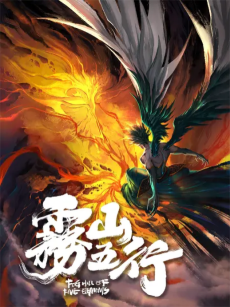
Wu Shan Wu Xing: Zhuo Yuan Shen Huo
📺Anime Details
📝Editorial Analysis
The dust doesn’t settle—it hangs. Not like in a battlefield after the clash, but thick and golden in the late afternoon light of a nameless village road, where a young man stands barefoot, palms open, breath shallow, staring at his own hands as if they belong to someone else. His memory is gone—amnesia—but his body remembers how to pivot, how to exhale before the strike, how to feel the qi coil low in his belly even when he can’t name it. A crow lands on a broken roof tile behind him. No music swells. Just wind, silence, and the weight of something ancient pressing down—not from the sky, but from the soil beneath his feet. That’s Wu Shan Wu Xing: Zhuo Yuan Shen Huo: not spectacle first, but presence.
What makes it ache so deeply isn’t the gods or demons—it’s the rural texture of divinity. This isn’t myth scaled for grandeur; it’s myth worn thin by time, stitched into calloused hands, whispered across rice paddies, buried in ancestral graves. You feel the exhaustion in every martial stance—the way a shapeshifting demon doesn’t roar but sighs, its form flickering like heat haze over dry earth. The tragedy isn’t melodramatic loss—it’s the quiet horror of forgetting your own name while your fists still know the names of every pressure point. It makes you think about lineage not as glory, but as burden: what lives in your bones before you remember it? What gods sleep in your blood, not because you summoned them, but because you were born under their shadow?
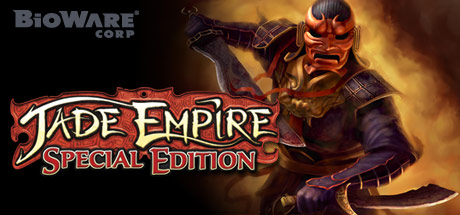
That same weight hums in Jade Empire™: Special Edition—not in its combat flash, but in its emotional narrative and the quiet tension between duty and selfhood. Like the amnesiac protagonist of Wu Shan Wu Xing, Jade Empire’s hero walks a path where identity is forged in choice after memory fails—open palm or closed fist, loyalty or rebellion—and every decision lands with moral gravity, not just consequence. A player notes it’s “fantastic,” yet the very effort required to launch it—copying steam.dll, navigating Reddit workarounds—mirrors the anime’s insistence that meaning isn’t handed down cleanly. It must be retrieved, piece by stubborn piece.
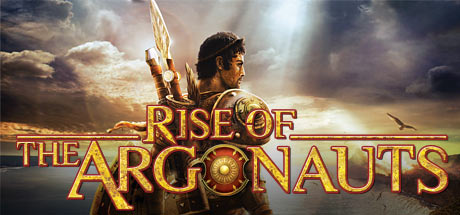
Then there’s Rise of the Argonauts, where Jason’s vow blooms from a single, shattering moment: his fiancée killed on their wedding day. The description frames it as a kingdom lost, love severed—but the emotional core is identical to Wu Shan Wu Xing’s rural tragedy: grief rooted in place, in ritual, in the sudden rupture of ordinary life by divine violence. A reviewer says it “does ancient history right”—not because it’s accurate, but because it treats myth as lived reality, where gods intervene not with thunder, but with silence so deep it cracks the earth. That same hush lives in Wu Shan Wu Xing’s village scenes, where a god might walk past a child selling steamed buns and no one bows—because reverence here is too old, too woven-in, to perform.
Even Prince of Persia, with its “healing & slow life” dimension, resonates—not in its sand-time mechanics, but in how it treats restoration as ritual, not reset. The new prince doesn’t reclaim a throne; he relearns how to move through ruins, how to listen to wind through broken arches. Like Wu Shan Wu Xing, it understands that healing isn’t forward motion—it’s kneeling in dust, remembering how to breathe before you stand. A player calls it “a brand new story completely separate from the sands”—and that’s the key: both works refuse inherited myth. They begin after the fall, in the quiet where memory frays and power feels less like fire and more like tremor in the wrist before the strike.
This pairing speaks to the viewer who watches a fight scene and counts the breaths between blows—who hears a demon’s voice and wonders what language it forgot first. It’s for the player who reloads not to win, but to feel the weight of the sword again, to sit with the silence after the boss falls, to trace the scar where legend touched flesh. Not fans of action or folklore—but those who recognize grief as a landscape, amnesia as sacred ground, and rural not as backdrop, but as the only true altar.
🎮14 Games That Match the Vibe



Match Dimensions Explained
❓Frequently Asked Questions
Why does Wu Shan Wu Xing: Zhuo Yuan Shen Huo feel so similar to Rise of the Argonauts?
Both lean hard into mythic worldbuilding and action-spectacle combat—Rise of the Argonauts has you swinging a spear as Jason through Iolcus’ sun-baked ruins and battling harpies in real-time, just like Wu Shan Wu Xing’s elemental duels against spirit-beasts in mist-shrouded mountain temples. Reviewers even noted how Rise’s ‘vow-driven narrative’ mirrors Wu Shan’s revenge-fueled pilgrimage across sacred geography.
Is there a mobile or anime adaptation of Wu Shan Wu Xing: Zhuo Yuan Shen Huo?
No official mobile version or anime exists yet—but if you're craving that same blend of Chinese mythology and emotional stakes, Jade Empire™: Special Edition delivers with its open-palm/closed-fist moral choices, martial-arts mastery system, and deep lore around the Spirit Monk and the Water Dragon. It’s the closest thing we’ve got in terms of tonal and thematic fidelity.
How does Loki compare to Wu Shan Wu Xing: Zhuo Yuan Shen Huo in terms of mythology depth?
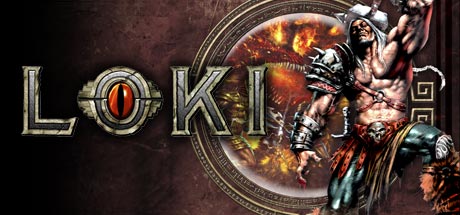
Loki pulls from Norse, Egyptian, Greek, and Celtic myths—and while it’s broad in scope (you play as a Norse fighter, an Egyptian priestess, etc.), Wu Shan Wu Xing dives deeper into *one* tradition: Daoist cosmology, Five Phases theory, and Wu Xing-aligned spirit battles. Loki’s mythic texture is wide but thin; Wu Shan’s is narrow, dense, and ritualistic—like comparing Loki’s Valhalla raids to Wu Shan’s incense-lit altar confrontations with the Metal Serpent.
What’s the best game like Wu Shan Wu Xing: Zhuo Yuan Shen Huo if I want something meditative and slow-paced after intense combat?
Go straight to Prince of Persia (2024)—its healing-focused rhythm, sand-swept dream logic, and deliberate acrobatic pacing mirror Wu Shan’s quieter moments: think pausing mid-leap to align with a celestial compass, or resting at a mountain hermitage before confronting the Fire Phoenix. It’s not about speed—it’s about breath, timing, and consequence, just like Wu Shan’s ‘stillness-before-strike’ philosophy.