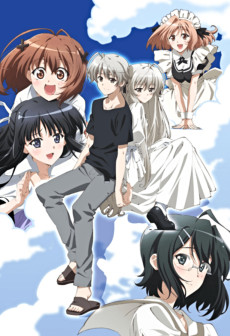
Yosuga no Sora: In Solitude Where We are Least Alone
📺Anime Details
📝Editorial Analysis
The scent of rain on hot asphalt, the low hum of cicadas thick enough to taste, and the way Sora’s fingers tremble—not from fear, but from the unbearable weight of holding too much love in a world that insists it must be wrong. That moment, just after the twins sit together on the porch swing, bare feet brushing, silence stretching like wet silk—no dialogue, no music swell, just the quiet crack of a twig snapping somewhere in the overgrown garden—it’s not romance as escape. It’s intimacy as gravity.
Yosuga no Sora: In Solitude Where We are Least Alone doesn’t traffic in fantasy catharsis or moral absolution. Its atmosphere is damp, tense, quietly suffocating—not because of taboo alone, but because every glance, every shared meal, every accidental touch carries the unspoken labor of sustaining connection in isolation. The orphaned setting isn’t backdrop; it’s architecture. The ensemble cast doesn’t dilute the focus—it multiplies the pressure, each character orbiting the twins’ fragile center like planets tugged by a star they’re forbidden to name. You don’t watch it to resolve tension—you sit inside it, breathing the same humid air, feeling how loneliness and togetherness coil around each other like vines. It makes you think about how love can be both shelter and sentence, how solitude isn’t absence—but presence without permission.
That emotional DNA—the slow-burn ache of being seen yet unmoored, the comfort found in ritual rather than resolution—echoes in surprising places. Chains, for all its bubble-popping simplicity, shares that same hypnotic stillness. Its description calls it “a relaxing arcade match 3 casual game” where physics governs each chain’s collapse—not speed, not score, but weight, flow, resonance. A player notes it “reminds me of connect 4 in nutshell”—a reference to deliberate, tactile alignment, not frantic action. Like watching Sora trace the rim of a teacup while Haruka watches her, Chains asks you to lean into slowness, to feel the quiet satisfaction of one precise, inevitable connection clicking into place—no fanfare, just release. It’s healing not through joy, but through order reclaimed, breath synced to rhythm.
Then there’s The Sims™ 4, whose description invites you to “play with life and discover the possibilities,” to “customize every detail from Sims to homes.” A player review complains it’s “no fun without DLC,” revealing something deeper: the game’s emotional resonance lives in curated mundanity—cooking breakfast, arranging furniture, watching light shift across a floorboard. Just like Yosuga no Sora, its power lies in the ordinary made heavy with meaning: a shared shower, a folded towel left behind, a glance held too long in a hallway. Neither offers grand stakes—just the trembling significance of what’s allowed, what’s withheld, what’s built in the margins. Both ask you to find weight in the small, the repeated, the unspoken.
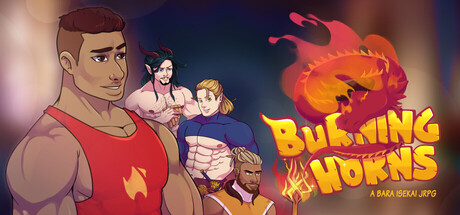
Even Burning Horns: A Bara Isekai JRPG, tagged with Emotional Narrative and JRPG Narrative, resonates—not through plot, but through tonal texture. Its very title suggests contradiction: “Burning Horns” implies heat, danger, mythic scale; “Bara Isekai” grounds it in queer-coded, bodily, often tender world-building. Like Yosuga no Sora, it likely treats emotional stakes as physical terrain—where desire isn’t abstract, but something you walk through, sweat through, bleed through. The anime’s twin dynamic mirrors that genre’s tendency to locate profound vulnerability not in battles won, but in bodies choosing proximity despite consequence.
This pairing isn’t for fans of tidy endings or moral clarity. It’s for the person who re-watches the scene where Haruka folds laundry just so—not because it’s cute, but because the precision feels like prayer. For the player who spends an hour rearranging a virtual bookshelf until the light hits the spines exactly right. For anyone who knows that healing isn’t always warmth—it’s sometimes the slow, quiet act of sitting beside someone in the dark, knowing the silence between you holds more truth than any confession ever could.
🎮36 Games That Match the Vibe













Match Dimensions Explained
❓Frequently Asked Questions
Why is Chains listed as similar to Yosuga no Sora when it’s just a match-3 game?
Great question — it’s not about gameplay similarity, but shared emotional texture: Chains’ slow, meditative bubble-linking loop and its emphasis on quiet focus and gentle progression mirror the introspective, emotionally resonant pacing of Yosuga no Sora’s quieter moments (like Haruka and Sora’s rooftop conversations or the rain-soaked train station scene). Reviewers explicitly call it ‘healing’ and ‘slow life’ — two core dimensions it shares with Yosuga no Sora’s intimate, character-driven atmosphere.
Is there an anime or visual novel adaptation of Burning Horns: A Bara Isekai JRPG?
No — Burning Horns is an original JRPG with no anime or visual novel adaptation (yet!). It stands out in the match list for blending emotional narrative and comedy/parody — think heartfelt isekai tropes flipped with sincerity and warmth, like when protagonist Kaito bonds with the gruff but tender horned elder Rennok during the ‘Crimson Grove’ arc. Its 84 score reflects how well it balances that tonal duality, much like Yosuga no Sora does with its melancholy tenderness and fleeting joy.
How does The Sims 4 compare to Yosuga no Sora in terms of emotional storytelling?
They’re wildly different formats, but TS4’s base-game relationship system — especially unscripted moments like two Sims quietly sharing tea at dawn or comforting each other after a failed career event — taps into the same ‘healing & slow life’ dimension. Player reviews complain about DLC bloat, but the core sandbox still supports intimate, player-driven emotional beats reminiscent of Yosuga no Sora’s slice-of-life weight — just without fixed characters or plot. It’s less ‘Haruka’s inner conflict’ and more ‘your version of that feeling, built one interaction at a time.’
What’s the best game like Yosuga no Sora if I want that bittersweet, rain-drenched, emotionally heavy vibe?
Burning Horns is your strongest match — despite its parody label, its emotional narrative dimension scores 84 and delivers raw, grounded pathos, like the scene where Kaito chooses between duty and love in the mist-shrouded Valley of Echoes. It avoids melodrama by grounding big feelings in small gestures (a held hand, a delayed confession), much like Yosuga no Sora’s most resonant moments — e.g., Sora’s letter left on the windowsill before the storm breaks. Chains also fits, but leans gentler; Burning Horns matches the ache.