
86 EIGHTY-SIX Part 2
The second cour of 86: Eighty Six.
Having bid Lena farewell, Shin and the surviving members of the Spearhead squadron continue into the heart of Legion territory. There, they endure countless hardships until they're rescued by the Federal Republic of Giad, a reformed nation that offers them a second chance at a peaceful life. But it isn't long before a sense of duty calls the Eighty-Six back to the battlefield. Choosing to enlist in the military, they willingly walk back through the gates of hell, this time joined by a peculiar new ally-Frederica Rosenfort: a haughty young girl with a rare ability and wisdom far beyond her years.
(Source: Yen Press)
Note: The last two episodes were originally set to air in the first two weeks of January 2022, but were postponed to the second and third week of March due to production issues.
📺Anime Details
📝Editorial Analysis
The silence after the explosion isn’t empty—it’s heavy, thick with the smell of burnt insulation and ozone, the low hum of dying Legion drones still vibrating in Shin’s teeth as he staggers upright, visor cracked, breath ragged behind a filter that no longer seals properly. His hand closes around Lena’s scarf—still tied to his forearm—not as a relic, but as weight. Not hope. Not memory. Weight. That’s the first breath of 86 EIGHTY-SIX Part 2: survival not as triumph, but as slow, grinding refusal to let the world erase you twice.

What makes this anime ache so precisely isn’t its mecha or its war—it’s how it treats dignity as a battlefield. Every frame pulses with exhaustion that isn’t physical alone: it’s the fatigue of being perpetually unseen, then suddenly seen too much—as weapons, as casualties, as inconvenient truths. The Federal Republic of Giad doesn’t offer sanctuary like sunlight; it offers paperwork, bureaucracy, quiet rooms where trauma isn’t named but measured in pauses between sentences. There’s no catharsis in peace—only the dissonance of waking up without sirens, and wondering if your body remembers how to rest. It’s quiet despair, yes—but also fierce, unromantic loyalty, the kind that doesn’t shout, but shows up at the recruitment office before dawn, uniform still smelling faintly of dust and old blood.
That emotional DNA—the visceral cost of systemic dehumanization, the way ideology calcifies into concrete walls and ration cards and unspoken rules—pulses through Deus Ex: Game of the Year Edition. Its description nails the same rot: “the gap between the insanely wealthy and the desperately poor grows ever wider,” and beneath that, “an ages old conspiracy bent on world dom…” — that ellipsis feels intentional, like a breath held too long. A player review calls it immediate: “gives you all options with one hit of the esc key.” That’s 86’s tone—no hand-holding, no moral GPS. You’re dropped into a broken system already in motion, and every choice (to obey, to resist, to survive) carries the weight of complicity. Both force you to navigate hierarchies where your body is policy, your identity a file folder, and your agency measured in millimeters of clearance.
Then there’s Beyond Good and Evil™, whose description cuts straight to the core: “Play as Jade, a young investigative reporter, and expose a terrible government conspiracy.” Not a soldier. Not a hero. A witness, armed with a camera and stubborn empathy. Like Lena’s reports—cold, precise, refusing to let the Eighty-Six be statistics—and like Shin’s silent, relentless forward motion, which is itself an act of testimony. A player calls it “Crazyyy game!”—that raw, startled awe mirrors the anime’s most devastating moments: when a character finally names their own grief aloud, or when a civilian in Giad looks at Shin not as a weapon, but as a man who blinks, who hesitates, who chooses—and that small, human detail lands like a grenade. Both understand that truth isn’t revealed in monologues—it’s smuggled in glances, in documents half-burned, in the way someone holds a cup of tea with hands that still shake.
And Dystopia, though its online is dead, lives in its bones: “a cyberpunk game with tense combat situations in a high-tech world spanned by computer networks… playing as either Punk mercenaries, or Corporate security forces.” Its description doesn’t romanticize sides—it presents them as roles, systems you wear like armor. Just like 86 never lets you forget that the Legion aren’t monsters—they’re machines built by humans who chose efficiency over ethics. A player review sighs, “Not a bad mod, too bad the online is dead…” That wistful resignation? That’s the sound of the Spearhead Squadron boarding the transport back to war—not with fanfare, but with the quiet clink of gear settling into place. Both treat conflict as infrastructure, not spectacle.
This pairing isn’t for fans of “epic battles” or “underdog wins.” It’s for the person who watches Shin walk into the rain in Giad and feels their throat tighten—not because he’s sad, but because he’s dry, and hasn’t been in years. It’s for the player who boots up Deus Ex and immediately opens the menu not to play, but to see the credits scroll, because even the names behind the fiction feel like proof someone else noticed the weight too. It’s for those who don’t want to escape the world—they want to recognize it, in the tremor of a voice, the flicker of a HUD, the way silence hangs just a second too long after a lie is told. They’re the ones who carry scarves, file reports, hack terminals, and still ask—every single time—whose name was left off the list?
🎮16 Games That Match the Vibe

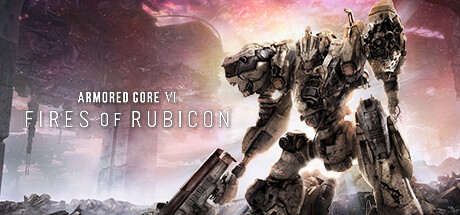


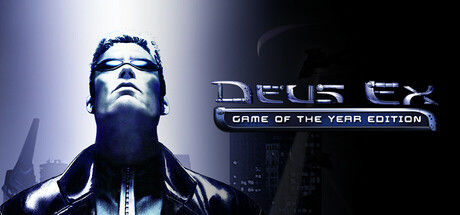
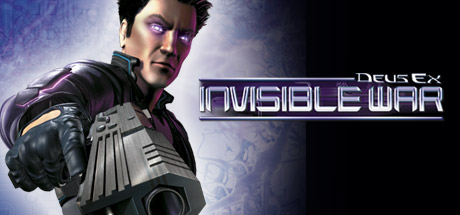

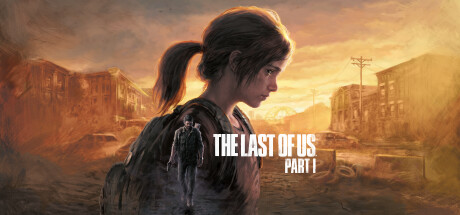


Match Dimensions Explained
❓Frequently Asked Questions
Why does Beyond Good and Evil feel so similar to 86 EIGHTY-SIX Part 2’s emotional gut-punch moments?
Because both hinge on a young, morally grounded protagonist (Jade in BG&E, Shin in 86) uncovering systemic lies while protecting vulnerable people — like Jade shielding orphans from government propaganda, mirroring Shin’s desperate radio calls to Lena during the Legion’s final stand. The quiet, melancholic pacing and themes of silenced truth under authoritarian rule hit with the same weight, especially in BG&E’s ‘Security Checkpoint’ sequence where Jade’s trust is weaponized against her.
Is there an 86 EIGHTY-SIX Part 2 video game adaptation?
No — there’s no official game adaptation of *86 EIGHTY-SIX Part 2*. What *does* exist are games that deeply resonate with its core vibe: *Deus Ex: Game of the Year Edition* nails the adult, politically charged dread (think Lena’s disillusionment with the Republic’s ‘peacekeeping’ lies), while *Dystopia* mirrors the gritty, networked warfare and moral ambiguity of the Legion’s battlefield comms — just without the anime characters.
How does Deus Ex: Invisible War compare to Warhammer 40K: Dawn of War for 86 EIGHTY-SIX Part 2 fans?
If you loved *86 Part 2*’s tense command-decision stakes and crumbling institutions, *Invisible War* delivers that political thriller tension through dialogue trees and faction betrayals (like the Order vs. Omar schism echoing the Republic’s fractured leadership), whereas *Dawn of War* gives you visceral, squad-level mecha warfare — think piloting a Lancer-class unit through ruined cities like the Legion’s last push at the Eastern Front, complete with resource-scarce survival pressure.
What’s the best game like 86 EIGHTY-SIX Part 2 if I want that quiet, heavy, late-night ‘radio static and regret’ mood?
Go straight to *Deus Ex: Game of the Year Edition* — especially the rain-lashed, neon-dimmed streets of NYC where JC Denton walks alone after learning about Majestic 12’s lies. That same hushed dread, that sense of being one voice against a machine? It’s all there — just swap Lena’s headset for JC’s neural interface and the Legion’s static for the hum of broken servers. Player reviews even call out how the ESC menu drops you right into the world’s oppressive systems — no fluff, just consequence.