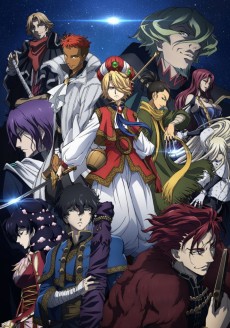
Altair: A Record of Battles
📺Anime Details
📝Editorial Analysis
The dust never settles in Altair: A Record of Battles. Not after the siege of Sogdiana, not after the grain embargo on Khorasan, not even in the quiet moments when Musa stares at the ledger—ink still wet, numbers trembling under his finger—as dawn bleeds gray over the marble corridors of the Imperial Chancery. That stillness isn’t peace. It’s the held breath before the next recalibration of power, the silence where a single misaligned decimal could spark famine or rebellion. You feel it in your molars—the low hum of consequence, relentless and unblinking.
What makes Altair: A Record of Battles singular isn’t its war or politics as spectacle—it’s the weight of cognition. This is an anime that treats economics like weather: invisible, omnipresent, capable of eroding empires one tariff at a time. There are no heroic speeches before battle lines; there’s Musa tracing supply routes on parchment while a clerk coughs blood in the next room—tuberculosis, untreated, because the hospital budget was diverted to fortify the western pass. The drama lives in arithmetic, in the exhaustion of sustained vigilance, in the quiet horror of realizing that loyalty can be priced, and often, it’s cheaper than bread. It doesn’t ask what if war came? It asks what if war never ends—and you’re the one balancing its books? That’s the feeling: exhausted clarity, the kind that leaves your throat dry and your thoughts unnervingly precise.
That same exhausted clarity pulses through Assassin's Creed™: Director's Cut Edition. Its description calls it a “Political Thriller, Tactical Warfare, Melancholic Exploration”—and that last phrase lands like a stone in water. Player reviews note dated textures, yes—but what lingers is the melancholy of walking Jerusalem’s sun-baked alleys, knowing every merchant, beggar, and guard is part of a machine you’re trying to dismantle with whispers and knives. Altaïr doesn’t roar; he observes, calculates, adapts. Like Musa, he moves through systems older than himself, reading power not in banners but in tax rolls and patrol rotations. Both demand you think in layers: ideology beneath rhetoric, hunger beneath obedience, fatigue beneath resolve.
Then there’s Kingdom Come: Deliverance II, scored for “Political Thriller” and “Tactical Warfare.” No magic, no chosen ones—just a blacksmith’s son navigating feudal bureaucracy where a misplaced signature can forfeit land, and where “tactical warfare” means choosing whether to ambush a supply caravan or bribe the quartermaster or leak false troop movements to three rival lords at once. The player review doesn’t mention fantasy—it mentions realism, consequence, the slow burn of influence earned not through leveling up, but through remembering who lent you a horse last winter and who refused water to your wounded comrade. That’s Musa’s world too: no deus ex machina, only debt, precedent, and the crushing weight of what happens next.
Even Act of War: Direct Action, with its “Tactical Warfare, Political Thriller” dimensions and real-time strategy framing, echoes this DNA—not in tone, but in architecture. Its description declares it “ripped from today’s headlines,” a “frightening tale of suspense, international intrigue and geopolitical military conflict.” The player admits the dialogue is “dumb and a bit cringe”—but then compares it to Command & Conquer 3, a game where victory hinges on resource denial, intel loops, and asymmetric pressure. That’s Altair’s battlefield: not clashing armies, but starving ports, manipulating wheat futures, turning allies against each other by leaking verified documents. The cringe isn’t in the writing—it’s in recognizing how banal, how bureaucratic, real power struggles actually are.
You’d love these pairings if you’ve ever paused mid-episode of Altair: A Record of Battles, not to admire the animation, but to re-read a line about silver coinage standards—and then opened a game not for escape, but for continuation. If your ideal tension isn’t a sword clash, but a ledger closing at midnight. If you feel relief, not adrenaline, when a plan works—not because it’s flashy, but because it holds. If you understand that the most devastating scene in any of these isn’t a death, but a signed treaty that quietly cancels pensions. That’s the shared pulse: quiet gravity, the kind that settles in your ribs and stays.
🎮15 Games That Match the Vibe




Match Dimensions Explained
❓Frequently Asked Questions
Why does Altair's political intrigue feel so much like Assassin's Creed's Damascus sequences?
Because both lean hard into Political Thriller vibes — especially Altair’s tense council scenes with Shihab and Assassin’s Creed’s shadowy negotiations in the Souk, where every NPC has layered loyalties. The match list confirms this overlap: Assassin's Creed™ (80) and Act of War: Direct Action (55) both score high on Political Thriller, making that slow-burn, morally gray diplomacy a core shared DNA.
Is there an anime or live-action adaptation of Altair: A Record of Battles?
No official anime or live-action adaptation exists — unlike Kingdom Come: Deliverance II, which got a Czech-language TV series spinoff tied to its grounded historical drama. Altair remains strictly manga/anime-only, while games like Marvel's Spider-Man 2 (73) and Assassin's Creed™ (80) show how Political Thriller + Melancholic Exploration can translate *to* adaptations — just not for Altair yet.
How does Kingdom Come: Deliverance II compare to Altair in terms of battlefield realism?
Kingdom Come: Deliverance II nails Tactical Warfare with its weighty, consequence-driven combat — think broken limbs mid-battle, fatigue affecting sword swings, and siege tactics mirroring Altair’s Siege of Antioch arc. It shares Altair’s emphasis on strategy over flash, scoring 73 on both Political Thriller *and* Tactical Warfare — same as Assassin's Creed™, but without the parkour flair.
What’s the best game like Altair if I want that quiet, heavy-feeling wartime melancholy — like watching Altair stare at the sea after losing Yusuf?
Marvel's Spider-Man 2 (73) hits that exact Melancholic Exploration vibe — especially Peter’s solo rooftop walks through rainy, neon-drenched NYC, or Miles’ silent subway rides reflecting on legacy and loss. It’s the only match besides Assassin's Creed™ (80) to score high on Melancholic Exploration, and both use environmental storytelling to mirror Altair’s somber, character-driven pacing.