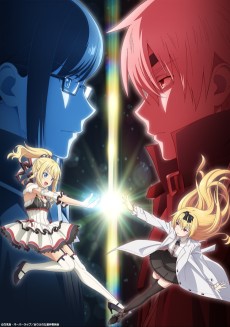
Arifureta - From Commonplace to World's Strongest: The Miraculous Meeting and the Phantasmagorical Adventure
📺Anime Details
📝Editorial Analysis
The air in the Abyssal Labyrinth isn’t just cold—it’s hungry. You feel it in Hajime Nagumo’s knuckles, white-knuckled around his rifle as he reloads mid-fall, suspended over a chasm where gravity frays at the edges and the walls pulse with bioluminescent veins of ancient, corrupted magic. His breath hitches—not from fear, but from the sheer weight of consequence: every step down has cost him flesh, memory, identity. He doesn’t shout. He doesn’t cry. He just adjusts his grip, and fires.
That silence—between bullet and impact—is where Arifureta - From Commonplace to World's Strongest: The Miraculous Meeting and the Phantasmagorical Adventure lives. Not in triumph, but in the hollow resonance after violence; not in rebirth, but in the slow, unglamorous reassembly of a self shattered by betrayal, isolation, and irreversible transformation. Its atmosphere isn’t “dark fantasy” as backdrop—it’s psychological erosion made tangible: the way kemonomimi features twitch not with charm but with predatory instinct, how time manipulation isn’t a tool for clever paradoxes but a weapon that fractures causality inside Hajime’s skull, how “lost civilization” means ruins breathing with residual malice, not romantic ruins draped in ivy. It makes you feel unmoored, then hyper-aware—like your nervous system has been recalibrated to register threat before thought. It makes you think about what happens when survival stops being heroic and starts being biological, inevitable, almost fungal in its persistence.
That emotional DNA—the suffocating intimacy of decay, the moral vertigo of power earned through irreversible loss—finds precise echoes in games where horror isn’t jump-scares but atmospheric digestion. Vampire: The Masquerade - Bloodlines, with its Dark Fantasy, Body Horror & Occult dimensions and Adult & Dark Seinen tone, doesn’t just let you play a vampire—it forces you to inhabit the rot. Like Hajime’s descent into the Abyss, the game’s world corrodes you from within: dialogue choices warp your humanity, physical transformations warp your reflection, and the player review’s insistence on the GOG version “comes with it”—the unofficial patch—mirrors how Arifureta’s narrative only coheres when you accept its foundational instability. Both demand you operate inside broken systems, where every upgrade is also a wound.
Then there’s BioShock Infinite, scoring 75 with Time & Memory and Body Horror & Occult dimensions. Its core tension—Booker DeWitt’s debt, his erasure, Elizabeth’s cage—isn’t about saving the world, but unspooling identity across fractured timelines. Hajime’s time manipulation isn’t flashy chronokinesis; it’s temporal dissonance echoing in his joints, his vision, his voice—just as Booker’s memories bleed across realities until “wiping the slate clean” becomes physically impossible. The player review’s quiet resignation—“I know that some people are still bitter about the Bioshock Infinite we could have gotten…”—lands with the same ache as Hajime’s earliest flashbacks: not nostalgia, but the dull thud of realizing the past isn’t recoverable—it’s reconstructed, and always slightly wrong.
And Heretic: Shadow of the Serpent Riders, steeped in Dark Fantasy and Body Horror & Occult, channels that same visceral, mythic dread. You’re not a chosen one—you’re a heretic, the last Sidhe elf, wielding magic that corrupts as it heals. That mirrors Hajime’s alchemical transmutation: turning flesh into weapon, bone into blade, trauma into tactical precision. The player review’s terse command—“Pick up the remaster…”—feels like Hajime’s own internal directive: no fanfare, no redemption arc—just adapt or dissolve. There’s no safe distance here. Every spell cast, every bullet fired, leaves residue on the soul.
This pairing isn’t for fans of wish-fulfillment isekai. It’s for the ones who watch Hajime stitch his own skin back together and feel their own pulse sync with the rhythm of the Abyss. For players who don’t reload saves to avoid failure—but to study the exact frame where their character’s jaw cracks under a blow in Sekiro™: Shadows Die Twice, or who replay REMNANT II®’s boss arenas not for victory, but to memorize the texture of each monster’s scream. They’re drawn to stories where strength isn’t light—it’s dense, scarring, unmistakably earned in the dark. Where the most powerful magic isn’t resurrection—it’s the unbearable, beautiful clarity of choosing to keep going, even when your hands remember how to hold a gun better than they remember how to hold a person.
🎮15 Games That Match the Vibe



Match Dimensions Explained
❓Frequently Asked Questions
Why is Vampire: The Masquerade - Bloodlines listed as similar to Arifureta despite having no isekai elements?
Great question—it’s not about the isekai setup, but the *tone and transformation arc*. Like Hajime’s brutal descent into body horror and moral ambiguity after his betrayal in the dungeon, Bloodlines drops you into a decaying L.A. where your vampire body mutates grotesquely (think blood-fueled claws, flesh tearing during frenzy), and every choice chips away at your humanity—just like Hajime’s shift from bullied student to ruthless, scarred survivor. The ‘Adult & Dark Seinen’ dimension matches perfectly, especially scenes like the Asmodeus Club’s visceral corruption or the Malkavian asylum sequence.
Is there an anime or game adaptation of Arifureta’s 'Miraculous Meeting and Phantasmagorical Adventure' arc?
No—there’s no dedicated anime or game titled *The Miraculous Meeting and the Phantasmagorical Adventure*. That phrasing is actually a stylized, fan-coined subtitle referencing Hajime’s reunion with Yue and the surreal, reality-warping events in the Abyss (like the shifting gravity zones and phantom echoes of past selves). The official anime covers arcs up to the Abyss, but never uses that exact title—and none of the matched games (like Sekiro or REMNANT II) are adaptations; they’re tonal parallels, especially in how Sekiro’s Divine Dragon shrine warps time and perception just like the Abyss distorts memory and space.
How does Heretic: Shadow of the Serpent Riders compare to Sekiro for dark fantasy vibes?
Both weaponize body horror and mythic decay—but differently. Heretic leans into eldritch body horror: as the last Sidhe elf, you cast spells that melt enemies into ichor while your own limbs warp under cursed magic (e.g., the ‘Hellfire’ spell scarring your hands black), echoing Hajime’s early mutations. Sekiro goes surgical and spiritual—your prosthetic arm isn’t grotesque, but its Ashina Arts (like the ‘Mortal Draw’ that splits enemies clean in half) mirror Heretic’s precision chaos, and both feature boss fights where victory feels earned through pattern mastery, not just stats—like fighting the Serpent Rider Mephisto or Sekiro’s Guardian Ape.
What’s the best game like Arifureta if I want that ‘trauma-to-power’ vibe with heavy occult visuals?
BioShock Infinite is your strongest match—not for the sky-cities, but for Elizabeth’s tear-warping powers and the *physical toll* of reality-bending. When Booker’s hand literally unravels into static during the Comstock House collapse, or when Elizabeth’s eyes bleed light mid-teleport, it nails Arifureta’s blend of psychological rupture and grotesque transformation (think Hajime’s first mutation in the dungeon, veins bulging as he devours monsters). The ‘Body Horror & Occult’ and ‘Adult & Dark Seinen’ dimensions line up hard, especially in the Hall of Heroes’ distorted statues and the Songbird’s sacrificial rituals.