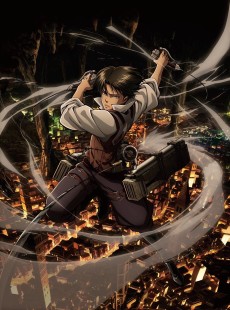
Attack on Titan: No Regrets
This prequel to megahit Attack on Titan answers the questions: How did Captain Levi of the Survey Corps go from street thug to humanity's strongest soldier? And how did Commander Erwin become a cold, calculating leader, ready to sacrifice anything to save the human race? The fires that forged this bond of loyalty and trust were intense indeed!
(Source: Anime News Network, revised)
📺Anime Details
📝Editorial Analysis
The smell of wet brick and blood hangs thick in the air—not from a battlefield, but from a narrow alley behind a brothel in Shiganshina’s underbelly, where a teenage Levi wipes his knife on a dead man’s coat, knuckles split and trembling, eyes already empty. Not numb. Not broken. Empty, like a well drained dry—because every choice here is subtraction: loyalty traded for survival, mercy swapped for momentum, identity shaved off layer by layer until only function remains. That’s not backstory. That’s the first breath of Attack on Titan: No Regrets.

This isn’t fantasy as escape. It’s fantasy as autopsy. The steampunk gears grind, yes—but they grind on people. The kaiju-scale Titans loom offscreen, but their shadow is already crushing Levi’s spine before he ever holds a blade with purpose. What makes No Regrets singular isn’t its military structure or orphan origin—it’s how it weaponizes doubt. Every order Erwin gives, every alliance Levi forges with bloodied hands, every time a comrade dies mid-sentence—it all lands with the weight of irreversible arithmetic. You don’t feel heroic. You feel accountable. You think about what silence costs. You wonder if conviction is just trauma with better posture.
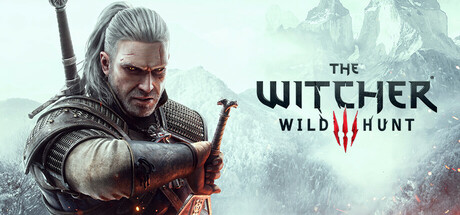
That same emotional DNA pulses through The Witcher 3: Wild Hunt, where Geralt tracks Ciri across a continent rotting from war and myth alike—not for glory, but because love has become a kind of duty you can’t outlive. The player review nails it: “DLC announced 11 years after release, my favourite game keeps getting better…” That longevity isn’t about content volume—it’s about emotional residue. Like Levi and Erwin, Geralt doesn’t get clean victories. He gets compromises that echo in his posture, in the way he pauses before speaking to Yennefer or Triss—not out of indecision, but because every word risks another fracture. The dark fantasy isn’t scenery; it’s the light you refuse to let in.
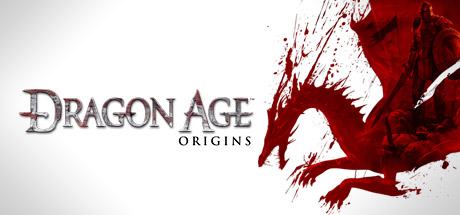
Then there’s Dragon Age: Origins, where your noble dwarf or city elf doesn’t just fight darkspawn—they inherit a legacy already stained. The pause-attack mechanic isn’t just tactical; it’s moral pacing. You freeze time mid-battle to weigh whether to save a templar who’ll burn mages later—or let him bleed out now. The player says it outright: “the story is great and its pause attack mechanic is amazing… help a lot to strategist your tactic…” But strategy here isn’t about damage numbers. It’s about calculating how much of yourself you’re willing to lose to win something that might not even matter in five years. Just like Erwin staring at a map, knowing the cost of the next column’s march isn’t measured in rations—but in names he’ll forget to grieve.
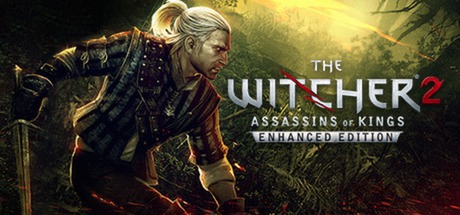
Even The Witcher 2: Assassins of Kings Enhanced Edition, praised for feeling “more thoughtfully designed than the next entry,” echoes this. Its political chaos isn’t backdrop—it’s architecture. Forces clash behind the scenes, yes—but Geralt stands in the seam, where ideology bleeds into blade-work. The player calls it “amazing” not for spectacle, but for consequence: every assassination, every betrayal, reshapes the ground beneath your feet. Like Levi choosing to follow Erwin not because he believes in the Survey Corps—but because he recognizes the same hollow calculus in Erwin’s gaze that lives behind his own eyelids.
This isn’t about liking grim stories. It’s about trusting art that treats sacrifice as grammar—not punctuation. People who love these pairings aren’t chasing catharsis. They’re drawn to characters who carry grief like muscle memory, who speak in half-truths because full honesty would collapse them, who make choices so heavy they leave fingerprints on your ribs long after the screen goes dark. They’re the ones who replay a conversation in The Witcher 3, not to change the outcome—but to hear Geralt’s voice crack just once more. They’re the ones who pause Dragon Age: Origins, not to optimize damage—but to stare at the faces of their party, wondering which one will vanish next, and whether they’d still choose them if they knew. They don’t want heroes. They want witnesses—to what it costs, truly, to stand upright in a world built on graves.
🎮17 Games That Match the Vibe


Match Dimensions Explained
❓Frequently Asked Questions
Why does The Witcher 3 keep coming up in 'Games Like Attack on Titan: No Regrets' lists?
Because both lean hard into morally gray choices with real emotional weight—like Geralt choosing between Triss and Yennefer while hunting Ciri, mirroring Levi’s brutal but human decisions in No Regrets. The dark fantasy tone, war-torn worldbuilding, and focus on tightly written character arcs (e.g., Geralt’s bond with Ciri vs. Levi’s mentorship of Erwin) hit the same narrative nerve.
Is there an Attack on Titan: No Regrets mobile game or official adaptation?
No—there’s no official mobile game, anime tie-in, or standalone adaptation of *No Regrets*. What *does* exist are tonally aligned games like *Dragon Age: Origins*, where you command squads in pause-and-plan tactical combat during the Fifth Blight, much like coordinating Survey Corps maneuvers against Titans—and its emotional narrative depth matches the manga’s grounded tragedy.
How does Chains compare to Dragon Age: Origins for someone who loved the quiet, tense moments in No Regrets?
It doesn’t—*Chains* is a chill match-3 arcade game about linking colored bubbles, totally missing the grim stakes and tactical tension of *No Regrets*. If you want that quiet intensity, go straight to *Dragon Age: Origins*: its pause-attack mechanic lets you freeze time mid-battle to position your dwarf warrior or elf mage just right—like planning a vertical maneuver before a Titan strike.
What’s the best game like No Regrets if I’m craving that gritty, emotionally heavy wartime vibe with tough choices?
Go with *The Witcher 2: Assassins of Kings Enhanced Edition*—it’s got war mobilizing across the Northern Kingdoms, morally impossible decisions (like betraying a friend to save a kingdom), and consequences that stick with you, just like Levi’s choices in Trost. Players even call it ‘more thoughtfully designed’ than its sequel for how tightly it weaves politics, trauma, and action.