
Baccano!
During the early 1930s in Chicago, the transcontinental train, Flying Pussyfoot, is starting its legendary journey that will leave a trail of blood all over the country. At the same time in New York, the ambitious scientist Szilard and his unwilling aide Ennis, are looking for missing bottles of the immortality elixir. In addition, a war between the mafia groups is getting worse. On board the Advena Avis, in 1711, alchemists are about to learn the price of immortality.
Based on the award winning light novels of the same name, this anime adaptation follows several events that initially seem unrelated, both in time and place, but are part of a much bigger story—one of alchemy, survival and immortality. Merging these events together are the kindhearted would-be thieves, Isaac and Miria, connecting various people, all of them with their own hidden ambitions and agendas, and creating lifelong bonds and consequences for everyone involved.
(Source: MAL Rewrite)
📺Anime Details
📝Editorial Analysis
The clatter of the Flying Pussyfoot’s wheels on rusted rails—metal on metal, rhythmic, relentless—while a cigarette burns down to ash between fingers that haven’t aged in eighty years. That’s the first breath of Baccano!: not silence before violence, but humming chaos—steam hissing, laughter cutting through gunfire, a jazz trumpet wailing from a saloon car as blood pools under velvet seats. You don’t see the bullet leave the barrel—you hear the click of a safety disengaging three scenes earlier, and only now, in the flicker of a match strike aboard the Advena Avis in 1711, do you understand why it mattered.
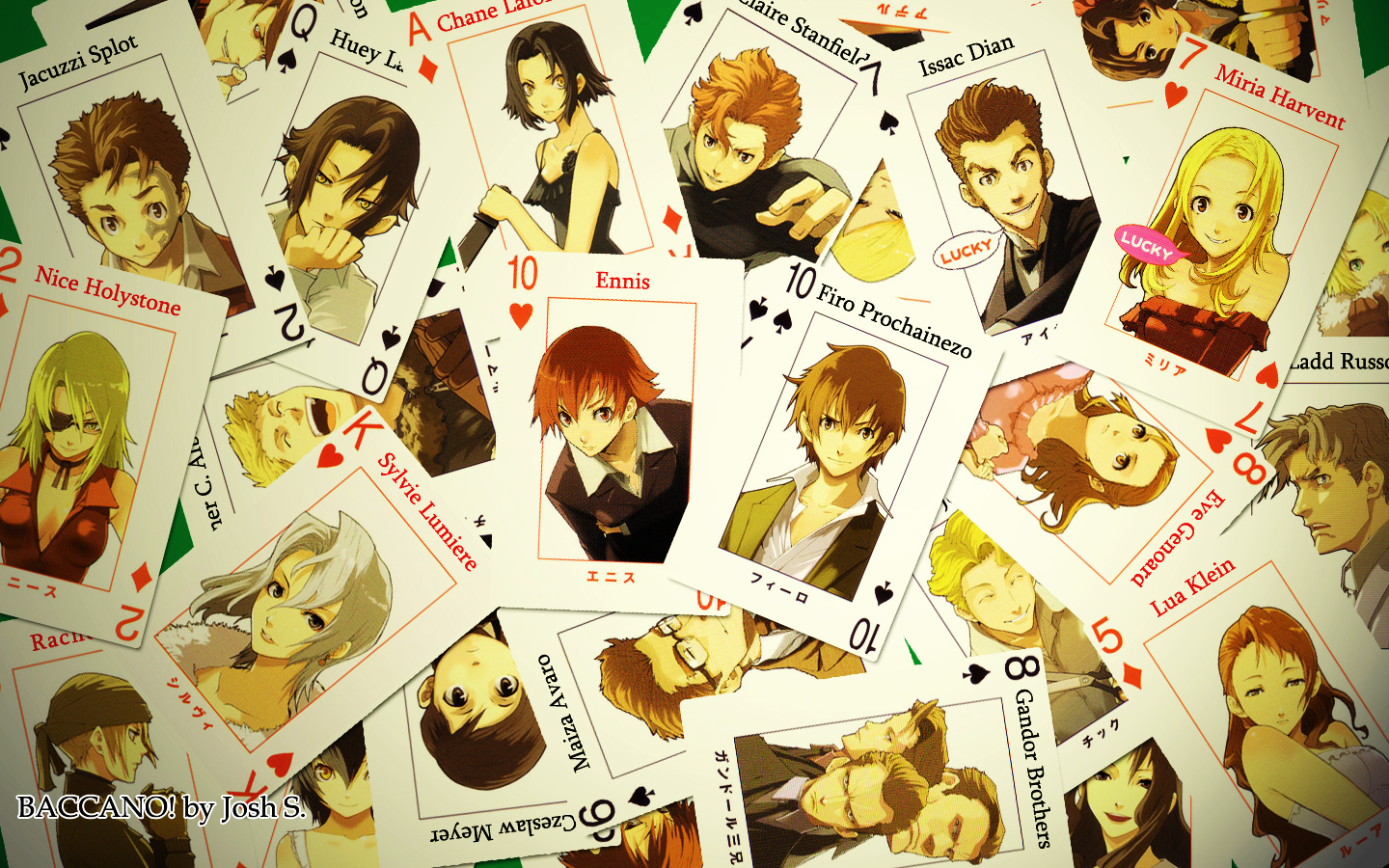
This isn’t just nonlinear storytelling—it’s temporal vertigo with soul. The feeling isn’t confusion; it’s recognition. You catch a glance, a gesture, a half-remembered line—and suddenly the Chicago mob war, the alchemist’s betrayal aboard the 18th-century galleon, and Szilard’s cold laboratory all breathe the same air. It’s noir, yes—but noir drenched in warm bourbon and train-yard soot, where immortality isn’t power—it’s weight, carried across decades like luggage too heavy to set down. You feel the loneliness of centuries, the fractured camaraderie of people who’ve outlived their own morals, the wry, exhausted joy of choosing kindness anyway—even when time has made it illogical.
That emotional DNA—the interplay of tactical precision and human messiness, of neon-lit moral ambiguity wrapped in period texture—resonates sharply in games built on layered consequence and quiet, deliberate agency. Hitman: Codename 47, for instance, drops you into a world where every guard’s patrol route, every dropped conversation, every misplaced umbrella is a narrative thread waiting to be pulled. Its description calls it “stealth and tactical problem solving to enter, execute and exit… with minimum attention and maximum effectiveness”—but the player review nails the soul beneath: “it’s jank, it’s old… but undeniably alive.” Like Baccano!, its brilliance lives in the gaps: the unplanned collision of two NPCs that creates an opening, the way a single disguise can rewrite your entire relationship to a scene—just as Firo’s accidental smile at a rival gangster in 1930 echoes in a flashback to his childhood in 1925, reframing everything.
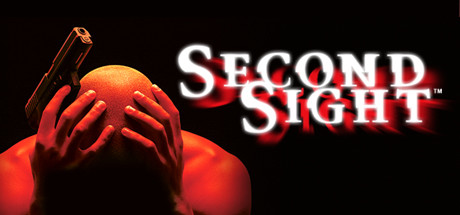
Then there’s Second Sight, whose description merges “psychological thriller narrative” with “paranormal psychic abilities” and “stealthy exploration.” One reviewer calls it “one of my favourite games of all time… loved for its story and mechanics”—not despite their wonkiness, but because they force you into embodied uncertainty. You rewind time not to fix mistakes, but to re-feel them—to stand again in the hallway where memory fractures, to hear the same voice crack twice, in two different decades. That’s Baccano!’s heartbeat: trauma and tenderness folded into the same gesture, the same train ticket stub, the same glass of whiskey shared across timelines.
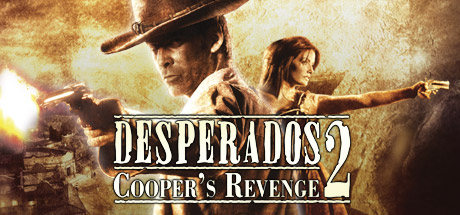
And Desperados 2: Cooper's Revenge, though its player review admits disappointment (“this game not so much”), still pulses with the same ensemble choreography: six distinct characters, each with irreplaceable skills, moving through a sun-baked, morally blurred frontier—not as heroes, but as survivors improvising justice in real time. Its description highlights “brand new tactical possibilities in a beautiful 3D environment,” but what lingers is the collaborative weight: one misstep unravels the whole plan, just as one character’s choice in New York ripples into a shootout aboard the Flying Pussyfoot. No one acts alone. Everyone carries someone else’s past.
These aren’t just stories about crime or immortality or assassins. They’re about how memory sticks to the ribs, how loyalty calcifies and softens across years, how a single train ride can hold a lifetime’s worth of near-misses and second chances. The person who’ll love this pairing? Someone who rewatches the bar fight in episode 12 not for the choreography—but to count how many times Jacuzzi glances at the clock, how often Chane adjusts her glove after lying, how long Claire holds her breath before lighting that third cigarette. Someone who saves Second Sight’s most emotionally brutal save file—not to reload, but to sit with it. Someone who plays Hitman not to win, but to linger: in the steam of a shower stall, in the pause before a trigger pull, in the quiet hum of a world that keeps turning—achronologically, beautifully, unforgettably—long after the credits roll.
🎮14 Games That Match the Vibe


Match Dimensions Explained
❓Frequently Asked Questions
Why does Hitman 2: Silent Assassin feel like Baccano! despite being a stealth assassin game?
Because both thrive on chaotic, interwoven timelines and morally grey characters operating in neon-drenched, morally bankrupt worlds—like how Hitman 2’s Osaka nightclub mission mirrors Baccano!’s train heist: overlapping perspectives, sudden betrayals (e.g., the traitorous Vittorio), and that same ‘everyone’s got a secret agenda’ energy. The Neon Noir dimension ties them tight—rain-slicked alleys, jazz-tinged tension, and quiet moments before everything explodes.
Is there a Baccano! video game adaptation?
No—there’s never been an official Baccano! game adaptation, licensed or otherwise. But fans looking for that same vibe often land on Second Sight: its fractured, psychological thriller narrative (with amnesiac protagonist John Vattic slipping between memories) and paranormal stealth mechanics echo Baccano!’s non-linear storytelling and ensemble cast of flawed, gifted outsiders.
How is Desperados 2: Cooper's Revenge different from Rogue Trooper if both are on the 'Games Like Baccano!' list?
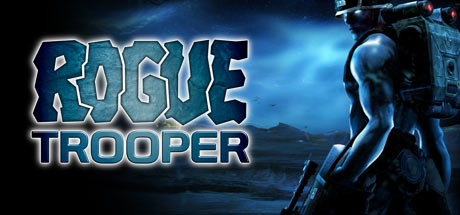
Desperados 2 leans into witty, character-driven chaos—think Doc McCoy’s precise timing and Isabelle’s dynamite banter—mirroring Baccano!’s ensemble banter and synchronized heists (like the bar brawl in Episode 4). Rogue Trooper, by contrast, is grittier and more solitary: you’re Ghost, a bio-chipped soldier haunted by digitized squadmates’ voices, echoing Baccano!’s themes of loyalty and legacy—but with PS2-era rawness and war-torn Nu Earth instead of 1930s New York glamour.
What’s the best 'Games Like Baccano!' pick if I want that late-night, rain-on-the-windowpane, morally complicated vibe?
Second Sight—hands down. Its moody, fog-laced asylum sequences, psychic flashbacks that rewire reality mid-mission, and protagonist John Vattic’s slow unraveling mirror Baccano!’s melancholy grandeur and layered moral ambiguity. Plus, that 72 Metacritic score and player review calling it ‘one of my favourite games of all time’? Yeah—it *gets* the vibe.