
Elfen Lied: Just How Did the Young Girl Arrive at Those Feelings?
📺Anime Details
📝Editorial Analysis
The silence after the blood stops dripping. Not the scream—those are sharp, brief—but the silence: a girl’s bare feet on cold linoleum, her breath shallow, her eyes wide and unblinking as she stares at her own hands, slick and red, while a single drop falls from her fingertip onto the floor tile. No music swells. No voiceover explains. Just that suspended, suffocating stillness—where horror isn’t in the gore, but in the sudden, quiet collapse of self-recognition.
That’s Elfen Lied: Just How Did the Young Girl Arrive at Those Feelings?’s atmosphere—not dread as spectacle, but disorientation as texture. It doesn’t ask you to fear the monster; it makes you feel the vertigo of watching someone unmake themselves in real time. Amnesia isn’t a plot device—it’s a lived tremor in every gesture. Dissociative identities aren’t theatrical switches—they’re whispered fractures in syntax, pauses too long between words, a smile that doesn’t reach the pupils. This is seinen not because it’s violent or adult-themed, but because it refuses comfort: no catharsis, no moral scaffolding, just the raw, unvarnished weight of trauma settling into bone. You don’t watch it to understand why she kills—you watch to feel how memory refuses to cohere, how love and violence coil in the same neural pathway, how a body can hold both tenderness and rupture without resolution.
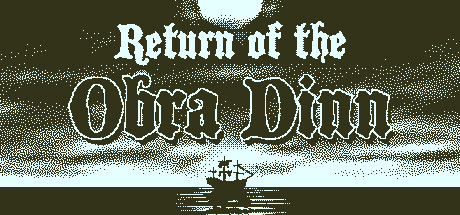
Among games, Return of the Obra Dinn shares this exact emotional DNA—not in subject, but in structure and silence. Its 79-scored mastery lies in “Mystery & Detective, Emotional Narrative, Adult & Dark Seinen”—and crucially, in what it withholds. Like Lucy staring at her hands, the player pieces together fate from frozen, fragmented moments: a sailor’s last breath caught mid-scream, a captain’s hand clutching a locket, a shadow stretching across a deck—but never the full context, never the interior life before the snap. There’s no exposition dump, no villain monologue—just evidence that accumulates like scar tissue. The emotional narrative isn’t told; it’s assembled, and the ache comes from the gaps—the silences between frames, the weight of conclusions drawn in solitude. That’s the same hollow resonance as Lucy’s amnesia: truth isn’t revealed—it’s reconstructed, and always incomplete.
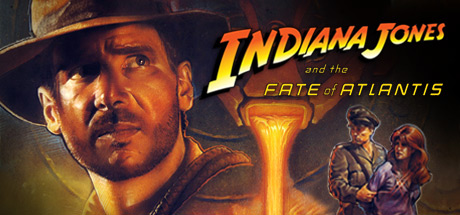
Then there’s Indiana Jones® and the Fate of Atlantis™, rated 71 for “Mystery & Detective, Adult & Dark Seinen”, set in 1939 with Nazi agents hunting a weapon “more dangerous than the atom bomb.” The player review calls it “An archaeological wonder trapped in amber.” That phrase—trapped in amber—is key. Like Lucy’s psyche, the past here isn’t linear history; it’s fossilized, pressurized, suddenly volatile when disturbed. Indy doesn’t solve puzzles—he unearths consequences. Every artifact he touches carries ideological weight, every tomb holds buried ideology made flesh. The darkness isn’t supernatural evil—it’s the chilling banality of ideology weaponized, echoing how Lucy’s powers aren’t chosen, but inherited, biologically coded, socially condemned. Both works treat trauma as archaeology: you dig, you find shards, and what emerges isn’t clarity—it’s density, layered meaning you carry forward, heavy and unresolved.
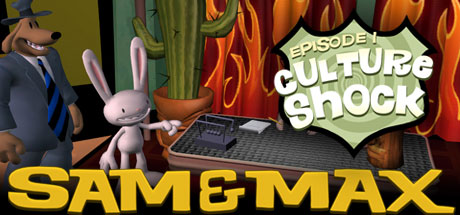
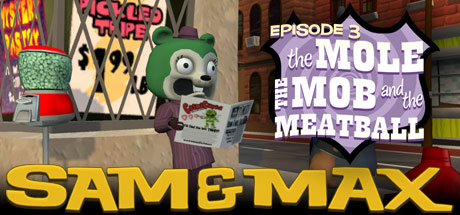
And strangely, the Sam & Max episodes—101, 103, and 104—all scoring 71 for “Mystery & Detective, Adult & Dark Seinen”—resonate not through tone, but through structural dissonance. Their descriptions teem with surreal escalation: child stars “wreaking havoc”, a mafia-free playland hiding an underground operation, Abe Lincoln “lost” amid pudding embargoes and federally mandated hugs. Player reviews note their “legendary” status and technical quirks (“download TTres to play in 1080p”), but what binds them to Elfen Lied is the jarring juxtaposition—absurdity pressed against genuine stakes. Lucy’s pink hair and school uniform beside arterial spray; Sam’s deadpan noir delivery over cartoonish chaos; Max’s manic energy orbiting real institutional rot. It’s the same tonal fracture: humor isn’t relief—it’s pressure release, a way the psyche copes when logic fails. The “Adult & Dark Seinen” tag fits not because of gore or sex, but because all these works trust the audience to hold contradiction: tragedy and slapstick, innocence and atrocity, silence and screaming—all vibrating at once.
This pairing isn’t for fans of “dark stories” or “strong heroines.” It’s for the person who re-watches a scene three times not to catch a detail, but to sit inside its unease—who saves a game file not to progress, but to linger in the pause before the choice—and who recognizes that the most devastating moments aren’t loud, but still: a drop of blood falling, a locket snapping shut, a meatball rolling under a desk, a girl’s fingers trembling—not with rage, but with the unbearable, quiet question: Whose hand is this?
🎮15 Games That Match the Vibe




Match Dimensions Explained
❓Frequently Asked Questions
Why does Return of the Obra Dinn feel like Elfen Lied’s emotional gut-punch but with deduction instead of blood?
Because both hinge on piecing together trauma through fragmented, visceral moments—like Obra Dinn’s silent, looping death scenes echoing Lucy’s fractured memories in the asylum flashbacks. You don’t just solve a mystery; you *witness* irreversible consequences, and that slow dawning of empathy (e.g., recognizing the cook’s final act of sacrifice) hits with the same quiet devastation as when Lucy finally whispers 'I’m not a monster' in Episode 13.
Is there a Sam & Max game that adapts Elfen Lied’s tone—or is it all just cartoon violence?
No direct adaptation exists—but Sam & Max 104: Abe Lincoln Must Die! nails the tonal whiplash: absurd satire (like the pudding embargo) suddenly pivots into eerie, unsettling weight (the scene where Max stares blankly at a child’s drawing of a bleeding Lincoln). It’s not about trauma like Elfen Lied, but it shares that same jarring shift from dark comedy to something quietly chilling—just like how Elfen Lied uses slapstick gags before cutting to Lucy’s trembling hands.
How does Indiana Jones and the Fate of Atlantis compare to Return of the Obra Dinn for someone who loved Elfen Lied’s slow-burn dread?
Obra Dinn builds dread through silence and consequence—every clue forces you to confront mortality. Fate of Atlantis trades that stillness for tense, time-pressured archaeology: think Indy racing through the Temple of Poseidon while Nazi agents close in, mirroring Lucy’s frantic escapes in the forest. Both make you feel the weight of history pressing down—not with gore, but with stakes that tighten like a noose.
What’s the best game like Elfen Lied if I want that mix of psychological unease and dry, adult humor?
Sam & Max 103: The Mole, the Mob and the Meatball—it’s got the exact vibe: Max’s deadpan cruelty (“I’ll file this under ‘Things That Should’ve Stayed Buried’”) contrasts with genuinely disturbing undertones, like the casino’s hidden torture chamber disguised as a kiddie ride. That dissonance—laughing at Sam’s one-liners while your stomach drops at what the ‘meatball’ really is—mirrors how Elfen Lied uses childish motifs (bunnies, nursery rhymes) to frame unbearable pain.