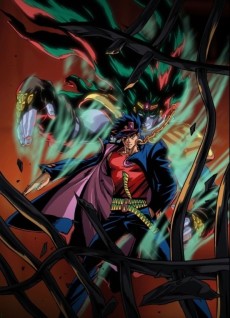
JoJo's Bizarre Adventure (2000)
Kujo Jotaro is a normal, popular Japanese high-schooler, until he thinks that he is possessed by a spirit, and locks himself in prison. After seeing his grandfather, Joseph Joestar, and fighting Joseph's friend Muhammad Abdul, Jotaro learns that the "Spirit" is actually Star Platinum, his Stand, or fighting energy given a semi-solid form. Later, his mother gains a Stand, and becomes sick. Jotaro learns that it is because the vampire Dio Brando has been revived 100 years after his defeat to Jonathan Joestar, Jotaro's great-great-grandfather. Jotaro decides to join Joseph and Abdul in a trip to Egypt to defeat Dio once and for all.
📺Anime Details
📝Editorial Analysis
The air in the Joestar mansion is thick—not with dust, but with weight. Jotaro stands motionless, eyes locked on his own trembling hand as Star Platinum flickers into existence: a golden silhouette wreathed in silent violence, fingers curling like a clenched jaw. No fanfare. No music swells. Just the low, guttural crack of bone—Abdul’s knuckles splitting under unseen force—and the sudden, nauseating realization that this isn’t possession. It’s awakening. And it’s already too late for innocence.
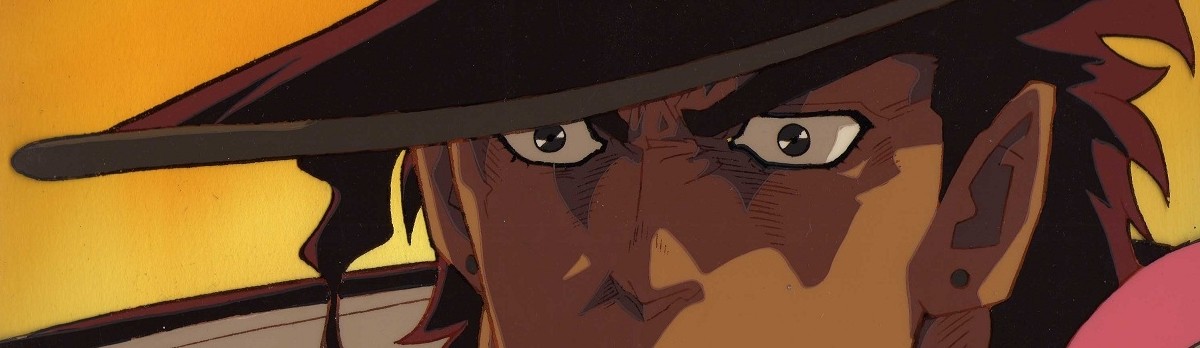
That moment isn’t about power—it’s about irreversibility. JoJo's Bizarre Adventure (2000) doesn’t trade in wonder or discovery; it trades in consequence. Every Stand manifests like a scar made visible—brutal, personal, unignorable. The horror isn’t in monsters leaping from shadows, but in the slow, suffocating realization that your body, your family, your bloodline has been marked by something ancient and hungry. The urban fantasy isn’t whimsical—it’s asphalt and hospital corridors lit by flickering fluorescents, where a mother’s fever isn’t illness but invasion, where travel isn’t adventure but a grim pilgrimage toward a vampire who remembers your grandfather’s face. This anime makes you feel vertigo: the ground tilting not from spectacle, but from the sheer, staggering history pressing down—100 years of grudges, genetic curses, and inherited rage folded into a single stare between two men who’ve never met but already know each other’s bones.
That same vertigo hums through Hollow Knight. Its description promises “an epic action adventure through a vast ruined kingdom of insects and heroes”—but what lingers is the melancholic exploration, the way every cavern breathes decay, every abandoned chapel echoes with names you’ll never hear spoken aloud. A player writes: “Beautiful art style. Great OST. Lovely story.” Not “fun” or “exciting”—lovely, as if beauty here is inseparable from sorrow. Like Jotaro walking Tokyo’s rain-slicked streets knowing Dio’s shadow stretches across continents, Hollow Knight’s protagonist moves through Hallownest not to conquer, but to witness collapse—its ruins aren’t backdrops; they’re epitaphs written in chitin and silence.
Then there’s DARK SOULS™ III, whose description declares it “the latest, ambitious chapter” in a series defined by darkness—but the player review cuts deeper: “Why Do We Still Reach for the Fire When It Is Dying?” That question is JoJo’s core tension. Jotaro doesn’t fight to win—he fights because stopping means letting his mother fade, letting Dio rewrite time itself. There’s no victory condition, only persistence. The game’s “Embrace The Darkness” isn’t nihilism—it’s the same grim, clear-eyed resolve Jotaro shows when he stares down Dio’s Stand, not with hope, but with the quiet certainty that some lines cannot be uncrossed. Both refuse catharsis. They offer only the weight of choice, again and again.
Even Disciples II: Gallean's Return, buried in its jank and dated systems, resonates in its JRPG Narrative dimension. Its description frames a war against “a shadow of evil” over Ancaria—but the player calls it “Best Disciples ever… Awesome atmosphere and gameplay!” That atmosphere—the sense of layered lore, fallen empires, and moral exhaustion—is JoJo’s terrain too. Joseph’s weary sarcasm, the way history repeats in posture and scar tissue, the way every battle feels less like a skirmish and more like a footnote in a war older than nations—all echo in Disciples’ turn-based gravity, where every spell cast and unit lost carries the sigh of centuries.
This isn’t for the casual viewer who wants clean arcs or easy triumphs. It’s for the one who watches Jotaro’s first Stand activation and feels their throat tighten—not at the power, but at the loneliness of it. For the player who walks Hollow Knight’s Abyss not to “beat” it, but to sit beside its crumbling statues and feel the silence settle in their ribs. For the person who reloads after a Dark Souls death not out of frustration, but because the act of rising again matters—not as progress, but as defiance. These pairings speak to those who find beauty in weariness, clarity in dread, and courage not in shouting, but in standing still—hand outstretched, golden fist coiled, waiting for the next inevitable, devastating crack.
🎮24 Games That Match the Vibe












Match Dimensions Explained
❓Frequently Asked Questions
Why does the 'Stardust Crusaders' Cairo fight feel so different from Hollow Knight's Abyss battles?
Great question—it’s all about rhythm and consequence. In JoJo’s 2000, that Cairo duel is hyper-stylized, turn-based with precise timing windows for Stand clashes (like Jotaro vs. DIO’s ‘The World’ stop-time counters), while Hollow Knight’s Abyss fights rely on atmospheric dread, stamina management, and reactive dodging—think facing the Watcher Knights in Deepnest, where one mistimed nail swing or missed shade cloak can end you instantly. Both demand mastery, but JoJo leans into theatrical, frame-perfect reads; Hollow Knight leans into environmental tension and melancholic persistence.
Is there a JoJo's Bizarre Adventure anime adaptation game that actually captures the Stardust Crusaders vibe?
No—not really. The 2000 game *is* the closest official adaptation of Stardust Crusaders, and even it’s unique: no other JoJo title replicates its real-time 3D arena brawling with Stand-specific hitboxes and dramatic camera zooms during ‘ORA ORA’ combos. Later games like *Eyes of Heaven* go full crossover chaos, and *All-Star Battle R* ditches the 2000’s gritty desert aesthetic and deliberate pacing for flashy, combo-heavy spectacle—so if you want that specific Cairo-to-Cairo road trip tension? You’re stuck with the 2000 original.
How does Disciples II: Gallean's Return compare to JoJo's Bizarre Adventure (2000) for story-driven tactical weirdness?
They’re cousins in tone but opposites in execution. JoJo 2000 is cinematic, character-forward, and built around iconic 1v1 Stand duels with visual flair (like Avdol’s Magician’s Red igniting mid-air), while Disciples II is grid-based, party-driven, and steeped in grim JRPG worldbuilding—imagine strategizing Khoura’s necromancer unit to flank an undead legion in the Ashen Wastes, all while soaking in that haunting, lore-dense atmosphere fans praised as ‘awesome’. Neither has combos—but both deliver bizarre, emotionally charged stakes with zero irony.
What’s the best game like JoJo’s Bizarre Adventure (2000) if I just want that lonely, stylish, ‘walking through ruins while the OST swells’ vibe?
Hollow Knight nails it—hands down. Think of wandering Hallownest’s crumbling City of Tears at dusk, rain pattering over your beetle-shell helmet as the soundtrack swells with melancholy strings, mirroring how JoJo 2000 makes the Egyptian desert feel vast and mythic between fights. Both use silence, architecture, and score to build weight—and yes, that same ‘melancholic exploration’ dimension ties them together in the match list (both scored 80 there). Just swap Stand cries for Nailmaster Oro’s quiet wisdom, and you’re spiritually home.