
KILL BLUE
Juuzou Oogami is a legendary hitman who has never failed an assignment, no matter how impossible. One day, after wiping out a powerful organization, he is stung by a mysterious wasp and collapses. When he wakes up, the fearsome 39-year-old assassin has been transformed into a 13-year-old boy!
Before he can even process what happened, his boss delivers a new order: “In that body, infiltrate a middle school.”
What awaits him is an unexpected school life filled with colorful classmates, youthful chaos, and looming danger. Can Juuzou ever return to his original form? Or will the assassins closing in on him end his second life before it even begins!?
(Source: Official Site)
📺Anime Details
📝Editorial Analysis
The chalk dust hangs in the afternoon light like suspended gunpowder—just before the bell rings, just after Juuzou Oogami, now thirteen, blinks once too slowly in homeroom, his knuckles white around a pencil he’s snapped in half. Not from frustration. From recognition: the angle of the teacher’s wrist as she writes on the board matches the exact grip he used to chamber a round in a suppressed Walther PPK. His body is small. His reflexes are still lethal. The dissonance doesn’t scream—it settles, cold and quiet, like a silencer screwed onto a barrel you didn’t know was loaded.

That’s the atmosphere of KILL BLUE: not chaos, but surreal calibration. It’s the feeling of standing perfectly still inside a storm that’s been politely asked to pause for roll call. You’re never sure whether to laugh because the absurdity is so precise—or because the violence is so contained, folded into lunchtime banter and clubroom negotiations. This isn’t parody dressed as action; it’s action wearing school uniform polyester, breathing the same air as puberty and protocol. It makes you feel off-kilter, yes—but also weirdly seen, like someone finally named the exhaustion of holding two irreconcilable truths at once: I am dangerous. I am required to raise my hand before speaking.
Which is why Hitman: Codename 47 lands with such eerie familiarity. Its description says: “As the enigmatic Hitman, you must use stealth and tactical problem solving to enter, execute and exit your assignment with minimum attention and maximum effectiveness.” That’s Juuzou trying to disarm a rival assassin during gym class without breaking stride in dodgeball—same economy of motion, same razor-thin margin between invisibility and exposure. A player review calls it “jank… old… but [you] need to read the guide before it’s playable”—and that’s the emotional DNA: competence buried under layers of inconvenient reality. Juuzou doesn’t get a tutorial. He gets detention. Both demand mastery despite the system’s friction—not because it’s smooth, but because the stakes won’t wait.
Then there’s Second Sight, described as “combining an atmospheric, psychological thriller narrative with paranormal psychic abilities, stealthy exploration and intense shooter action.” Its player review declares: “Second Sight, hands down, is one of my favourite games of all time… loved this game for its story and mec…” That trailing “mec” feels intentional—not a typo, but the breathless truncation of someone who’s spent hours wrestling with clunky controls only to be gut-punched by a moment where thought becomes action: a telekinetic shove, a memory flash mid-combat, a choice that rewrites causality. Juuzou’s age regression isn’t magic—it’s narrative physics, bending time and identity without explanation. Like Second Sight’s psychic leaps, it’s less about power and more about reorientation: how do you move when your center of gravity has been rewritten? When your voice cracks mid-threat and your target blinks, confused—not by danger, but by pitch?
And Rogue Trooper, set on “Nu Earth: a poisoned planet where endless war rages… but there are tales of a lone warrior. A man who kno—” —the description cuts off, just like Juuzou’s sentence when he tries to issue a threat and remembers he’s supposed to say “Yes, sensei” instead. The player review calls it “good hidden gem single player game. is like ps2 era game no bullshiet. recomended…” That raw, unpolished sincerity—no lore dumps, no exposition dumps, just boots on irradiated soil and a mission that hums in your bones—is pure KILL BLUE. Both trust you to absorb worldbuilding through posture, not prologue: the way Juuzou adjusts his too-big blazer sleeves before stepping into the hallway mirrors Rogue Trooper’s silent march across scorched trenches—each movement a quiet assertion of still here, still functional, still operating under compromised conditions.
This pairing isn’t for fans of “cool assassins” or “wacky school comedies.” It’s for the person who watches Juuzou meticulously fold origami cranes while calculating bullet trajectories, then pauses—not because he’s distracted, but because the paper’s crease echoes the stress fracture in a ceramic mug three desks over. It’s for the player who reloads Desperados 2 not for perfection, but for the tactile relief of watching a well-timed distraction unfold like clockwork—even if the animation stutters. They love systems that resist them, worlds that refuse to simplify, and characters who hold lethal knowledge in hands too small for the weight. They don’t want escape. They want recognition: that rare, electric thrill when fiction names the quiet tension of being both weapon and witness—and lets you breathe, just once, inside the paradox.
🎮20 Games That Match the Vibe

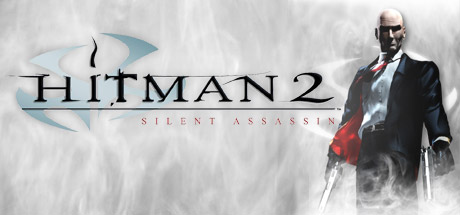

Match Dimensions Explained
❓Frequently Asked Questions
Why does KILL BLUE feel so much like Second Sight’s psychic stealth scenes?
Because both lean hard into that tense, cerebral stealth vibe where your mind is your main weapon—like Second Sight’s John Vattic using telekinesis to silently choke guards from behind a crate or freezing time to reposition during a hallway ambush. KILL BLUE mirrors that same deliberate pacing and psychological weight, especially in its interrogation sequences where reading intent matters more than reflexes.
Is there an anime or manga adaptation of KILL BLUE?
No official anime or manga adaptation exists yet—just the original manga by Tadashi Kawashima. But if you're craving that same neon-drenched, morally gray tactical grit, Hitman 2: Silent Assassin nails it with its rain-slicked Tokyo docks mission and Agent 47’s quiet betrayal arc—same ‘Neon Noir’ dimension, same razor-thin line between justice and vengeance.
How does Desperados 2 compare to KILL BLUE in terms of squad-based tactics?
Desperados 2 gives you a full crew—Cooper, Doc, Isabelle, and more—each with unique abilities you coordinate in real-time, like having Doc distract guards while Isabelle picks locks from afar. KILL BLUE is more lone-wolf, but the *feel* of planning every move around patrol routes and environmental tells? That’s pure Desperados 2 energy—especially in its Saloon Siege level, where one wrong sound triggers total chaos.
What’s the best KILL BLUE-like game if I want that moody, rain-soaked Neon Noir vibe with tactical patience?
Hitman: Codename 47—hands down. Think of its dimly lit Hong Kong hotel infiltration: flickering neon signs bleeding color onto wet pavement, guards moving in predictable loops, and that heart-pounding moment when you swap disguises mid-hallway. It’s janky, yes (check that Steam Community guide), but its oppressive atmosphere and methodical pacing are *exactly* what makes KILL BLUE click for fans of slow-burn tension.