
Lady Oscar: The Rose of Versailles
Raised from birth as a man, the Lady Oscar commands the palace guards at Versailles in the years before the French Revolution. Her beauty and noble spirit make her a shining figure in the eyes of both men and women but she is torn between her chosen life of service and duty to class and country and her own heart and desires. She lives as a noble amidst the opulence of Versailles but her keen senses and compassion are not blinded to the poverty of the French people.
(Source: Anime News Network)
📺Anime Details
📝Editorial Analysis
The candlelight flickers low in the Hall of Mirrors—not bright enough to hide the tremor in Oscar’s hand as she lifts her glass, not steady enough to erase the hollow behind her eyes. She’s just returned from a patrol past the city gates, where the scent of unwashed bodies and sour bread clung to the air like fog, and now she stands amid crystal chandeliers and powdered wigs, laughing at a joke she didn’t hear, her uniform immaculate, her posture flawless—and utterly alone. That moment isn’t about costume or crossdressing; it’s the quiet, suffocating weight of duality: duty folded over desire, nobility stitched over empathy, grace worn like armor against grief.
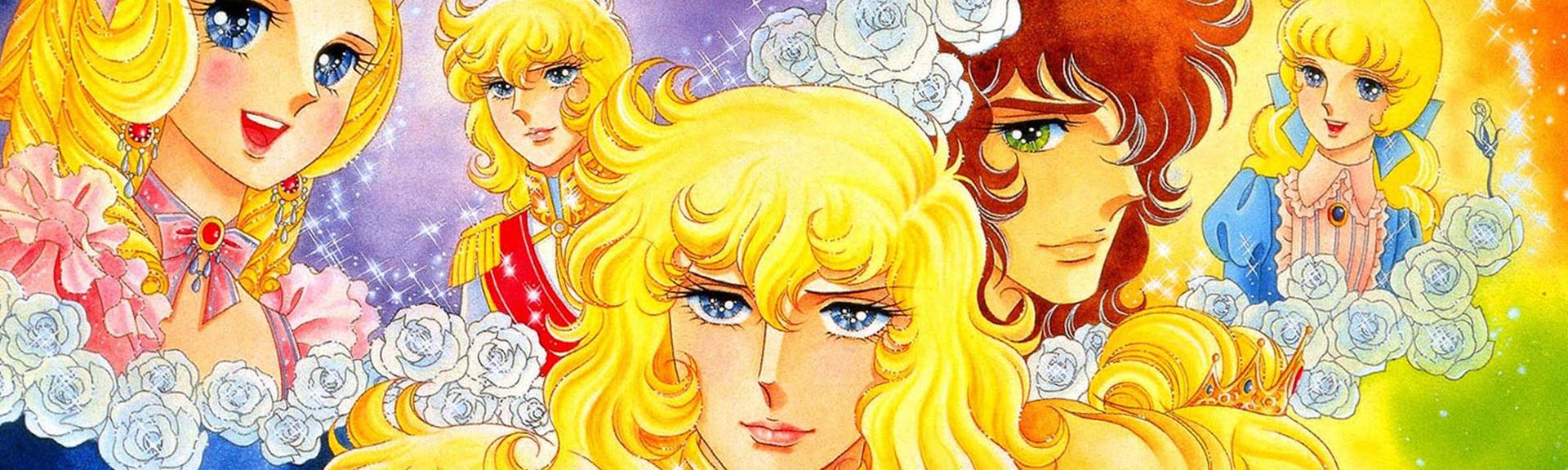
What makes Lady Oscar: The Rose of Versailles ache so deeply isn’t its historical setting—it’s how it renders intimacy as political risk. Every glance exchanged across a ballroom floor carries the gravity of class betrayal. Every whispered confession in a moonlit garden threatens to unravel an entire social order. You don’t just watch Oscar navigate Versailles—you feel the tension in your own shoulders when she salutes the queen while silently mourning a starving child she passed on the road. It’s shoujo not because of romance, but because it treats emotion as structural, as consequential as a treaty or a tax levy. Her crossdressing isn’t spectacle—it’s the first fracture in a system that demands identity be singular, legible, obedient. And when the Revolution comes, it doesn’t arrive with fanfare—it arrives as exhaustion, as inevitability, as the slow, terrible unraveling of everything she was taught to protect.
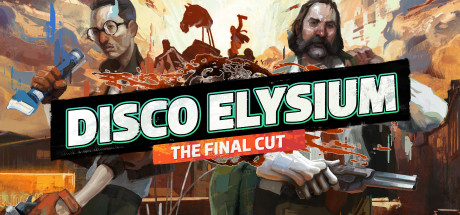
That same emotional architecture pulses through Disco Elysium - The Final Cut, where player reviews quote lines like “Capital has the ability to subsume all critiques into itself”—a chilling mirror of Oscar’s realization that even her compassion is absorbed, neutralized, and redeployed by the very monarchy she serves. Like Oscar, the detective walks a city built on inherited violence, his mind a battlefield of competing ideologies, his relationships constantly shadowed by systemic rot. The game’s “Political Thriller” and “Emotional Narrative” dimensions don’t just overlap—they bleed, just as Oscar’s loyalty to Marie Antoinette and her solidarity with the people cannot coexist without cost.
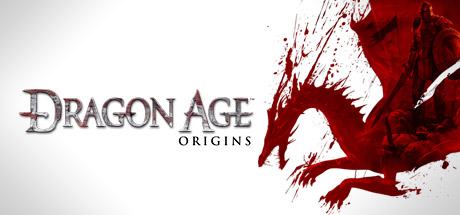
Then there’s Dragon Age: Origins, where player reviews praise its “pause attack mechanic”—not for tactical flair, but because it lets you breathe in the middle of chaos, to weigh consequence before action. Oscar does this constantly: pausing mid-command to soften her voice for a frightened page, hesitating before signing an arrest warrant, choosing silence over obedience. The game’s “Romance & Shoujo” dimension isn’t about flirtation—it’s about how love becomes resistance: a shared glance in the war room, a hand brushing during a council meeting, the unbearable tenderness of caring for someone whose survival depends on your discretion. Like Oscar, your choices in Ferelden aren’t just plot points—they’re moral fractures widening under pressure.
And Persona 5 Royal, with its “seamless transition between daily life and crisis”, echoes Oscar’s double existence with startling fidelity. One moment you’re tutoring a classmate in calculus; the next, you’re confronting a corrupt minister in a metaphysical palace shaped by collective denial. Player reviews highlight the “stunning soundtrack”—but what makes it resonate is how music swells not during battle, but during quiet train rides home, during rain-soaked confessions, during the unbearable beauty of ordinary time before everything breaks. Oscar lives in that same liminal rhythm: polishing sabers at dawn, dancing at midnight, writing letters she’ll never send—all while the ground trembles beneath Versailles’ gilded floors.
This pairing isn’t for fans of “historical drama” or “turn-based RPGs.” It’s for the person who’s ever held two truths in their chest at once—love and rage, duty and dissent, grace and grief—and felt them pull in opposite directions until something inside gave way. It’s for the reader who underlines passages in novels not for plot, but for the weight in a single comma; the player who reloads a save not to win, but to linger in a character’s hesitation one more time. These stories don’t offer catharsis—they offer recognition. Not “you’ll get through it,” but “yes, this is how it feels to stand at the edge of collapse—and still choose kindness.” That’s the quiet, devastating heart beating beneath every candlelit scene, every paused combat menu, every whispered line in a rain-slicked alley: the courage to remain human, even as the world insists you become a symbol.
🎮32 Games That Match the Vibe














Match Dimensions Explained
❓Frequently Asked Questions
Why does Prince of Persia keep showing up in 'Games Like Lady Oscar' lists?
Because both lean hard into romanticized historical spectacle with gender-fluid elegance—think Oscar’s military uniform and the Prince’s acrobatic grace amid ornate palaces and political intrigue. The game’s emphasis on swashbuckling action, morally ambiguous choices, and a central romance that shapes the narrative (like the Prince’s bond with Elika) directly echoes Lady Oscar’s blend of shoujo heart and revolutionary drama.
Is there a Lady Oscar video game adaptation?
No official Lady Oscar game exists—but fans often reach for Persona 5 Royal because it nails the same vibe: stylish Paris/Tokyo-inspired aesthetics, a charismatic, androgynous protagonist leading a secret society (Phantom Thieves ↔ Musketeers), and deep relationship-building with emotionally rich characters like Ann or Makoto who mirror Oscar’s loyalty and inner conflict.
How is Dragon Age: Origins different from Assassin’s Creed for someone who loves Lady Oscar’s political romance?
Dragon Age: Origins gives you slow-burn, choice-driven romance (like with Leliana—a bard-spy with Versailles-level poise and secrets) and emotional weight in every court scene, while Assassin’s Creed leans into parkour-driven tactical warfare across historical settings without meaningful romance systems. If you want Oscar’s heart *and* her swordplay consequences, DA:O delivers the former; AC delivers the latter’s scale—but not the intimacy.
What’s the best ‘Lady Oscar’-like game if I’m craving melancholy beauty and quiet rebellion?
Disco Elysium — seriously. Think of Kim’s quiet despair or Oscar’s conflicted loyalty to monarchy vs. justice: HMH’s crumbling city mirrors Versailles’ gilded decay, and your detective’s internal monologues (like the ‘Logic’ or ‘Empathy’ skills) echo Oscar’s constant self-negotiation. It’s not flashy—it’s all whispered confessions, rain-slicked alleys, and politics that break your heart before it breaks the system.