
Lucky☆Star
What’s the best way to eat dessert? Do twins really have a psychic connection? What kind of guys are into moe girls? These are the kinds of questions that float through the inquisitive mind of anime super-fan Konata Izumi. When she’s not lost in her favorite manga or logging hours in one of her online games, she’s debating the mysteries of the universe with the best friends a girl could ask for.
(Source: Funimation)
📺Anime Details
📝Editorial Analysis
Konata Izumi leans back in her chair, legs draped over the armrest, eyes half-lidded as she scrolls through a forum thread titled “Is it canon that Moe-chan’s hairclip has 3.72x more sparkle than standard moe accessories?” Her soda can is sweating faintly on the desk beside an open manga volume, a half-eaten melon soda Pocky stick poking out like a tiny flag. Outside the window, cherry blossoms drift—slow, weightless, unurgent. No crisis looms. No villain stirs. Just this: the quiet hum of a laptop fan, the soft click-clack of keyboard keys, and the warm, low-grade thrill of thinking about something delightfully trivial for ten uninterrupted minutes.

That’s the heartbeat of Lucky☆Star: not plot, but presence. It doesn’t ask you to care about stakes—it asks you to care about how Konata tilts her head when debating whether pudding should be eaten with a spoon or fork. Its atmosphere isn’t cozy—it’s suspended, like sunlight catching dust motes above a sunlit tatami mat. It makes you feel safe in smallness. It makes you think—not about meaning, but about texture: the crinkle of a candy wrapper, the rhythm of overlapping chatter in the school cafeteria, the way nostalgia smells like old manga paper and strawberry milk. There’s no urgency, no pressure to grow or change—just the gentle, recursive joy of noticing, sharing, and lingering. It’s healing not because it fixes anything, but because it validates the quiet pulse of ordinary attention.
Which is why Prince of Persia (2024) lands so strangely close—despite swords, sandstorms, and mythic stakes. Its listed dimensions include Healing & Slow Life, and its description calls it “an all-new epic journey” built by Ubisoft Montreal—but the player review hints at something quieter beneath the spectacle: “a new prince, new lands and a brand new story completely separate from the sands…” That word—separate—echoes Lucky☆Star’s ethos: a deliberate, almost defiant departure from inherited gravity. Both luxuriate in tactile slowness—the Prince’s acrobatic flow feels less like combat and more like choreographed daydreaming; Konata’s debates about moe taxonomy feel like sacred ritual. They share the same reverence for motion without momentum, for beauty that exists just to be observed.
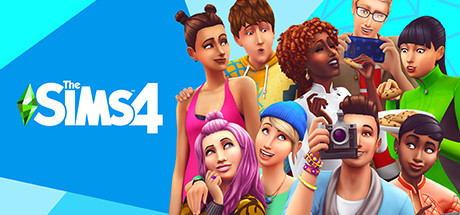
Then there’s The Sims™ 4, whose description invites you to “Play with life and discover the possibilities”—not conquer, not optimize, but play. Its listed dimension Healing & Slow Life aligns perfectly with Konata’s after-school sprawl across her futon, idly designing a dream house for her OC in MS Paint while listening to J-pop. The player review complains about DLC costs and bugs—but that complaint itself is Lucky☆Star-adjacent: it’s the voice of someone who cares deeply about the mundane architecture of play, who notices when the scaffolding cracks. Like Konata dissecting anime tropes, Sims players obsess over floor tile gradients, NPC moodlets, or whether a Sim’s “flirty” animation reads as sincere or absurd. Both are worlds where meaning emerges not from narrative climax, but from the careful, loving arrangement of tiny, silly, human-seeming details.
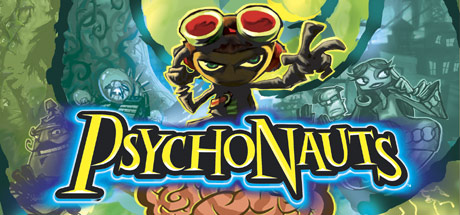
And Psychonauts, with its Comedy & Parody and Melancholic Exploration, taps into the same layered warmth. Its description frames it as “A Psychic Odyssey Through the Minds of Misfits, Monsters, and Madmen”—but the player review, bizarrely fixated on “milking… highly creamy men”, accidentally reveals what binds it to Lucky☆Star: a shared love of tonal layering, where absurdity and tenderness coexist without irony. Just as Konata’s otaku rants mask real emotional intelligence—and her teasing hides deep loyalty—Raz’s surreal mental landscapes are hilarious and achingly vulnerable. Both use parody not to mock, but to hold space: for anxiety, for fandom, for the weird, tender mess of being a teenager who feels too much and laughs too loud.
This pairing isn’t for people who want “escapism” in the grand sense. It’s for the ones who rewatch the same three minutes of Konata miming a mecha pilot just to catch how her ponytail swings; who spend hours arranging a Sims’ bookshelf by color and genre and spine font; who pause Prince of Persia mid-leap just to watch light ripple across a dune. It’s for the quietly obsessive, the gently unhurried, the ones who find profound comfort in the exact shade of a melon soda’s fizz—or the precise weight of a joke that lands only because everyone in the room already knows the grammar of the punchline. They don’t need fireworks. They need this: the soft, sustained glow of being understood, one tiny, sparkling detail at a time.
🎮23 Games That Match the Vibe











Match Dimensions Explained
❓Frequently Asked Questions
Why does Prince of Persia keep showing up in 'Games Like Lucky☆Star' lists when it's an action-adventure game?
Great question—it’s all about the *Healing & Slow Life* and *Comedy & Parody* dimensions. While Prince of Persia (2024) has swordplay and platforming, its tone leans into gentle absurdity—like the Prince’s deadpan banter with the Dahaka or those deliberately over-the-top, anime-adjacent cutscenes where time rewinds mid-sarcastic remark. It shares Lucky☆Star’s rhythm of quiet character moments punctuated by sudden, self-aware silliness—not unlike Konata’s otaku rants colliding with serene shrine visits.
Is there a Lucky☆Star visual novel or dating sim adaptation?
No official visual novel exists—but *The Sims™ 4* is the closest functional stand-in for that slice-of-life, character-driven, low-stakes social simulation vibe. With custom content like the 'Lucky Star CC Pack' (fan-made outfits for Konata, Kagami, and Tsukasa) and mods that add anime-style UIs and school lot templates, you can recreate Tanagawa High’s classroom banter or the Konata-and-Chii couch-gaming scenes. Just skip the expensive DLCs—the base game’s enough for cozy, dialogue-heavy hangouts.
Psychonauts vs. Garry's Mod—which one captures Lucky☆Star’s chaotic classroom energy better?
Psychonauts wins hands-down for *structured* chaos: think Raz’s psychic projections turning Ms. Mowz’s jazz club into a surreal, fourth-wall-breaking musical number—very much like Konata hijacking the class blackboard with a chibi doodle that starts talking back. Garry’s Mod lets you *build* that chaos (e.g., rigging a physics-based 'Konata desk catapult'), but Psychonauts delivers the same rapid-fire parody, expressive facial animations, and affectionate satire of tropes—right down to its melancholic undercurrents, like Raz quietly processing grief while cracking jokes.
What’s the best 'Lucky☆Star-like' game if I just want to chill and laugh without pressure or grinding?
Go straight to *The Sims™ 4*—especially with the 'Get Together' and 'City Living' packs (or even free mods like 'Anime School Uniforms'). You can spend hours just watching your Sim mimic Konata’s lazy slouch during homeroom, trigger silly 'awkward anime sweatdrop' reactions during group chats, or host a 'moe-themed' tea party with exaggerated bowing animations. No timers, no fail states—just healing, slow-life pacing and comedy that lands because it *gets* the tiny, relatable rhythms of hanging out.