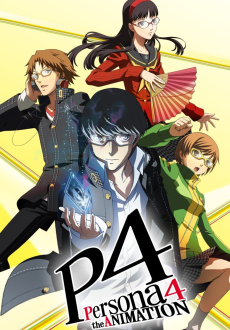
Persona 4 the Animation
Persona 4 takes place in a rural town named Inaba. There have been mysterious murders occurring whenever there was fog after heavy rain. There were also rumors about a channel on television airing only at midnight called Mayonaka TV, during which it is said that one can see his/her "other half" when staring at the TV screen.
After hearing about a recent unsolved murder which occurred during the fog, the characters—Narukami, Chie, and Yosuke—discuss how each of them had attempted to watch the mysterious TV channel and witnessed the murder victim. The protagonist later realizes that during midnight when the channel is on, his body can phase into his television set as a gateway to enter another world infested with shadows.
After discovering this, they all decide to explore. When first completely entering the world, dazed and confused, Narukami meets Teddie. Mayonaka TV and the town murders seem to have a connection. The murder victims may be merely victims of Mayonaka TV. Everyone decides that they will together try to solve the mysterious murders by exploring the hidden world of Mayonaka TV.
📺Anime Details
📝Editorial Analysis
The fog rolls in off the rice fields just before dusk—thick, wet, and wrong. Not mist, not haze, but something that clings to your throat like static, turning streetlights into smudged halos and making the distant crow of a rooster sound like a warning from another world. That’s when the TV flickers—not the one in your room, but the one you shouldn’t be watching: Persona 4 the Animation’s Mayonaka TV, bleeding midnight blue into the quiet living room of a borrowed house in Inaba. You don’t see a face at first. You see recognition: the slight tilt of a jaw, the way someone blinks too slowly—your own gesture, mirrored back with eerie calm. It’s not horror. It’s intimacy, folded inside dread.
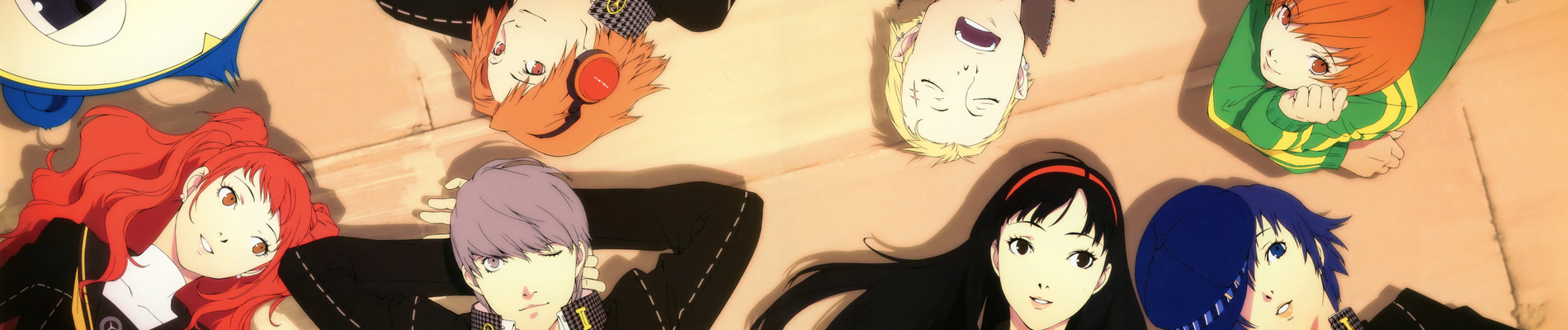
What makes Persona 4 the Animation ache so deeply isn’t its murder mystery or its Personas—it’s how relentlessly domestic it feels while unraveling the uncanny. The crunch of gravel under school shoes, the smell of rain on tatami, the weight of silence between friends who’ve known each other for years but never spoken this truth. It doesn’t ask “Who killed them?” as much as “What did we bury to keep living here?” Every foggy night is a slow exhumation—not of bodies, but of shame, loneliness, the versions of ourselves we locked away and called “not me.” It makes you feel seen, then exposed, then, quietly, held. Not by answers, but by the shared exhaustion of showing up—even when you’re tired of pretending you’re fine.
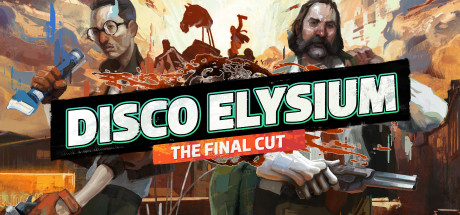
That emotional DNA pulses in Disco Elysium - The Final Cut, where the city of Revachol isn’t just a setting—it’s a sentient archive of failure, memory, and suppressed selfhood. Its description calls it a “groundbreaking role playing game” where you interrogate “unforgettable” people—but the player review cuts deeper: “Capital has the ability to subsume all critiques into itself. Even those who would critique capital end up reinforcing it instead.” That’s the same vertigo Persona 4 the Animation delivers when Yosuke stares at his reflection in the TV screen—not seeing a villain, but a boy who’s spent years apologizing for existing in his father’s shadow. Both works trap you in systems you helped build, then force you to name the parts of yourself you outsourced to survive.
Then there’s Max Payne and Max Payne 2: The Fall of Max Payne, two neon-noir tragedies vibrating at the same frequency of self-accusation. Their descriptions frame them as “violent, film-noir love stories” and “fugitive undercover cops framed for murder”—but the player review reveals the real texture: “Back in the PS2 era, my friends and I used to play Max Payne 1 and 2 together. We had a rule: once you died, you passed the controller to the next player.” That ritual—passing the burden, sharing the fall—mirrors how Persona 4 the Animation structures its ensemble: no one solves the fog alone; Chie’s fear, Yukiko’s isolation, Kanji’s rage—they’re not clues, they’re relays. The Max Payne games don’t let you outrun grief—they make you stumble through it, bullet-time slowing every misstep, just as Persona 4 the Animation lingers on a character’s pause before speaking, their breath catching like a snagged thread.
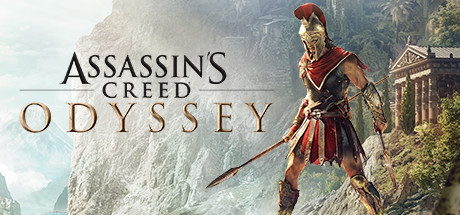
Jade Empire™: Special Edition, meanwhile, grounds myth in muscle and motion—its description invites you to “step into the role of an aspiring martial-arts master” and choose “the path of the open palm or the closed fist.” That duality echoes Inaba’s central tension: the self you present (polite, dutiful, rural) versus the self you suppress (angry, desiring, real). The player review’s frustration—“to get to launch I had to follow these instructions I got from Reddit…”—is oddly resonant: both Jade Empire and Persona 4 the Animation demand patience with systems that resist easy access. You don’t unlock power by leveling up—you earn it by sitting with discomfort long enough for the fog to lift just enough to see your own outline.
This pairing isn’t for fans of “cool powers” or “tight mysteries.” It’s for the person who watches Persona 4 the Animation and feels their chest tighten during the scene where Nanako hums while making tea—not because it’s sweet, but because it’s fragile, and you know, in your bones, how quickly that warmth could vanish. It’s for the player who reloads Disco Elysium not to solve the case, but to hear another line from the Pale, or who plays Max Payne 2 not for the shootouts, but for the way Max’s voice cracks when he says “I’m not built for this.” It’s for anyone who’s ever stared into a screen—at midnight, in fog, in silence—and whispered, “Is that… me?” Not hoping for a hero. Just needing proof they’re still here.
🎮21 Games That Match the Vibe







Match Dimensions Explained
❓Frequently Asked Questions
Why is Disco Elysium compared to Persona 4 the Animation?
Because both dive deep into a brooding, rain-slicked mystery where your protagonist’s inner voice is as loud and conflicted as the world around him—think Yu Narukami’s silent intensity mirrored in Detective Harrier’s fractured psyche and skill-check monologues. The neon-noir atmosphere of Night City’s decaying districts feels like a grittier, more existential version of Inaba’s foggy alleys and midnight confessions.
Is there a game adaptation of Persona 4 the Animation?
No—there’s no direct game adaptation of the anime itself, but Persona 4 Golden (not on this list) is the definitive interactive version of that story. What *is* here is Max Payne 2: The Fall of Max Payne, which shares the same tightly wound, dialogue-driven noir storytelling and tragic romance beats—like Max’s doomed bond with Mona echoing Yu’s slow-burn trust with Rise or Nanako’s quiet vulnerability.
How does Jade Empire compare to Persona 4 Golden in terms of story depth and character growth?
Jade Empire trades Persona 4’s small-town Japanese high school setting for a mythic, wuxia-inspired empire where your choices literally reshape your martial arts path—open palm (compassion) vs. closed fist (dominance)—similar to how P4G’s Social Links force moral reflection and growth. While it lacks Confidants’ intimacy, its branching narrative and morally gray mentors like Master Li echo the weighty, identity-shaping relationships in Inaba.
What’s the best game like Persona 4 the Animation if I want that moody, late-night introspective vibe with a detective twist?
Disco Elysium — The Final Cut is your match: imagine sitting in a rain-streaked hotel room at 3 a.m., your own thoughts arguing like party members (‘Logic’ vs. ‘Empathy’), just like Yu staring out his window after a Midnight Channel call. Its 74 Metacritic score reflects how deeply it nails that lonely, cerebral, emotionally raw tone—no flashy battles, just you, your head, and a city that feels as haunted as Tatsumi Port Island.