
Sleepy Princess in the Demon Castle
Sshhh! Princess Syalis is trying to get a good night's sleep. Some shut-eye. Forty winks. Catch some Z's. Long ago in olden times when people and demons lived together in—well, disharmony, really—a demon king kidnaps a human princess and imprisons her in his castle. Bereft, the princess's subjects beat their chests in anguish…until a hero arises to spearhead Project Rescue Our Princess! While waiting for her knight in shining armor, what's an imprisoned princess to do...? Teddy-bear guards with bat wings are all very well, but her dungeon cell is bo-o-o-ring! So, she decides to wile away the long hours by sleeping. Now if only she could get comfortable…and didn't suffer from insomnia...
(Source: VIZ Media)
📺Anime Details
📝Editorial Analysis
The thump of a demon’s head hitting stone—again—as Princess Syalis, curled like a comma in a pile of stolen pillow feathers, sleep-snores through the third consecutive failed escape attempt. Her eyelids don’t flutter. Her breathing doesn’t hitch. A guard’s horn snaps off mid-yell. A chandelier sways, unmoored by her latest “pillow fort reinforcement” (read: seismic destabilization via enchanted goose-down). No one yells. No one panics. The castle just… sighs. And keeps running.

That’s the quiet magic: Sleepy Princess in the Demon Castle isn’t about stakes—it’s about stillness inside motion. Not peace, not calm—but resonant suspension. You feel it in the way time thickens around Syalis: minutes stretch like warm taffy, hours blur into soft-edged loops of absurd labor (reweaving a demon’s tail into a dream-catcher, reupholstering a throne with stolen silk pajamas), and danger dissolves into background texture—like rain on a windowpane you’ve stopped noticing. It’s healing not because it’s gentle, but because it refuses urgency. The prison isn’t a cage; it’s a pressure-release valve for narrative tension itself. You exhale without realizing you were holding your breath.
That feeling—the slow life pulse beneath slapstick, the healing that arrives sideways through parody—is why Prince of Persia lands so deeply. Its description names “Healing & Slow Life, Comedy & Parody, Melancholic Exploration”—and yes, this isn’t the sand-timed urgency of old. This reboot leans into weightless movement, crumbling architecture that breathes like old lungs, and moments where the Prince pauses—not to fight, but to watch light fracture across mosaic tiles while wind hums through broken arches. A player review calls it “a new prince, new lands, a brand new story”—exactly how Sleepy Princess treats its own mythos: familiar tropes, gently unspooled, then re-knitted into something tenderly unserious. Both let melancholy linger like dust motes in sunbeams—not as sorrow, but as texture.
Then there’s The Sims™ 4, whose top dimensions are “Healing & Slow Life, Comedy & Parody”. Look past the player review’s bitterness about DLC pricing—zoom into the core loop: Sims making tea, napping in hammocks, rearranging bookshelves for no reason other than the pleasure of alignment. That’s Syalis reorganizing demon guard helmets into a perfect Fibonacci spiral before dozing off atop them. The game’s description says “Play with life and discover the possibilities”—not “win,” not “conquer,” but play. Like Syalis “playing” at captivity until the castle forgets it’s supposed to be menacing. The emotional DNA isn’t in the graphics or goals—it’s in the shared reverence for small, self-contained acts of domestic absurdity, repeated until they become ritual, then lullaby.
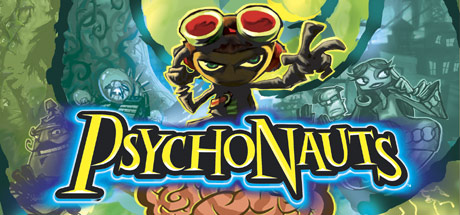
And Psychonauts, with its “Comedy & Parody, Melancholic Exploration” dimensions, clicks in a quieter way. Its description promises “A Psychic Odyssey Through the Minds of Misfits, Monsters, and Madmen”—which is just Sleepy Princess’s castle reframed as psychic topography. Every demon guard is a misfit mind: the overworked bureaucrat-demon filing sleep-deprivation complaints, the shy cyclops who only communicates via interpretive pillow-fluffing. The player review’s odd phrasing—“in-depth milking of certain highly creamy men”—feels unintentionally apt: both works luxuriate in the physical comedy of bodies out of sync with expectation, turning vulnerability (a demon’s social anxiety, a princess’s utter indifference to rescue) into something warm, weird, and strangely dignified.
Who lives for this? Not the adrenaline junkie chasing boss fights, but the person who replays the same five-minute sequence of a cat knocking things off a shelf—just to hear the clatter, just to watch the slow-motion tumble. The one who saves a game not to progress, but to sit on a virtual bench and watch NPCs walk past, or who sketches Syalis’s latest “bedsheet suspension bridge” in the margins of their notebook. They love stillness that hums, parody that hugs, melancholy that doesn’t ask for fixing. They don’t want to escape the world—they want to soften its edges, one feather pillow, one physics glitch, one perfectly timed thump, at a time.
🎮23 Games That Match the Vibe















Match Dimensions Explained
❓Frequently Asked Questions
Why is Prince of Persia listed as similar to Sleepy Princess in the Demon Castle?
Because both lean hard into comedic parody *within* a melancholic, atmospheric exploration framework — like when the Prince gets hilariously flustered mid-parkour after tripping over a rug, or Sleepy Princess nonchalantly naps atop a demon lord’s throne while he fumes. The 'Healing & Slow Life' dimension fits too: Prince of Persia’s quiet desert ruins and reflective moments between action sequences echo the castle’s cozy, unhurried pacing despite the chaos.
Is there a Sleepy Princess in the Demon Castle anime or game adaptation?
No official game adaptation exists — it’s still just the manga and anime. That said, fans often say *The Sims™ 4* feels like the closest spiritual cousin: you’re basically roleplaying Princess’s chaotic domesticity — building absurd demon-proof bedrooms, customizing sleepy outfits, and watching NPCs (like your Sim-demon roommate) react with deadpan exasperation to your latest 'nap fort' disaster.
How does Psychonauts compare to Sleepy Princess in the Demon Castle?
Both weaponize absurdity to soften emotional weight — Psychonauts’ Raz exploring a janitor’s guilt-ridden mind via sentient mops and sentient lint balls mirrors how Sleepy Princess turns demon captivity into a surreal home-improvement sitcom. And just like Princess casually reorganizing a demon’s lair while he sobs in the corner, Raz cheerfully unpacks trauma with cartoonish empathy — same Comedy & Parody + Melancholic Exploration combo.
What’s the best game like Sleepy Princess if I want that cozy, silly-but-slightly-wistful vibe?
Go straight for *The Sims™ 4* — especially without heavy DLC. Its low-stakes life sim rhythm (baking terrible cakes, redecorating a dungeon-themed basement, watching your Sim yawn through a ‘demon negotiation’ social) nails that ‘healing slow life’ warmth. Plus, player reviews confirm it’s built for gentle, self-directed chaos — exactly like Princess turning an evil castle into her personal nap resort.