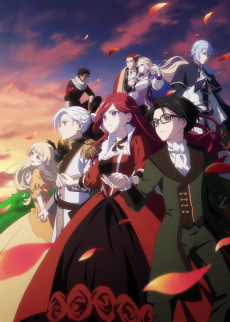
The Most Heretical Last Boss Queen: From Villainess to Savior
It’s one thing to get reincarnated as a righteous hero. It’s another thing entirely to get reincarnated as a villain! Our protagonist was just reincarnated into the body of Princess Pride Royal Ivy, the last boss and ultimate villain of her favorite otome game. But evil just isn’t her style, so she’ll use Pride’s powerful abilities to sow peace and love instead of discord! Can she change the fate of this vile villainess, or is her role in the story already rotten to the core?
(Source: HIDIVE)
📺Anime Details
📝Editorial Analysis
The first time Princess Pride Royal Ivy raises her hand—not to curse, not to command, but to catch a falling sparrow mid-air, its tiny chest heaving against her palm—time doesn’t slow. It softens. The wind hushes. The garden’s magic-laced jasmine thickens in the air, sweet and grounding. She doesn’t smirk. Doesn’t sigh. Just blinks, startled by the weight of something so small trusting her—her, the “last boss queen,” the villainess scripted to shatter kingdoms. That quiet, unguarded breath before she gently lifts the bird back to its branch? That’s the show’s heartbeat. Not spectacle. Not irony. Tenderness as rebellion.
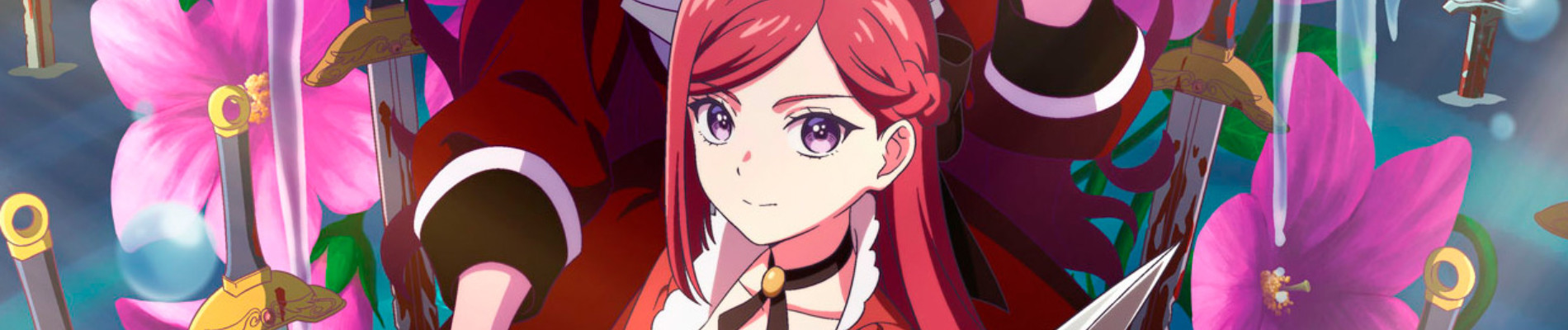
What makes The Most Heretical Last Boss Queen: From Villainess to Savior vibrate with such rare warmth isn’t its isekai setup or swordplay—it’s how it treats power as care, not control. Every superpower Pride wields—magic, royal authority, time-skip foresight—is rerouted through domestic intention: mending a servant’s sprained wrist with golden light, rewriting a treaty over tea with honeyed diplomacy, teaching sword forms to children who once trembled at her name. There’s no angst about fate being “rotten to the core.” Instead, there’s quiet insistence: that love isn’t naive when it’s chosen, again and again, in the face of narrative gravity. You don’t feel clever watching it—you feel held. Like the world itself exhaled, just for her.
That same emotional resonance flickers in Prince of Persia: Warrior Within—not in its Dahaka chases or dark fantasy grit, but in how time itself becomes a character you learn to cradle. The description calls it “the dark underworld of Prince of Persia,” and the player review calls the Dahaka chase “goated”—but what lingers is the Prince’s exhaustion, his weariness with memory, with consequence. When Pride chooses peace over prophecy, she mirrors that exhausted, hard-won agency—the kind that doesn’t shout victory, but lowers its shoulders after decades of running from inevitability. Both works treat time not as a puzzle to solve, but as scar tissue to soothe.
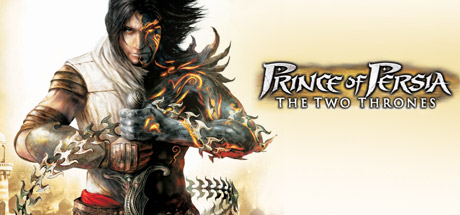
Then there’s Prince of Persia: The Two Thrones, where the Prince returns “to Babylon with his love, Kaileena… only to find his homeland ravaged by war.” The description frames it as shattered peace; the player review calls it “one of my best childhood games… still plays great.” That dissonance—between longing for safety and stepping into ruin—is Pride’s daily reality. She doesn’t arrive to fix a broken system from outside. She lives inside the wreckage, baking bread in a castle built on villainous lore, humming while mending a torn royal banner—not erasing the past, but stitching new meaning into its frayed edges. Like the Prince navigating Babylon’s ruins with Kaileena at his side, Pride’s strength isn’t in undoing history—it’s in tending the present with hands that remember every wound.
Even Dark Messiah of Might & Magic, with its “ferocious combat” and “dark and immersive” world, shares this DNA—not in tone, but in emotional narrative. Its player review praises it as “a fantastic melee combat game that still holds up,” yet highlights its narrative weight: “if you enjoyed Arx Fatalis…” That’s the thread—games where violence isn’t cathartic spectacle, but a grim language you learn to translate into something else. Pride’s swordplay isn’t flashy domination; it’s precise, protective, almost ritualistic—like the Dark Messiah’s brutal parries becoming acts of restraint. Both understand that true power isn’t in landing the final blow, but in choosing not to—and making that choice matter in a world that expects blood.
This pairing sings for the viewer who cries during grocery runs—not because life is sad, but because ordinary kindness feels like defiance. For the player who replays Warrior Within not for the Dahaka, but for the moment the Prince finally stops running and sits, just for five seconds, watching dust motes dance in a sunbeam through a ruined archway. For anyone who’s ever held a door open longer than necessary—not out of politeness, but as a tiny, stubborn act of yes, even when the story says no. These aren’t stories about winning. They’re about the weight of a hand placed gently on another’s shoulder, the warmth of shared silence, the unshakeable softness that persists, luminous and real, right in the center of the storm.
🎮19 Games That Match the Vibe


Match Dimensions Explained
❓Frequently Asked Questions
Why is Prince of Persia: Warrior Within recommended for fans of The Most Heretical Last Boss Queen?
Because both lean hard into the 'villainess-to-savior' arc through morally gray power and haunting consequences—Warrior Within’s Prince literally becomes a darker version of himself after absorbing the Dahaka’s curse, mirroring the Queen’s descent and redemption. The Dahaka chase sequences (especially in the Hourglass Wastes) deliver that same breathless, high-stakes tension as the Queen’s pivotal betrayals and comeuppances.
Is there an anime or game adaptation of The Most Heretical Last Boss Queen that captures the same vibe?
No official anime or direct adaptation exists yet—but Dark Messiah of Might & Magic nails the *emotional narrative* + *dark fantasy action* combo fans love: you play as a conflicted antihero (Kael) wrestling with corruption, betrayal, and redemption in real-time melee combat—like when Kael faces the corrupted Archmage in the Catacombs of Gloom, his choices echoing the Queen’s moral pivots.
How does Sacred Gold compare to Prince of Persia: The Sands of Time for someone who loves the Queen’s blend of spectacle and emotional stakes?
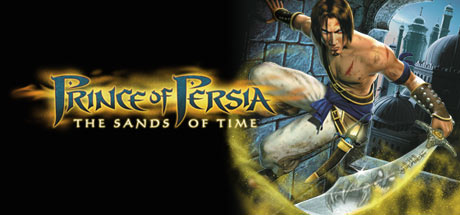
Sands of Time wins on emotional stakes and tight narrative pacing—its dagger-driven time rewinds let you *feel* the weight of every misstep, just like the Queen’s do-overs, while Sacred Gold leans into janky, loot-driven chaos (fighting orcs in Ancaria’s Bloodfen Marshes feels epic but emotionally hollow). One reviewer even called Sands of Time ‘tactical platforming that’s satisfying due to locked directions’—a perfect match for the Queen’s precise, consequence-laden decision-making.
What’s the best game like The Most Heretical Last Boss Queen if I want that brooding, atmospheric ‘fallen royalty’ mood?
Prince of Persia: The Two Thrones — it’s all about a ruler returning home only to find his kingdom broken, his identity fractured by shadow (the Dark Prince persona), and his love Kaileena tragically lost. That melancholy grandeur—like walking through Babylon’s ruined palace halls at dusk, hearing whispers of your own duality—is pure ‘fallen royalty’ energy, and scores 73 for its strong Action Spectacle + Time & Memory dimensions.