
BLEACH: Thousand-Year Blood War - The Calamity
📺Anime Details
📝Editorial Analysis
The air tastes like rust and burnt sugar—thick with the static of severed reiatsu, the low groan of collapsing spiritual pressure barriers, the sudden, wet shink of a blade parting bone that shouldn’t be there anymore. In BLEACH: Thousand-Year Blood War - The Calamity, it’s not just blood that spills—it’s memory. A Hollow’s scream fractures mid-air as Ichigo’s Getsuga Tenshō tears through its mask, but behind the flash of black-and-white reiatsu, you catch the flicker of a child’s face—his own, warped, half-erased by Quincy erasure. That moment isn’t spectacle. It’s grief made kinetic.
This isn’t war as strategy or conquest. It’s war as unraveling: time fraying at the edges, identities slipping like sand from clenched fists, gods who remember too much and forget exactly what matters most. The urban fantasy setting—Karakura Town’s quiet streets now cracked open to reveal inverted heavens and bleeding spirit realms—doesn’t feel like backdrop. It feels like skin peeled back, revealing the raw, pulsing nerve of consequence. You don’t watch this anime; you hold your breath between heartbeats, waiting for the next memory to dissolve—or worse, return, unbidden and sharp. It makes you think about how much of yourself is built on what you’ve been allowed to keep—and how violently that architecture can collapse when someone wields erasure like a scalpel.
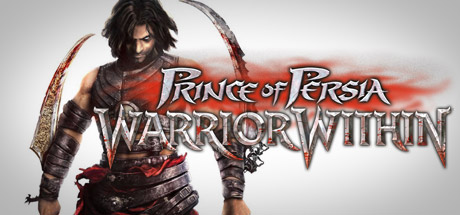
That same weight lives in Prince of Persia: Warrior Within™—not just in its “Dark Fantasy” dimension, but in the way Dahaka chases. Not as a boss, but as time’s grudge given teeth and shadow. Player reviews call it “goated”—but what they mean is inescapable, relentless, tied to choices that echo across timelines. Like Yhwach’s Sternritter erasing entire histories, Dahaka doesn’t just hunt the Prince—he hunts the aftermath of his past. Every dodge, every parry, carries the exhaustion of running from something you helped create. The “Time & Memory” dimension isn’t abstract here—it’s muscle memory turning against you, just like Ichigo’s Bankai destabilizing under the weight of inherited trauma.
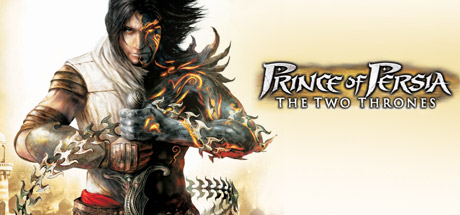
Then there’s Prince of Persia: The Two Thrones™, where the Prince returns home expecting peace and finds Babylon ravaged by war—a kingdom not just broken, but infected by its own corrupted sovereignty. His duality—the Light and Dark Prince—isn’t split-personality theatrics; it’s embodied contradiction, mirroring Ichigo’s fractured spiritual identity, his Hollow self no longer an enemy but a wound that won’t close. The player review notes it “still plays great”—but what endures isn’t the combat flow alone. It’s the dissonance: seeing your reflection twist in palace mirrors, hearing your own voice snarl back at you. That’s the same ache as watching Uryū stand before his fallen clan’s sigil, fingers trembling—not with rage, but with the silence where memory used to live.
And Black Myth: Wukong—with its “Mythology & Folklore” core and “Dark Fantasy” texture—lands with the same gravitas. This isn’t just spectacle; it’s cosmic accountability. Wukong’s rebellion isn’t heroic—it’s exhausted, layered with millennia of erased names and rewritten heavens. The player doesn’t just swing a staff—they reclaim motion from myth’s ossified bones. Like Ichigo confronting Yhwach’s “Sangvis Ferrum” doctrine—the idea that bloodline is destiny—the Monkey King fights not just gods, but the narrative itself that has imprisoned him. The gore isn’t gratuitous; it’s textural truth, proof that divinity bleeds, breaks, and remembers pain.
Who loves this? Not just fans of swordplay or shounen pacing—but people who feel relief when a story treats memory as physical terrain: uneven, scarred, haunted. People who replay games not for trophies, but to sit again in that moment when Dahaka’s shadow first falls across the screen—and recognize it as their own. People who watch BLEACH: Thousand-Year Blood War - The Calamity and don’t flinch at the gore, but lean in when a character’s eyes go hollow—not from fear, but from recognition. They’re the ones who understand that the deepest battles aren’t fought with blades or spells, but in the quiet, trembling second after the erasure hits—when you reach for a name, a face, a promise… and find only silence where your soul used to echo.
🎮26 Games That Match the Vibe


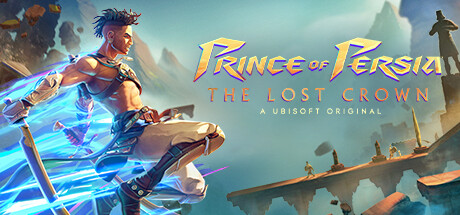
Match Dimensions Explained
❓Frequently Asked Questions
Why does Prince of Persia: Warrior Within feel like the closest match to BLEACH: TYBW’s intense chase scenes?
Because the Dahaka’s relentless, scripted pursuit sequences—where he bursts through walls and corners you in crumbling temples—mirror TYBW’s high-stakes, momentum-driven battles like Ichigo vs. Yhwach’s collapsing palace fight. The time-manipulation mechanics (rewind, slow) also echo Bleach’s flash-step timing and reactive dodging, not just as gimmicks but as core survival tools—just like in Warrior Within’s tense arena escapes.
Is there a BLEACH: Thousand-Year Blood War anime or game adaptation that captures the Calamity arc’s tone?
No direct game adaptation exists yet—but Prince of Persia: Warrior Within nails that same oppressive, gothic dread: think Babylon’s rain-lashed ruins, the Dahaka’s shadowy persistence, and the Prince’s morally gray descent—all echoing the Calamity arc’s weight, sacrifice, and visual grandeur. Even the player review calling Dahaka ‘still as goated as it was before’ mirrors how fans describe Yhwach’s chilling inevitability.
How does Black Myth: Wukong compare to Prince of Persia: The Sands of Time for BLEACH fans who love flashy, combo-heavy swordplay?
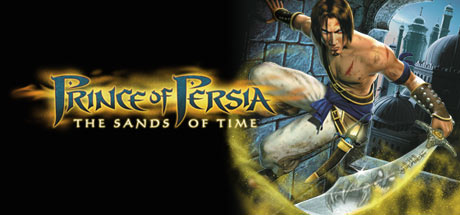
Sands of Time has tighter, puzzle-integrated acrobatics and precise dagger-based parries—like Ichigo’s early Bankai sparring with Byakuya—while Wukong goes full mythic spectacle: staff combos morph mid-air, transformations shift combat rhythm instantly (e.g., transforming into a mountain to crush enemies), and boss fights like Erlang Shen channel TYBW’s cinematic scale and layered abilities. Both score 84, but Wukong leans harder into ‘god-tier spectacle’; Sands of Time rewards tactical patience.
What’s the best game like BLEACH: TYBW if I want that ‘epic, mythic last-stand’ vibe with heavy emotional stakes?
Black Myth: Wukong—it’s built on folklore tragedy, with Sun Wukong’s fall, imprisonment, and defiant return mirroring Ichigo’s resolve against cosmic ruin. Scenes like the Jade Emperor’s shattered throne room or the final confrontation at Mount Huaguo deliver the same operatic gravity and visual poetry as TYBW’s ‘The Calamity’ climax. And yes, that 84-score isn’t fluke—the player reviews praise its ‘mythology & folkore’ depth and ‘dark fantasy’ tone, dead-on for Bleach fans craving soul-deep stakes.