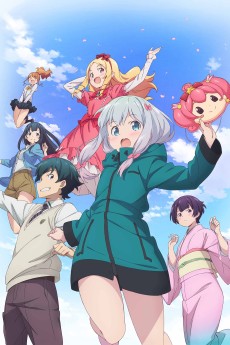
Eromanga Sensei
📺Anime Details
📝Editorial Analysis
The smell of instant ramen steam rising into the stale, warm air of a cramped Tokyo apartment—just before Sagiri’s trembling hand slides a freshly inked manga page across the desk, her eyes fixed on the floor, cheeks burning—not from embarrassment, but from the unbearable weight of being seen. Not judged. Not mocked. Seen. That quiet exhale after Masamune reads her words aloud, voice catching just once—no fanfare, no music swell—just two people suspended in the fragile, humming silence of mutual recognition. That’s Eromanga Sensei.
It doesn’t feel like a harem. It doesn’t play like ecchi. What it makes you feel is the low, persistent hum of creative labor—the ache in your wrist after hours of sketching, the hollow dread of a blank document, the way vulnerability pools behind a slammed door or a too-tight ponytail. This isn’t about conquest or wish-fulfillment; it’s about the tremor before confession, the exhaustion of hiding your voice, the slow, unglamorous unfurling of self-worth through shared drafts and half-finished panels. You think about how much courage lives in small things: a margin note passed under a sliding door, a line rewritten three times, a hand that almost reaches out—but stops, then lingers just long enough to mean something.
That emotional DNA pulses in Amnesia™: Memories, where romance isn’t built on grand gestures but on fragmented recollections stitched together with quiet urgency—memory as both barrier and bridge, just like Sagiri’s past trauma and Masamune’s buried grief over their mother’s writing. The game’s “Romance & Shoujo” and “Comedy & Parody” dimensions mirror the anime’s tonal tightrope: tender sincerity wrapped in self-aware absurdity, where a love letter might be delivered mid-slapstick chase, yet lands with real weight because both characters are trying, awkwardly, desperately, to say what they’ve held inside too long.
Then there’s Undertale, scoring 76 in those same dimensions—“Comedy & Parody, Romance & Shoujo.” Not because it’s about dating sims or school festivals, but because it treats emotional connection as mechanical, deliberate, hard-won. Choosing to spare instead of fight. Learning names. Remembering small things. Like Masamune learning Sagiri’s favorite pencil grade—or Toru remembering how to fold origami cranes without looking. Player reviews don’t mention romance systems; they talk about consequences, about kindness accumulating like ink on paper until it changes the whole story. That’s the core resonance: love as practice, not premise.
Even Disco Elysium - The Final Cut, with its 65 in “Romance & Shoujo, Comedy & Parody,” shares that same dissonant heart—where intimacy blooms in broken dialogue trees, where affection is negotiated through failed skill checks and drunken confessions, where the most tender moment might be parsing bureaucratic jargon with someone who listens. A player’s review quotes capital subsuming critique—but Eromanga Sensei does something quieter: it lets critique soften. Lets sarcasm become scaffolding. Lets irony hold space for sincerity until the irony cracks open. Both works treat emotional exposure as dangerous, necessary, and deeply, darkly funny—not because pain is trivial, but because surviving it together is the only thing funnier than despair.
Who loves this pairing? The writer who saves every draft—even the terrible ones—in a folder labeled “maybe someday.” The artist who sketches in margins during meetings, fingers stained with graphite, heart pounding at the thought of showing anyone. The player who replays dialogue branches not to optimize outcomes, but to hear that one line again: the one where someone finally says, “I read all of it. Every word.” Not because it’s perfect—but because it’s yours, and they met it with attention. Not applause. Not validation. Just presence. That’s the quiet magic these share: the belief that being truly known, in all your messy, unfinished, ink-smudged humanity—is the rarest kind of victory.
🎮21 Games That Match the Vibe




Match Dimensions Explained
❓Frequently Asked Questions
Why does Amnesia™: Memories keep coming up in Eromanga Sensei game recommendations?
Because both lean hard into the 'awkward, artistically-inclined girl hiding her talent' trope—think Megumi's shy manga debut vs. Aiko's amnesia-driven identity crisis—and share that same warm, character-driven romance-comedy rhythm. The visual novel pacing, school-life vignettes, and gentle harem-adjacent tension (especially with the childhood friend route) mirror Eromanga’s emotional beats far more than most action-heavy titles.
Is there an Eromanga Sensei visual novel adaptation?
No official visual novel exists—but Amnesia™: Memories (79/100) is the closest *spiritual* match: it’s a full-blown romance-focused VN with branching paths, expressive character sprites, and that signature blend of heartfelt confession scenes and self-deprecating humor you’d expect from an Eromanga-style story. Players even praise its ‘Megumi-like’ protagonist arc—starting timid, growing through creative expression, and earning genuine emotional payoff.
How does Undertale compare to Amnesia™: Memories for Eromanga Sensei fans?
Undertale (76/100) nails the meta-humor and fourth-wall-breaking parody Eromanga loves—like Sans’ lazy jokes or the ‘determinations’ system riffing on shoujo tropes—but lacks the sustained romantic development and soft character intimacy Amnesia delivers. If you want Eromanga’s *tone* (witty, affectionate, slightly absurd), go Undertale; if you want its *heart* (slow-burn bonds, blush-worthy confessions, art-as-emotional-language), Amnesia is the stronger pick.
What’s the best game like Eromanga Sensei if I just want that cozy, nostalgic ‘drawing together in a quiet room’ vibe?
Amnesia™: Memories—hands down. Its ‘art club’ route has multiple scenes where you sketch alongside Aiko at a sunlit desk, exchange half-finished manga panels, and share quiet, meaningful silences—exactly like Megumi and Masamune’s late-night drawing sessions. Even the UI mimics a sketchbook, and player reviews call out how ‘comforting and unhurried’ those creative moments feel compared to flashier, more combat-driven matches like Apex Legends.