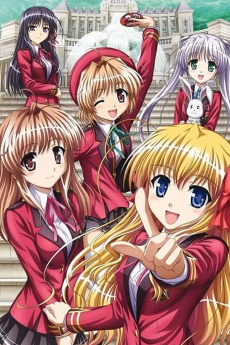
FORTUNE ARTERIAL: Akai Yakusoku
📺Anime Details
📝Editorial Analysis
The first time the wind stirs the cherry blossoms over the old school gate at Mifune Academy, and Shouko’s hand hovers—just for a breath—over Kuroda’s wrist before she pulls away, you feel it: not romance, not tension, but hesitation. A quiet, almost painful suspension—like holding your breath underwater while sunlight fractures through the surface. That moment isn’t about confession or climax. It’s about the weight of memory that won’t return, the warmth of a touch you’re not allowed to name, the way a nun’s rosary clicks softly against her palm as she watches from the chapel steps—not with judgment, but with the kind of sorrow that’s already settled in her bones.
What makes FORTUNE ARTERIAL: Akai Yakusoku ache like this isn’t its vampire lore or harem setup—it’s how deeply it lives inside unresolved time. Not mystery as puzzle, but mystery as atmosphere: the fog clinging to the coastal cliffs at dawn, the way classroom light catches dust motes mid-fall, the silence between lines where something vital was erased. You don’t watch it waiting for answers—you watch it remembering what it feels like to forget. The comedy doesn’t undercut the tragedy; it shores it up, like laughter echoing down an empty hallway just before the door closes. This isn’t escapism—it’s recognition: the tender, terrifying fragility of identity when your past is a locked drawer you can’t find the key to, and everyone around you knows the contents except you.
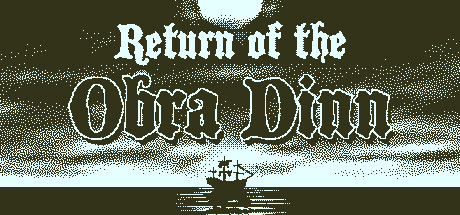
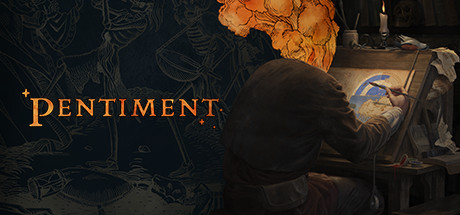
That same emotional gravity pulses through Return of the Obra Dinn, where every clue isn’t just a fact to deduce but a life suspended mid-breath—frozen in a single, looping, haunting tableau. Its score of 83 in Mystery & Detective and Emotional Narrative lands because it trusts you to sit with ambiguity, to feel the weight of a sailor’s last gesture, the echo of a scream cut short—not to solve, but to witness. Like Shouko tracing the edge of her amnesia with quiet fingers, the game asks you to hold space for loss without resolution. And Pentiment, also scoring 83 in Mystery & Detective, Emotional Narrative, and Dark Fantasy, mirrors this in its medieval ink-stained world: every dialogue choice carries the weight of inherited silence, every uncovered truth reshapes not just plot—but who you were before you knew. Its darkness isn’t gothic spectacle; it’s the dim candlelight of a scriptorium where history is written by the living, and rewritten by the dead. Just as Kuroda walks the same hallways haunted by versions of himself he can’t reconcile, Pentiment’s Andreas moves through a village where every face holds a story he’s forgotten he helped write.
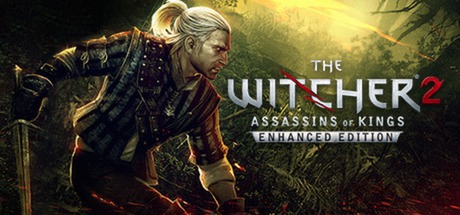
Even The Witcher 2: Assassins of Kings Enhanced Edition, scoring 81 in Dark Fantasy and Emotional Narrative, resonates—not through monster-hunting spectacle, but through consequence that settles, not shocks. As one player notes, it “feels more thoughtfully designed” than later entries—not because of mechanics, but because its choices land like stones dropped into still water, rippling outward long after the cutscene ends. Geralt’s amnesia isn’t literal, but his moral memory is fractured: he remembers the sword, not the vow; the wound, not the reason. That’s the same ache as Kuroda staring at his reflection, wondering if the boy in the glass is the one who made the promise—or the one who broke it. The nun’s presence in FORTUNE ARTERIAL isn’t symbolic window dressing; she’s the quiet axis of that tension—faith as anchor, not answer—and The Witcher 2’s world hums with similar figures: priests, scholars, healers who stand in the gap between action and meaning, never offering salvation, only witness.
This pairing isn’t for fans of “vampire romance” or “detective games.” It’s for the person who re-watches the scene where Shouko folds origami cranes—not because they’re pretty, but because each fold is a tiny act of faith in continuity, even when memory fails. It’s for the player who lingers on a corpse in Return of the Obra Dinn, not to log cause of death, but to imagine the scent of salt air on their coat. It’s for the one who reads Pentiment’s marginalia twice—not for plot, but for the tremor in the scribe’s hand. These are works that treat longing as a language, silence as architecture, and what’s missing as the most vivid character of all. If you’ve ever held a photograph of someone you love and felt the distance not in miles, but in milliseconds—the blink between recognition and recall—then this is your wavelength. Not fantasy. Not mystery. Just presence, trembling at the edge of erasure.
🎮32 Games That Match the Vibe











Match Dimensions Explained
❓Frequently Asked Questions
Why is Return of the Obra Dinn matched with FORTUNE ARTERIAL: Akai Yakusoku?
Because both hinge on piecing together emotionally charged, time-looping narratives through fragmented memories — Obra Dinn’s monochrome deduction scenes where you reconstruct crew deaths mirror FORTUNE ARTERIAL’s slow-reveal structure around Risa’s vampiric secret and the weight of her 'red promise'. It’s not about action or romance routes; it’s that same quiet, aching tension as you revisit moments knowing more each time.
Is there an anime or manga adaptation of FORTUNE ARTERIAL: Akai Yakusoku?
No — unlike many visual novels, FORTUNE ARTERIAL never got an official anime or manga adaptation. That’s part of why fans lean into matches like Pentiment: both rely entirely on text, atmosphere, and layered character writing (like Pentiment’s Brother Hugo unraveling moral gray zones in a 16th-century Bavarian town) to deliver that same intimate, consequence-heavy storytelling without supplemental media.
How does Pentiment compare to The Witcher 2: Assassins of Kings Enhanced Edition for FORTUNE ARTERIAL fans?
Pentiment nails the quiet, dialogue-driven intimacy and historical weight FORTUNE ARTERIAL fans love — think Sister Agnes’ guarded confessions or the monastery’s hushed tensions — while The Witcher 2 leans harder into morally thorny political stakes and visceral combat (like Geralt choosing between Triss and Saskia in Chapter II). Both share Emotional Narrative + Dark Fantasy, but Pentiment’s slower, script-focused pacing feels closer to FORTUNE ARTERIAL’s rhythm.
What’s the best game like FORTUNE ARTERIAL if I want that melancholy, small-town mystery vibe with emotional payoff?
Go straight to Pentiment — its 1540s Bavarian setting, hand-drawn aesthetic, and focus on community secrets (like the murder of Andreas Kiesl) hits that same bittersweet, rain-soaked mood as FORTUNE ARTERIAL’s Chikuzen Academy. You’ll feel it in how characters’ pasts quietly reshape present choices — no flashy combat, just layered dialogue, period-accurate fonts, and endings that land like a held breath finally released.