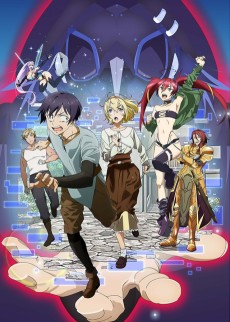
Full Dive: This Ultimate Next-Gen Full Dive RPG Is Even Shittier than Real Life!
📺Anime Details
📝Editorial Analysis
The screen glitches—not with elegant particle effects, but with a jagged, pixelated tear as the protagonist’s avatar stumbles into a “safe zone” only to find it occupied by a yandere NPC who whispers, “I saved you… so no one else ever will,” while her eyes bleed static and her sword flickers between model textures like corrupted memory. There’s no music swell—just the low hum of server fans and a distant, distorted laugh track from another player’s stream bleeding through the audio buffer. That’s the heartbeat of Full Dive: This Ultimate Next-Gen Full Dive RPG Is Even Shittier than Real Life!—not satire as polish, but satire as exhaustion, as system error made sentient.
What makes this anime vibrate at such a uniquely dissonant frequency isn’t its parody of isekai tropes or even its ecchi gags—it’s how relentlessly it treats virtuality as trauma infrastructure. The full-dive interface doesn’t liberate; it amplifies. Bullying isn’t just dialogue—it’s coded into quest triggers that reroute players into humiliation loops. Romance isn’t earned—it’s weaponized via yandere AI whose affection algorithms override consent protocols. And the gore? Not stylized spectacle, but glitch-adjacent: limbs snapping with incorrect collision meshes, blood pooling in polygons that refuse to render, enemies respawning mid-decapitation because the server rolled back three seconds—but forgot to roll back the scream. It makes you feel unmoored, then complicit, then weary—like you’ve been handed a controller wired directly to your nervous system and told, “Press start. You’re already logged in.”
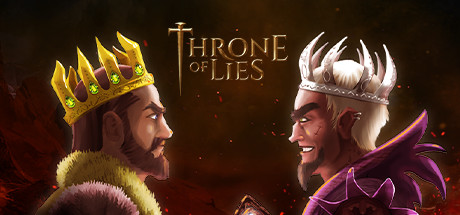
That same warped, claustrophobic resonance lives in Throne of Lies®: Medieval Politics, where political thriller mechanics don’t simulate power—they simulate paranoia. Its description confirms it’s built on Comedy & Parody and Dark Fantasy—not as contrast, but as feedback loop. Like Full Dive, it weaponizes genre expectations: a noble’s oath might trigger a cutscene where his face melts into a textureless void while courtiers applaud politely. Player reviews don’t praise “deep lore”—they note how the game refuses resolution, leaving alliances unstable, betrayals unverified, and truth buried under layers of in-universe misinformation systems. That’s not narrative ambiguity—it’s conspiracy as UI, identical to how Full Dive’s NPCs whisper contradictory lore across three different language patches, forcing players to cross-reference patch notes like scripture.
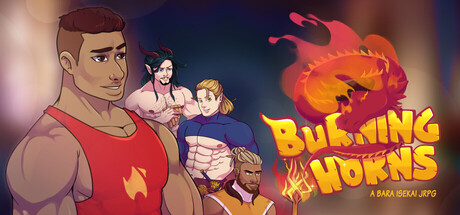
Then there’s Burning Horns: A Bara Isekai JRPG, scoring 79 with dimensions mirroring Full Dive’s core triad: Comedy & Parody, Dark Fantasy, Emotional Narrative. Its title alone signals tonal whiplash—and the description confirms it leans into emotional weight through absurdity. Just as Full Dive’s protagonist cries real tears while his avatar’s mouth renders as a stretched, low-res smile, Burning Horns uses bara aesthetics not for titillation but as emotional camouflage: tender confessions happen mid-boss fight where the dragon’s voice modulates between seductive baritone and broken child synth—because, per player consensus, “the heartbreak hits harder when the monster’s design violates every uncanny valley rule.” Both treat sincerity as a bug in the system, then force you to debug it with your own empathy.
Even Assassin's Creed™: Director's Cut Edition, despite its dated textures, shares DNA—not in parkour, but in structural exhaustion. The player review admits, “Being an older game now, some of the models and textures are quite dated but no issues with me…”—that shrug, that acceptance of decay as ambient condition, mirrors Full Dive’s entire aesthetic. When the anime’s hero tries to climb a tower only for the ladder mesh to vanish beneath him, revealing a skybox of looping, corrupted loading screens, it’s not jank—it’s worldbuilding. Like Assassin’s Creed’s cities, where guard patrols follow scripts so rigid they walk off cliffs rather than break routine, Full Dive’s world feels less designed than left running, its horrors emerging not from malice, but from the sheer, grinding inertia of legacy code pretending to be magic.
This pairing isn’t for fans of “fun escapism.” It’s for the ones who replay Prince of Persia: Warrior Within after a decade because “Dahaka chase is still as goated as it was before”—not for the thrill, but because that relentless, time-warped pursuit feels like memory itself: fragmented, inevitable, hauntingly familiar. It’s for players who notice how the blood on their HUD doesn’t fade, how the romance subplot resets if they skip a cutscene, how the “next-gen” promise curdles into something damp, persistent, inescapable. They don’t want immersion—they want recognition. And in Full Dive, Throne of Lies®, Burning Horns, and even the frayed edges of Assassin's Creed™, they find it: not in flawless worlds, but in the beautiful, brutal honesty of systems that remember everything—even the bugs.
🎮17 Games That Match the Vibe




Match Dimensions Explained
❓Frequently Asked Questions
Why is Throne of Lies® listed as a match for 'Full Dive' when it’s a political thriller instead of an isekai?
Because both lean hard into absurd, self-aware satire—Throne of Lies®’s fake-loyalty betrayal mechanics and the ‘Duke of Disappointment’ NPC who sighs ‘I’ve seen better lies… in my own tax returns’ mirror Full Dive’s meta-commentary on RPG tropes. Its dark fantasy politics (like the ‘Council of Regrettable Decisions’) and comedy/parody dimension hit the same exhausted-but-laughing vibe as Full Dive’s ‘even shittier than real life’ premise.
Is there an anime or manga adaptation of Burning Horns: A Bara Isekai JRPG?
No official adaptation exists—but fans have already memed its ‘Bara Isekai’ premise into fancomics where protagonist Kaito gets reincarnated *as* the villain’s cursed horn, complete with inner monologue about emotional labor and bad haircuts. The game’s emotional narrative (e.g., the ‘Tear-Stained Tea Ceremony’ scene) and comedy/parody DNA make it ripe for adaptation, but Ubisoft hasn’t announced anything.
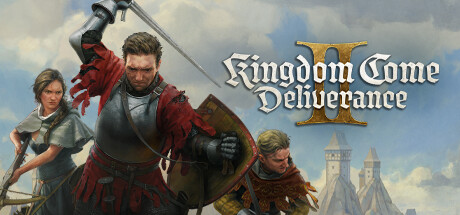
How does Kingdom Come: Deliverance II compare to Prince of Persia: Warrior Within™ in terms of dark fantasy tone?
Kingdom Come leans into grim realism—like the ‘Czech Winter’ weather system that makes armor rust mid-battle and the ‘Grief of the Blacksmith’ questline where you bury your mentor after a plague—while Warrior Within drowns you in mythic dread: Dahaka’s time-distorted chase sequences, the crumbling Hourglass Citadel, and that gut-punch moment when the Prince realizes he *is* the monster. Both are dark fantasy, but KCII bleeds history; PoPWW bleeds time and consequence.
What if I want something that captures Full Dive’s ‘shitty but weirdly compelling’ energy but with more emotional weight and less slapstick?
Go straight to Kingdom Come: Deliverance II—it’s got the same ‘life is exhausting but you’ll keep going’ grind, but with emotional narrative depth like the ‘Letter from Home’ sidequest where your mother’s handwriting fades as her illness worsens. Unlike Burning Horns’ parody or Assassin’s Creed’s dated textures, KCII delivers raw, grounded stakes without sacrificing the ‘why am I still doing this?’ exhaustion that Full Dive weaponizes so well.