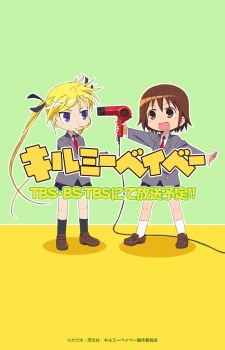
Kill Me Baby
Kill Me Baby is the touching story of Yasuna, a normal (?) high school girl, and Sonya, her best friend who happens to be an assassin. Unfortunately, little Sonya's trained assassin instincts often work against her and others in her daily high school life, as Yasuna's often-broken wrist can attest to. She just wanted a hug, but she ended up with a broken neck. Isn't it sad? No, it's hilarious.
Not even Yasuna's intense ninja training can prepare her for the exciting adventures in this explosive 4-panel manga adaptation.
📺Anime Details
📝Editorial Analysis
Yasuna’s wrist snaps—not with a crack, but a soft, wet pop—as Sonya lunges for a hug, her tiny assassin fingers locking into a perfect chokehold mid-air, eyes wide with innocent affection. Yasuna doesn’t scream. She just blinks, dangles slightly off the floor, and sighs like she’s just missed the bus again. The background dissolves into chibi swirls. A single teardrop floats upward. It’s not trauma—it’s routine*.
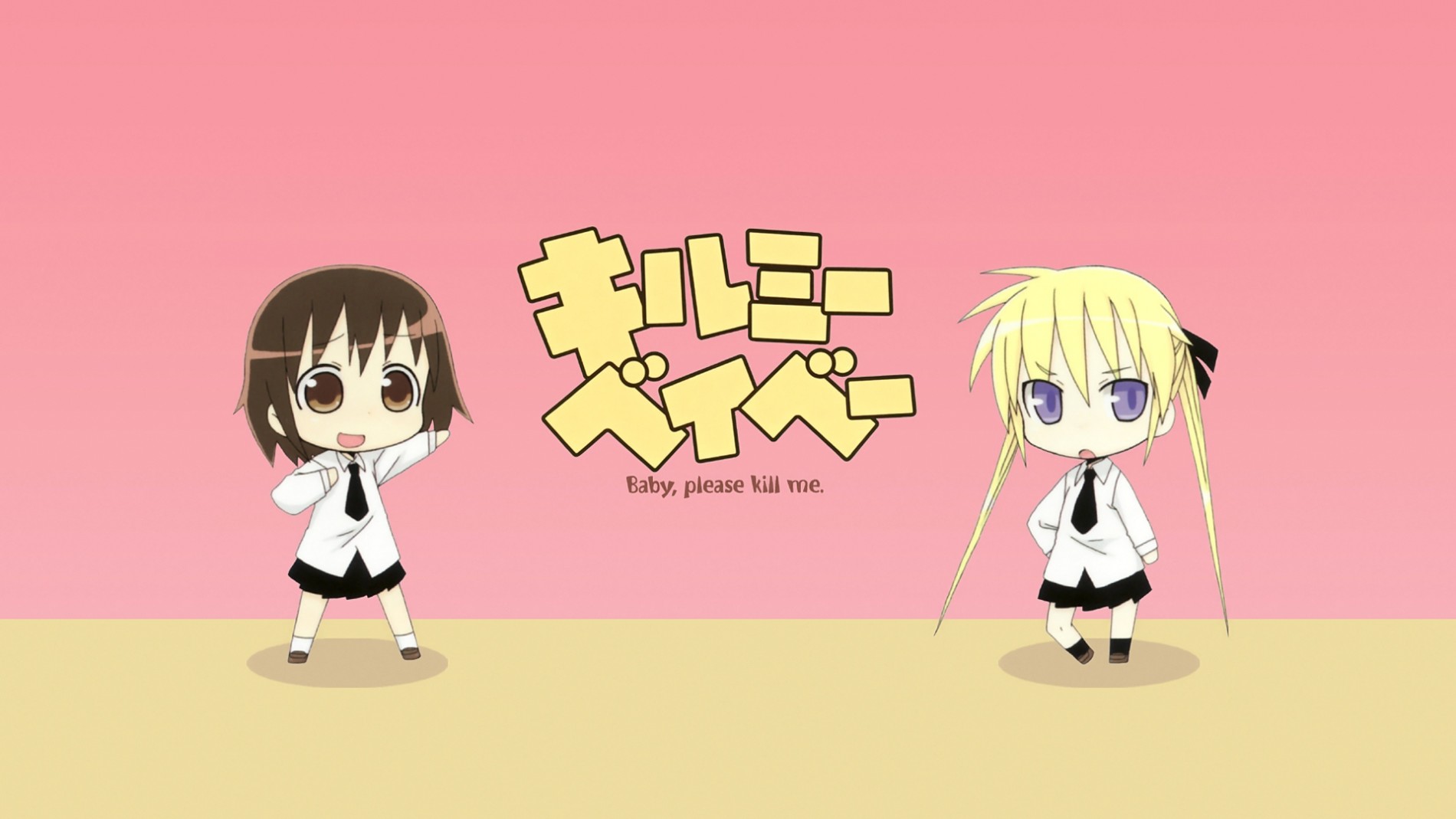
That’s the quiet magic of Kill Me Baby: it doesn’t ask you to suspend disbelief—it asks you to retrain your nervous system. This isn’t parody that winks at tropes; it’s surreal comedy that lives in the gap between intention and impact, where Sonya’s lethal training and Yasuna’s exhausted patience coexist without irony or escalation. You don’t laugh at the violence—you laugh because the wrist always pops, the neck always bends, and yet the next scene is Sonya offering Yasuna a perfectly folded origami crane… with blood still under her nails. It feels like being gently shaken by someone who loves you too much, too hard, too precisely. There’s no catharsis, no lesson—just the warm, low hum of recognition: this is what care looks like when filtered through incompatible operating systems.
Prince of Persia shares that same tender dissonance—not in its acrobatics or sand magic, but in how it frames healing as both literal and absurd. The description calls it “an all-new epic journey,” yet the player review notes it’s the third reboot, a lineage built on repetition, reset, and gentle self-parody. Like Yasuna resetting her wrist brace before lunch, the Prince resets his timeline not for grand stakes, but because the gesture itself—the leap, the rewind, the soft landing—is the point. Both works treat consequence as choreography: broken bones and fractured timelines aren’t failures—they’re rhythms. You feel the same soft weight in both: the exhaustion of caring deeply in a world wired for chaos, and choosing grace anyway.
The Sims™ 4 pulses with the same unspoken emotional grammar. Its description invites you to “play with life and discover the possibilities”—not conquest, not narrative, but arrangement, maintenance, small rituals repeated until they become meaning. And yet the player review groans about DLC bloat and bugs—because the game’s soul lives in the glitches: the Sim who autonomously waters a plant while on fire, the toddler who tries to “comfort” a grieving adult by slapping their knees. That’s pure Kill Me Baby logic—the love is real, the method is catastrophic, and the world keeps rendering it with pixel-perfect sincerity. Both refuse to moralize the mess. They just let Sonya hug, let the Sim cry, let the wrist pop—and keep the camera steady, affectionate, utterly unflustered.
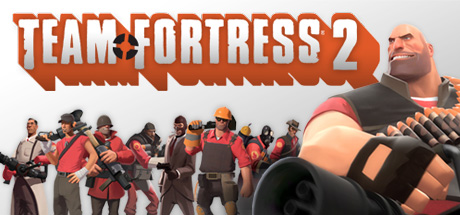
Even Team Fortress 2, with its chaotic, hat-obsessed anarchy, echoes this DNA—not in story, but in emotional architecture. Its description highlights “nine distinct classes [with] tactical abilities and personalities,” and the player review stumbles into raw, contradictory truth: “The community is gay, racist, sexist, gay, artistic, gay, furries, and love men.” That jumble—affection tangled with aggression, identity worn like hats, sincerity buried under spam—is exactly Sonya trying to express devotion via spinal lock. TF2’s warfare isn’t strategic—it’s relational slapstick, where the Heavy’s minigun roar sounds like laughter choking on tears. Both operate in a space where love and harm wear the same uniform, speak the same language, and are never, ever separated by tone.
This pairing isn’t for fans of “cute girls doing cute things” as aesthetic—it’s for people who’ve ever held someone too tight and felt their own pulse spike with guilt and joy at the same time. It’s for the quiet observer who notices how Yasuna always repositions her wrist before Sonya reaches out—not to stop her, but to meet her halfway. For the player who spends hours in The Sims™ 4 arranging bookshelves just so, not for function, but because alignment feels like safety. For the one who watches Prince of Persia’s rewind not as a mechanic, but as a lullaby: I’ll catch you. I’ll catch you. I’ll catch you. These aren’t stories about fixing broken things. They’re about building a life where broken things breathe together, softly, stubbornly, hilariously.
🎮19 Games That Match the Vibe


Match Dimensions Explained
❓Frequently Asked Questions
Why is Prince of Persia listed as similar to Kill Me Baby?
Because both lean hard into absurdist, fast-paced comedy and parody—like when the Prince flips off a sand monster mid-backflip while yelling nonsense, mirroring Yasuna’s deadpan violence and Sonya’s over-the-top explosions. It’s not about plot depth; it’s that same Healing & Slow Life + Comedy & Parody combo that makes Kill Me Baby’s chaotic school-life gags feel at home alongside PoP’s self-aware, slapstick-heavy set pieces.
Is there a Kill Me Baby anime or game adaptation?
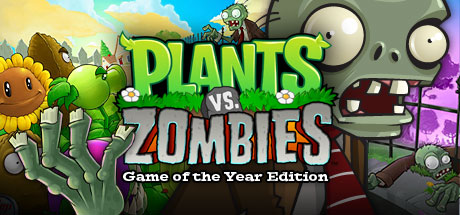
No official Kill Me Baby video game exists—but if you’re craving that same vibe, Plants vs. Zombies GOTY Edition nails it: think Sonya’s explosive energy meets Crazy Dave’s unhinged delivery, with tactical chaos (peashooters vs. zombies) standing in for Yasuna’s reluctant babysitting duty. The Comedy & Parody + Tactical Warfare overlap is spot-on, especially during those frantic lawn-defense moments where everything goes gloriously sideways.
How does Team Fortress 2 compare to Kill Me Baby in terms of humor?
TF2’s nine wildly exaggerated classes—like the Scout yelling ‘MERCY!’ while backpedaling into a rocket blast—mirror Kill Me Baby’s character-driven absurdity, but with multiplayer chaos instead of classroom shenanigans. Both live in that Comedy & Parody + Tactical Warfare space, though TF2 trades Yasuna’s dry sighs for Pyro’s flamethrower giggles and Heavy’s ‘SANDVICH’ interruptions—same energy, different battlefield.
What’s the best game like Kill Me Baby if I just want something silly and low-stakes to unwind with?
The Sims 4 is your go-to—especially if you skip the expensive DLC and stick to base-game hijinks: watch your Sim try (and fail) to cook, get stuck in a shower forever, or start a feud with a garden gnome. Its Healing & Slow Life + Comedy & Parody score matches Kill Me Baby’s vibe perfectly—think Yasuna’s exhausted slouch versus your Sim dramatically collapsing after tripping over their own feet. It’s gentle, weird, and endlessly rewatchable.