
Link Click Season 2
Cheng Xiaoshi by chance meets Lu Guang, a person possessing super powers, and awakens to his own special ability.
In order to save the Time Photo Studio which is on the verge of closing down, the two of them start to cooperate in using their super powers to enter photos of customers to complete their commissions.
However, the appearance of a mysterious killer shatters the peace, Lu Guang's condition is still unknown and Qiao Ling has also become entangled in the conspiracy. Faced with all this, how will Cheng Xiaoshi solve the situation?
(Source: bilibili, translated)
📺Anime Details
📝Editorial Analysis
The flicker of a neon sign—Cheng Xiaoshi’s Time Photo Studio—reflected in rain-slicked pavement, warped and trembling as if the city itself is holding its breath. Inside, Lu Guang stands motionless before a developing tray, his hand hovering over a photograph that shouldn’t exist: Qiao Ling’s face, half-swallowed by static, her eyes open but unseeing—not in the photo, but in memory. That silence isn’t empty. It’s thick with the weight of seconds stretched too thin, of choices already made but not yet lived, of a twin’s voice echoing from a room two doors down… though he’s been gone for three years.
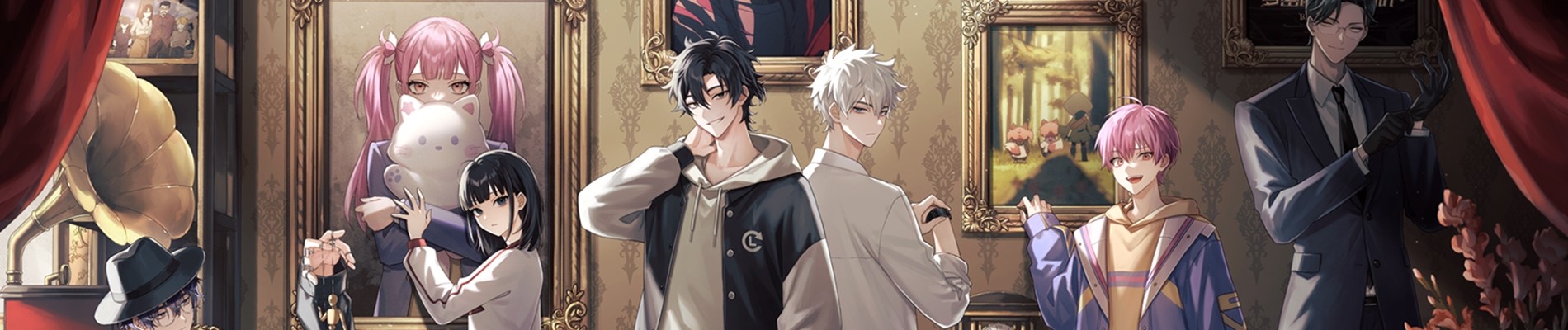
This isn’t just urban fantasy—it’s urban ache. Link Click Season 2 doesn’t trade in spectacle for its own sake; it trades in resonance. The glow of old film negatives under red safelights, the hum of a failing AC unit in a cramped studio apartment, the way a character pauses mid-sentence—not for drama, but because they’ve just remembered something their body hasn’t caught up to yet. Time here isn’t a mechanic. It’s a wound that scabs over unevenly, and every time Cheng steps into a photo, he doesn’t just enter a moment—he re-enters the emotional gravity of it. You don’t watch this anime to solve the mystery—you watch because you recognize that hollow, familiar dread when someone you love starts speaking in fragments, like their timeline has been edited without consent.
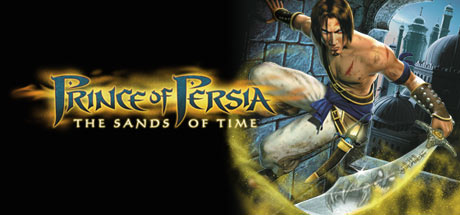
That feeling—the vertigo of time as both weapon and wound—is why Prince of Persia: The Sands of Time lands with such uncanny precision. Its description names “a time borne by blood and ruled by deceit”—exactly the texture of Lu Guang’s deteriorating condition, where power bleeds into consequence, and every rewind carries moral residue. A player review calls the platforming “satisfying due to the locked directions, which helps… yet still challenging.” That tension—structure enabling vulnerability—mirrors how Link Click Season 2 uses rigid rules (photos as fixed points, time loops as bounded spaces) to make emotional collapse feel inevitable, not arbitrary. The Prince doesn’t master time; he negotiates with it, bruised and breathless. So does Cheng—every dive into a memory is less a leap than a surrender to gravity.
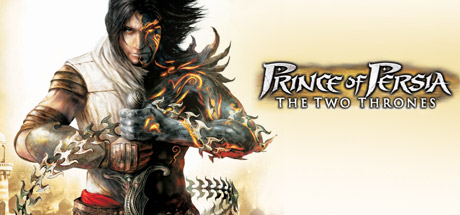
Then there’s Prince of Persia: The Two Thrones, whose description drops the phrase Neon Noir—and suddenly, the palette of Link Click Season 2 clicks into focus: not just rain and alleyways, but the glow of streetlights bleeding into wet concrete, the way Qiao Ling’s coat catches that sickly amber light as she walks away from the studio, shoulders tight—not angry, just worn through. A player review notes it’s “one of my best childhood games… still plays great,” underscoring how deeply nostalgia and trauma intertwine in both works. In The Two Thrones, the Prince carries a second voice inside him—a shadow self forged in violence and regret. Lu Guang’s condition isn’t metaphorical; it’s physiological, terrifying—but the emotional architecture is identical: a person split by time, haunted not by ghosts, but by versions of themselves they can no longer reconcile.
And then—Disco Elysium - The Final Cut, with its raw, unblinking gaze at systems that corrode intimacy. Its description positions you as a detective carving a path across a city, not with fists or blades, but with skill checks on grief. A player review quotes, “Capital has the ability to subsume all critiques into itself…”—a line that resonates like a struck bell in Link Click Season 2’s quietest scenes: the studio’s slow decline, the way adults speak around tragedy instead of through it, how Qiao Ling’s entanglement isn’t a plot twist but a slow suffocation by institutional silence. No neon chase sequences here—just the crushing weight of emotional narrative, where every dialogue choice feels like choosing which scar to press on.
This pairing isn’t for fans of “time travel” as gadgetry. It’s for the person who replays a game not to win, but to sit with the Dahaka’s footsteps echoing down a corridor long after the credits roll—who watches Cheng Xiaoshi stare at his own reflection in a darkened photo booth window and thinks, I know that exhaustion. It’s for those who feel time not as a line, but as a room they keep walking back into—door ajar, lights low, someone else’s breath still warm on the air.
🎮21 Games That Match the Vibe




Match Dimensions Explained
❓Frequently Asked Questions
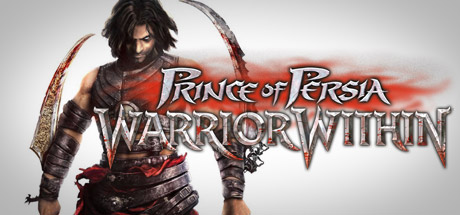
Why does Prince of Persia: Warrior Within feel so much like Link Click Season 2’s darker time-loop moments?
Because both lean hard into the 'Time & Memory' dimension with visceral consequences—like Dahaka’s relentless, memory-anchored chases mirroring Xu Bing’s fragmented recollections and the psychological weight of repeating traumatic timelines. The game’s grim underworld aesthetic and the Prince’s fractured identity (echoing Liu Qing’s emotional unraveling) hit that same neon-tinged, emotionally raw nerve as Season 2’s rain-slicked flashbacks and time fractures.
Is there a Link Click Season 2 anime adaptation or game remake coming soon?
No—there’s no official anime adaptation or game remake in development. But if you’re craving that same blend of time-bending tension and emotional intimacy, Prince of Persia: The Sands of Time nails it: the Dagger of Time’s rewind mechanic mirrors Xu Bing’s desperate do-overs, and scenes like the Prince replaying his father’s death evoke the same gut-punch vulnerability as Liu Qing’s hospital confessions.
How is Disco Elysium different from Prince of Persia: The Two Thrones when it comes to handling trauma and memory?
Two Thrones uses 'Time & Memory' + 'Neon Noir' through visual metaphors—like the Prince’s split personality (Light/Dark Prince) and Babylon’s decaying, neon-lit ruins—to externalize trauma physically. Disco Elysium goes inward: its 'Emotional Narrative' and 'Neon Noir' dimensions live in your detective’s head—skills like 'Logic' or 'Empathy' literally argue with you, much like Xu Bing’s internal monologues during time resets—but without action set pieces, just raw, text-driven reckoning.
What’s the best game like Link Click Season 2 if I want that melancholy, rain-soaked, emotionally heavy vibe?
Disco Elysium – The Final Cut is your top pick: its 'Neon Noir' atmosphere drips with existential rain and urban decay, and its 'Emotional Narrative' dimension makes every dialogue choice feel like peeling back scar tissue—just like Liu Qing’s quiet breakdowns in empty apartments or Xu Bing staring at rain-streaked windows. It won’t give you sword fights, but it delivers that same suffocating, poetic weight—no time loops needed.