
R.O.D - READ OR DIE
📺Anime Details
📝Editorial Analysis
Rain slicks the Tokyo streets like spilled ink, and Yomiko Readman stands motionless beneath a flickering neon sign—“Kanda Bookstore”—her fingers trembling not from cold, but from the weight of a single, unopened letter. It’s not the paper that shakes; it’s the silence after she reads the line: “They cloned you. Not once. Not twice.” Her breath hitches—not in fear, but in recognition. That pause, that suspended second where identity fractures and reassembles in real time—that’s where R.O.D - READ OR DIE lives. Not in explosions (though there are plenty), but in the quiet before the page tears.
This isn’t urban fantasy as spectacle—it’s urban fantasy as resonance. The city doesn’t sparkle; it hums with low-frequency tension: surveillance cameras blink like tired eyes, library archives smell of ozone and decaying cellulose, and every whispered conversation in a café carries the static of suppressed histories. You don’t feel excited watching it—you feel alert, then unsettled, then strangely tender, like holding a first edition bound in someone else’s memory. It makes you think about how power hides in grammar—in who gets to annotate history, who gets archived, who gets erased and then quietly, bureaucratically, reproduced. The clones aren’t monsters. They’re footnotes made flesh. And the espionage isn’t about gadgets—it’s about access: to texts, to vaults, to the very syntax of legitimacy.
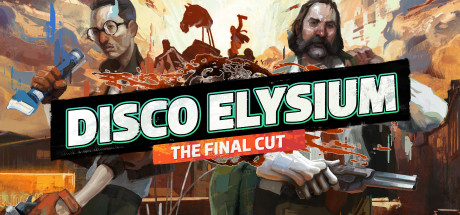
That same frisson lives in Disco Elysium - The Final Cut, where the player-detective walks a city whose architecture breathes ideology—every alleyway a dialectic, every NPC a living contradiction. The game’s description calls it a “groundbreaking role playing game” built on interrogation and pathfinding across a city—but what sticks is the player review’s chilling line: “Capital has the ability to subsume all critiques into itself.” That’s Yomiko staring at her own genetic file, realizing her dissent has already been pre-quoted, filed, and repurposed by the very system she’s trying to outrun. Both works treat politics not as backdrop but as gravity—inescapable, invisible, bending every choice toward its center.
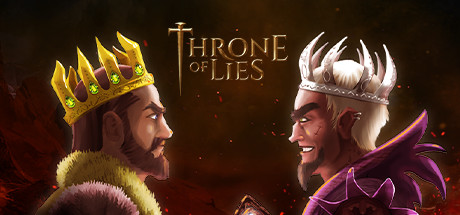
Then there’s Throne of Lies®: Medieval Politics, scoring 84 in Political Thriller and Mystery & Detective. No dragons, no magic—just layered allegiances, forged documents, and the slow, sickening realization that truth is less a fact than a negotiable commodity. Like when Yomiko deciphers a microfilm hidden inside a 19th-century botanical text, only to find it’s not evidence—it’s propaganda disguised as scholarship. The anime and the game share that exact texture: the thrill of decoding isn’t intellectual—it’s moral. You’re not solving a puzzle. You’re verifying whether your own memory is licensed.
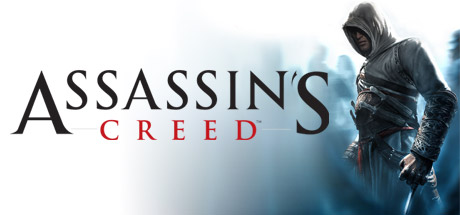
And Assassin's Creed™: Director's Cut Edition, despite its dated textures, lands at 83 in Political Thriller and Tactical Warfare. Its description highlights how it “redefines the action genre” not through spectacle, but through systemic immersion—a world where rooftops aren’t just platforms, but political terrain. When Yomiko folds a newspaper into a blade mid-chase through Shinjuku Station, it’s not flashy—it’s archival violence: knowledge weaponized, literacy turned kinetic. The player review admits flaws but shrugs: “no issues with me but I can…” — that same weary, embodied pragmatism lives in every R.O.D. operative who knows the best cover isn’t a disguise, but a well-cited bibliography.
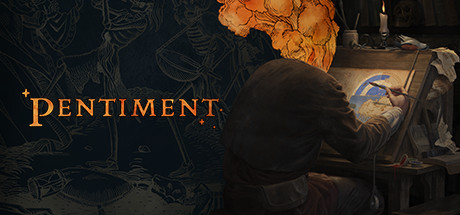
This pairing isn’t for fans of “cool powers” or “spy fun.” It’s for the person who pauses mid-episode to Google the real-life Library War movement in Japan, who replays a Pentiment dialogue tree not to win, but to hear how a scribe’s voice cracks when asked to burn his own manuscript, who reads a Kingdom Come: Deliverance II patch note and wonders which feudal decree was really about controlling access to parchment mills. It’s for those who feel history as pressure, who know that the most dangerous weapon isn’t a gun—it’s a footnote with the wrong name attached. Who understand that sometimes, the bravest thing you can do is turn the page—and keep reading.
🎮28 Games That Match the Vibe
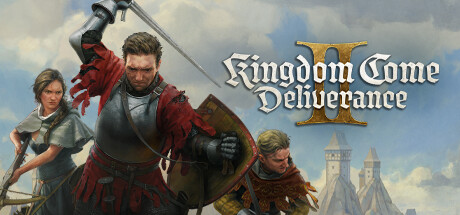




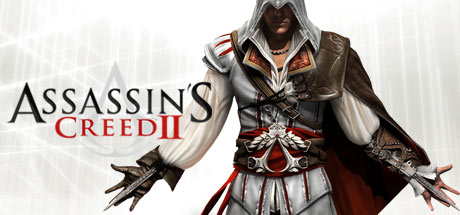

Match Dimensions Explained
❓Frequently Asked Questions
Why does R.O.D feel so different from Pentiment even though both are mystery-detective games?
Great question—R.O.D’s fast-paced, anime-infused action and supernatural library warfare (like Yomiko Readman’s paper-based combat in the OVA) contrasts sharply with Pentiment’s deliberate, historically grounded investigation where you’re cross-examining monks in 16th-century Bavaria using dialogue trees and period-accurate handwriting analysis. Pentiment nails political thriller tension through scriptural debates and feudal power shifts—not psychic paper cuts.
Is there an official video game adaptation of R.O.D - READ OR DIE?
Nope—there’s never been an official R.O.D. game. The closest you’ll get is Disco Elysium’s razor-sharp detective work and ideological chaos: think Harry Du Bois arguing with his own skill checks while chasing truth through a decaying city, much like Yomiko navigating conspiracies with books as both weapon and conscience.
How accurate is Assassin’s Creed Director’s Cut Edition compared to R.O.D’s blend of espionage and literary flair?
Not very—it swaps R.O.D’s book-wielding heroics for parkour-driven stealth and templar-vs-assassin lore. But if you love R.O.D’s political thriller layer (e.g., the British Library’s shadowy agenda), AC’s Damascus bureau missions and factional betrayals—especially how Al Mualim manipulates ideology—hit that same nerve, just without the bibliophile charm.
What’s the best game like R.O.D if I want that ‘smart but stylish’ vibe—where brains and attitude collide?
Disco Elysium — hands down. Its skill system lets you talk your way out of fights *or* into existential crises (like Logic debating Electrochemistry mid-chase), mirroring Yomiko’s calm precision and Nenene’s fiery editorial instincts. Plus, the writing has that same razor wit and layered political satire—just swap paper shurikens for a hangover and a rain-soaked trench coat.