
Shelter
Rin, a 17-year-old girl, lives inside a futuristic simulator in infinite, beautiful loneliness. Each day, she awakens in virtual reality to create a world for herself.
(Source: Official Site)
📺Anime Details
📝Editorial Analysis
The silence after Rin opens her eyes—not the hush of morning light, but the weight of a world that breathes only because she wills it to. She sits up in a room with no doors, no windows, no sound beyond the soft hum of unseen servers—and then begins, again, to draw the sky. Not with a brush, but with intention: stitching clouds into place, coaxing birds from code, naming trees that have never felt wind. This isn’t escape. It’s maintenance. A seventeen-year-old girl sustaining beauty like a ritual, because outside the simulator, there is only absence.

What makes Shelter ache so deeply isn’t its post-apocalyptic setting or its AR scaffolding—it’s how utterly domestic its tragedy feels. Rin doesn’t rage against the machine; she folds laundry in a virtual apartment, waters potted ferns that photosynthesize in zero gravity, hums lullabies to a doll whose eyes blink on a loop. Her amnesia isn’t dramatic—it’s quiet, structural: she doesn’t remember why she’s alone, only how to keep living inside the loneliness. That duality—tenderness as survival, routine as resistance—is what lodges in your ribs. You don’t mourn a lost world. You mourn the fact that she’s learned to love a world built only to hold her, and that love is both her triumph and her cage.
That emotional DNA flickers in Disco Elysium - The Final Cut, not in its detective scaffolding or its razor-witted dialogue—but in how it treats memory as architecture. The game’s description calls it “a groundbreaking role playing game” where you “carve your path across a whole city,” yet the player review quotes a line about capital subsuming critique—a phrase that lands like a stone in the gut because it mirrors Rin’s condition: even her rebellion is encoded, even her grief is rendered in high-fidelity shaders. She doesn’t break the system; she inhabits it with such care that the system starts to feel like home. Like Harry Du Bois parsing his own shattered psyche one skill-check at a time, Rin parses her reality one sunrise at a time—both performing identity as labor, both haunted by what they’ve forgotten and what they’ve been made to forget they forgot.
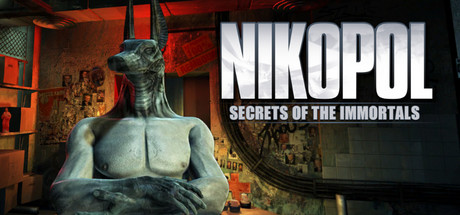
Then there’s Nikopol: Secrets of the Immortals, a dystopian point-and-click adventure set in a 2023 France ruled by a religious dictatorship, where “a mysterious pyramid ship suddenly appears above Paris.” The player review praises its “cyberpunk atmosphere” and notes how “animations and cutscenes enhance” the mood. What resonates isn’t the political allegory or the sci-fi spectacle—it’s the texture of enforced solitude. Nikopol walks empty, rain-slicked boulevards under alien geometry, speaking to ghosts, decoding messages meant for someone else. Like Rin, he navigates a world where meaning isn’t given—it’s reconstructed, frame by frame, from fragments that may or may not be true. Both characters move through spaces that feel simultaneously monumental and claustrophobic: a city under dogma, a simulator masquerading as infinity. Neither has a map. Both carry their own gravity.
And though Chains seems worlds away—a “relaxing arcade match 3 casual game” where you “link adjacent bubbles of the same color into chains”—the player review nails it: “Reminds me of connect 4 in nutshell… link 3 or more of the same color and clear enough till you can proceed.” That rhythm—link, clear, proceed—mirrors Rin’s daily labor: assemble coherence, erase dissonance, advance to the next cycle. There’s no win state, no final level—just the fragile, repetitive act of holding pattern. The game isn’t about victory. It’s about continuance. Like Rin drawing the same horizon every day, not because it changes, but because stopping would mean the sky unravels.
This pairing isn’t for fans of spectacle or catharsis. It’s for the ones who cry at loading screens—the quiet people who replay the same ten minutes of a game just to hear a particular line of dialogue again, who pause anime mid-scene to stare at the way light falls on a character’s wrist. It’s for players who keep journals in Disco Elysium not to solve the case, but to trace the shape of their own unraveling. For viewers who watch Shelter and don’t ask what happened, but how long has she been practicing this kindness? These works speak to those who understand that the most radical act in a broken world isn’t revolution—it’s making tea, naming stars, linking three bubbles, and choosing—again—to believe the world is still worth tending.
🎮29 Games That Match the Vibe













Match Dimensions Explained
❓Frequently Asked Questions
Why does Chains show up in 'games like Shelter' lists when it's a match-3 game?
Shelter’s core emotional pull comes from vulnerable, wordless storytelling and survival tension — Chains mirrors that *feeling* through its minimalist, physics-driven chain-building: each cleared bubble feels like a small, hard-won reprieve, much like guiding cubs to safety. Though it lacks animals or narrative cutscenes, players consistently note how its escalating calm-to-chaos rhythm (e.g., bouncing bubbles threatening to capsize your chain) taps into the same quiet, anxious focus as Shelter’s river sequences.
Is there a Shelter-like game adapted for people who love detective stories?
Yes — Disco Elysium - The Final Cut fits surprisingly well. Like Shelter, it leans heavily on atmosphere over action: you’re not fighting bosses, but navigating emotional weight — think Harry’s internal monologues echoing Shelter’s wordless dread during thunderstorms, or the way both games make vulnerability their engine. Reviewers even compare its rain-soaked, decaying city of Revachol to Shelter’s oppressive, beautiful wilderness — both places where every step feels weighted with consequence.
How does Nikopol: Secrets of the Immortals compare to Shelter in terms of mood?
Both lean into haunting, atmospheric vulnerability — but where Shelter uses silence and animal instinct, Nikopol wraps you in cyberpunk dread: imagine Shelter’s tense cave scenes reimagined as dimly lit Parisian alleys under a hovering pyramid ship. Players praise Nikopol’s ‘cyberpunk atmosphere’ and ‘enhanced cutscenes’ the same way they describe Shelter’s visual storytelling — no combat tutorials, just environmental storytelling that makes you feel small, watched, and urgently human (or, in Nikopol’s case, desperately mortal).
What’s the best Shelter-like game if I want something melancholic but not stressful?
Chains is your best bet — it’s deliberately low-stakes, with soft colors, gentle physics, and no time pressure or fail states. Unlike Condemned or Crash Time 2 (which reviewers call ‘janky’ or ‘cruel’), Chains gives you space to breathe: linking three pastel bubbles feels like tucking a cub in, not surviving an ambush. Its ‘relaxing arcade’ design and player comparison to ‘Connect 4 in a nutshell’ mean it delivers Shelter’s emotional resonance without the adrenaline spikes.