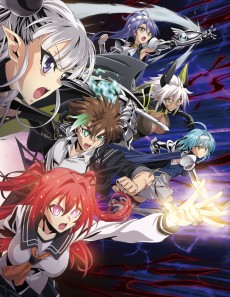
The Testament of Sister New Devil BURST
📺Anime Details
📝Editorial Analysis
The first time Mio’s sword cleaves through a demon’s shadow-form—blade humming with violet light, her hair whipping across sweat-slicked collarbone as she pivots mid-air—the world narrows to heat, motion, and the weight of protection. Not just duty. Not just power. The kind of fierce, breathless, almost painful devotion that makes your chest tighten because you know, without being told, that she’d burn herself to ash before letting him fall.
That’s the feeling The Testament of Sister New Devil BURST lives inside: urban fantasy not as backdrop, but as pressure chamber—where magic isn’t abstract, it’s tactile: the sting of holy sigils burning into skin, the damp chill of vampire blood cooling on a blade, the way a harem isn’t about conquest but constant recalibration of trust amid demonic pacts and cursed contracts. It’s intimate spectacle—swordplay that reads like choreographed confession, ecchi moments that land not as titillation but as raw, flustered vulnerability in a world where bodies are both weapons and wounds. You don’t watch it for escapism. You feel the strain—of keeping secrets, of holding lines, of loving someone whose very existence is tied to forces that demand sacrifice.
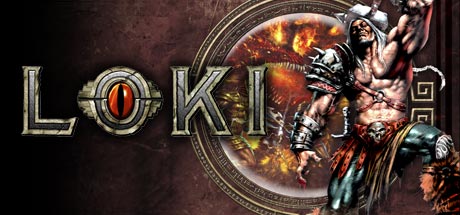
Which is why Loki, despite its glitch-riddled execution and anticlimactic ending, shares its emotional DNA—not in plot, but in mythic friction. Its description promises a “fantasy voyage through the great mythologies,” and the player review calls it “similar to Diablo… but filled with annoying glitches.” That dissonance—grand, resonant mythic stakes clashing with janky, imperfect delivery—is precisely what BURST leans into: divine hierarchies and ancient bloodlines rendered through school uniforms, shared baths, and hastily drawn wards on apartment walls. The frustration in that 5/10 review? It mirrors how BURST refuses polish—it lets tension fray at the edges, lets emotions stutter mid-confession, lets power systems buckle under emotional weight. The mythology isn’t pristine. It’s lived-in, flawed, and fiercely personal.
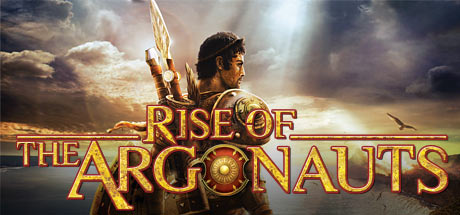
Then there’s Rise of the Argonauts, where Jason vows “to do anything to restore her life” after his fiancée is killed on their wedding day. The player review praises how it “does [ancient history] right”—but what anchors it emotionally isn’t historical accuracy. It’s the irrevocable hinge of loss transforming into relentless, almost desperate action. BURST operates on that same hinge: every spell cast, every demon fought, every forbidden contract signed stems from that first, shattering violation—the moment Mio’s sister was taken, the moment Basara’s ordinary life ended. There’s no clean vengeance arc. Just layered, grinding commitment: love as labor, as risk, as repeated, bodily choice. The review doesn’t mention romance—but the game’s core drive is romantic devotion weaponized into mythic scale. So is BURST’s.
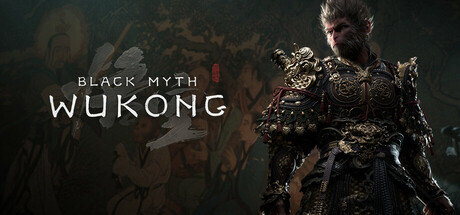
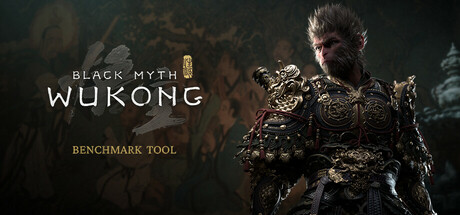
And Black Myth: Wukong, scoring 84 for Mythology & Folklore and Dark Fantasy. Its presence here isn’t about monkeys or heaven—nor is it about the Benchmark Tool’s technical specs. It’s about tone: a world where divinity is cruel, power is corrosive, and salvation demands walking straight into the teeth of inherited damnation. BURST’s demons aren’t cartoonish—they’re ancient, hierarchical, bound by blood-oaths that twist affection into obligation. When Basara signs a pact, it’s not a power-up; it’s a binding. Like Wukong’s rebellion against celestial decree, BURST’s characters fight not to overthrow gods, but to reclaim agency within the system—to love without becoming a vessel, to protect without erasing self. The darkness isn’t gothic—it’s the quiet dread of realizing your deepest bond is also your greatest vulnerability.
This pairing isn’t for fans of “light” harem comedies or bug-free RPGs. It’s for the ones who replay cutscenes not for lore dumps, but for the micro-expressions—the tremor in a hand reaching for a sword, the way a character’s breath hitches just before a confession, the exhaustion behind a grin after battle. It’s for players who tolerate jank because the yearning feels real, and viewers who lean in when the camera holds on silence—not because something’s about to happen, but because everything already has. They’re drawn to stories where myth isn’t distant—it’s breathing down your neck, wearing school socks, sharing your shower, and refusing to let you forget what it costs to stay human.
🎮26 Games That Match the Vibe



Match Dimensions Explained
❓Frequently Asked Questions
Why is Rise of the Argonauts listed as similar to The Testament of Sister New Devil BURST when it’s a Greek myth game?
Good catch—it’s not about the anime’s harem comedy or fanservice, but the *shared emphasis on high-energy action spectacle and mythic worldbuilding*. Like Sister New Devil BURST’s over-the-top transformation sequences and magical girl vs. demon battles, Rise of the Argonauts delivers cinematic combat (Jason’s spear combos, Medea’s spell effects), dramatic mythic stakes (resurrecting his fiancée from Hades), and set-piece boss fights—e.g., the Hydra battle with its multi-phase arena shifts and screen-filling VFX.
Is there an anime or visual novel adaptation of Loki that’s like Sister New Devil BURST?
No—Loki is purely a Western action-RPG with no anime adaptation, visual novel spin-offs, or harem elements. It’s more like a glitchy, myth-heavy Diablo clone where you play as Norse, Egyptian, Slavic, or Hindu heroes (like Thor-inspired ‘Bjorn’ or Anubis-like ‘Sekhmet’), not a romantic comedy with devil girls. If you’re hoping for something like Sister New Devil’s tone, skip Loki—it’s all grim combat, zero flirtation or school-life scenes.
How does Black Myth: Wukong compare to Sacred Gold for someone who loves Sister New Devil BURST’s fast-paced magic battles?
Black Myth: Wukong wins hands-down for fluid, spectacle-driven magic combat—think Sister New Devil’s ‘burst’ transformations upgraded to god-tier scale: Sun Wukong’s staff morphs mid-air, summons clones, and triggers screen-shaking ‘Ruyi Jingu Bang’ explosions. Sacred Gold, while also action-spectacle, feels clunkier: its spellcasting relies on rigid hotkey combos and suffers from jank (per player reviews), whereas Wukong’s parry-dodge-ultimate flow mirrors Sister New Devil’s rapid-fire demonic energy bursts in boss fights like the Spider Queen arena.
What’s the best game like Sister New Devil BURST if I want over-the-top magical girl action but with actual mythological depth?
Black Myth: Wukong is your strongest match—it layers Chinese mythology (Journey to the West) with Sister New Devil’s signature blend of flashy transformations, rapid aerial combos, and demonic adversaries. When Wukong shifts into ‘Great Sage Equal to Heaven’ form, glowing golden fur erupts and his staff splits into six spectral copies—very much like Mio’s ‘Devil Burst’ sequence where her wings unfurl and energy spirals explode outward. No other title on the list merges mythic gravitas with that level of kinetic, visually saturated magic combat.