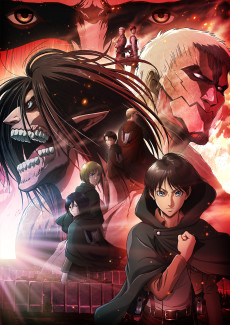
Attack on Titan ~Chronicle~
Movie compiling the first 3 seasons of Shingeki no Kyojin.
📺Anime Details
📝Editorial Analysis
The first time Eren’s jaw unhinges—not in rage, but in horror, as he watches his own teeth tear through flesh while the Titan’s body surges forward against his will—that’s the moment Attack on Titan ~Chronicle~ stops being spectacle and becomes a wound. Not metaphorical. A physical, gut-level rupture: the sound design cracks like bone, the camera doesn’t flinch, and the silence after the bite isn’t relief—it’s the hollow echo of a self dissolving. That’s not action. That’s violation.

What makes Attack on Titan ~Chronicle~ unique isn’t its kaiju or steampunk gear—it’s how relentlessly it weaponizes memory. Every flashback isn’t exposition; it’s a trapdoor opening beneath your feet. The walls aren’t just stone—they’re inherited amnesia made manifest. You don’t watch this anime thinking what happens next? You think what have I already forgotten? It’s the dread of realizing your own history has been edited, your grief repurposed, your loyalty a lever pulled by hands you can’t see. The military isn’t heroic—it’s a bureaucracy of trauma, issuing orders that calcify into dogma even as bodies pile up in the mud. There’s no catharsis in victory—only the slow, sickening weight of complicity. You feel exhausted, unmoored, watched—not by Titans, but by the architecture of lies holding civilization together.
That same suffocating, layered dread lives in Assassin's Creed™: Director's Cut Edition. Its description calls it a Political Thriller, Dark Fantasy, Tactical Warfare—and yes, the dated textures don’t matter, as one player notes, because the real enemy isn’t the Templar guard on the rooftop—it’s the system whispering through every mission brief. You scale Jerusalem not for freedom, but because the Animus forces you to retrace a lineage you didn’t choose. Like Eren reliving Grisha’s memories, you’re trapped inside someone else’s ideological collapse. The player says “I should probably start with the flaws first”—but they don’t stop there. They keep climbing. Because the horror isn’t in the fall. It’s in recognizing the hand that built the ladder.
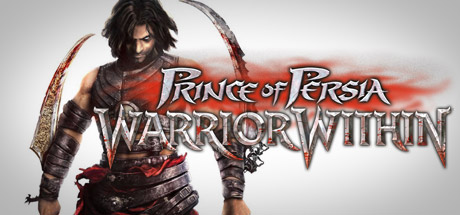
Then there’s Prince of Persia: Warrior Within™, where Dahaka isn’t chasing the Prince—he’s catching up to him. Time isn’t linear here; it’s a debt collector. The description names Time & Memory and Dark Fantasy—and the player review nails it: “Dahaka chase is still as goated as it was before.” Why? Because it’s not about speed—it’s about inevitability. Every dodge, every wall-run, every desperate parry feels like Eren sprinting from his own future, lungs burning, knowing the moment he stumbles, the past will swallow him whole. No reset button. No save point before consequence. Just the raw, breathless physics of running from yourself—and failing, beautifully, over and over.
Even Disco Elysium - The Final Cut, with its low score and dense political monologues, shares this DNA. Its description positions it as Political Thriller, Emotional Narrative, and the player quote cuts deep: “Capital has the ability to subsume all critiques into itself.” That’s the core tragedy of Attack on Titan ~Chronicle~—every revolution, every act of defiance, gets absorbed, renamed, and redeployed by the very power it sought to destroy. You don’t overthrow the system; you become its newest grammar. Geralt’s world in The Witcher 3: Wild Hunt, meanwhile, mirrors the anime’s moral erosion—not in scale, but in texture. Its description cites Dark Fantasy, Emotional Narrative, and the player’s quiet awe at DLC arriving 11 years later speaks to something deeper: the refusal to let meaning settle. Like Paradis’ history, Geralt’s choices don’t resolve—they accrete, haunt, and mutate across decades of player memory.
This isn’t for fans who want heroes to win. It’s for the ones who’ve stared at a family photo and wondered what wasn’t said in the frame—who’ve read a news headline and felt the floor tilt because the lie was too elegant, too old, too built-in. It’s for players who replay Warrior Within not for mastery, but to feel that chase again—the cold certainty that some debts don’t expire. For viewers who rewatch Chronicle not to catch plot holes, but to trace how quietly hope curdles into doctrine. These pairings resonate because they share a rare, unflinching honesty: the most terrifying monsters don’t roar. They sign treaties. They draft conscription papers. They whisper your name in the voice of your father—and you nod, because you’ve already forgotten how to refuse.
🎮26 Games That Match the Vibe





Match Dimensions Explained
❓Frequently Asked Questions
Why does Assassin's Creed: Director's Cut Edition match Attack on Titan ~Chronicle~ despite being set in the Holy Land?
Because both lean hard into Political Thriller and Dark Fantasy dimensions — think Levi’s calculated takedowns mirroring Altaïr’s precision assassinations in Damascus, or the way both games frame power struggles through morally grey factions (Survey Corps vs. Templars). The Tactical Warfare layer also clicks: dodging Titans’ attacks feels like evading guards’ sight cones while scaling walls with ODM gear echoes parkour-driven stealth navigation.
Is there a mobile game like Attack on Titan ~Chronicle~ that adapts the anime’s vertical maneuvering system?
No — none of the matches replicate ODM gear mechanics. Chains is the only mobile title on the list, but it’s a physics-based match-3 puzzle game (linking colored bubbles), totally divorced from aerial combat or Titan-slaying. If you’re craving that verticality, Prince of Persia: Warrior Within is your closest analog — its wall-runs, ledge swings, and Dahaka chase sequences nail the breathless, momentum-driven movement vibe.
How does Prince of Persia: Warrior Within compare to The Witcher 3 for Attack on Titan fans who love grim worldbuilding and tragic characters?
Warrior Within wins on tone and pacing: its oppressive, rain-lashed Island of Time and Dahaka’s relentless pursuit mirror the despair and urgency of Shiganshina’s fall — especially how both weaponize memory and consequence (like the Prince’s guilt vs. Geralt’s trauma over Ciri). The Witcher 3 has deeper emotional narrative layers, sure, but Warrior Within’s Dark Fantasy grit — all crumbling temples and cursed time loops — hits closer to AoT’s visceral dread.
What’s the best game like Attack on Titan ~Chronicle~ if I want something intense but not overwhelming — like the Survey Corps’ focused, high-stakes missions?
Assassin’s Creed: Director’s Cut Edition — its mission structure is *exactly* that: tight, objective-driven sequences (e.g., eliminate the Templar captain in Acre’s market) with clear stakes, zero filler. You get the same tactical tension as clearing a Titan nest — observe, plan, strike — without Witcher 3’s sprawling open world or Disco Elysium’s dense dialogue trees slowing you down.