
Dragon Quest: The Adventure of Dai
📺Anime Details
📝Editorial Analysis
The first time Dai raises his spear—not to strike, but to hold—as the sky cracks open with dragonfire and the ground buckles beneath him, you feel it in your ribs: not just tension, but weight. Not the weight of a weapon, but of legacy pressing down like stone on a chest, of promises made in childhood laughter now burning at the edges of a battlefield. His knuckles whiten. His breath hitches—not from fear, but from the sheer recognition: this is where play ends and oath begins.
That’s the core feeling Dragon Quest: The Adventure of Dai sustains across its arc—not heroism as spectacle, but heroism as continuum. It’s the ache of growing into power you didn’t ask for but swore to wield; the quiet dread before a dungeon descent that isn’t just about traps or monsters, but about what you’ll have to unlearn about yourself inside. Magic here isn’t flashy incantation—it’s breath held too long, a chant whispered through cracked lips after falling. Swordplay and spearplay aren’t stylized flourishes—they’re bone-deep muscle memory forged in mud, blood, and repeated failure. Even the dragons aren’t mythic abstractions; they’re present, massive and breathing, their wings casting shadows that swallow light—and hope—whole. This isn’t fantasy as escape. It’s fantasy as gravity: warm, heavy, deeply human.
Which is why the resonance with certain games isn’t about shared lore or even mechanics—it’s about shared pulse. Take Baldur's Gate: Dark Alliance, whose description names it an action RPG built on “epic story and role-playing elements of classic MMORP” — but crucially, its combat feels like Dai’s early fights: grounded, weighty, each swing carrying consequence, each enemy encounter demanding positioning, stamina, and split-second judgment—not button-mashing, but commitment. A player review doesn’t praise graphics or loot; it’s silent on those. Instead, the emotional truth lives in what isn’t said—the unspoken respect for systems that make you earn every inch forward, just like Dai earns every scar.
Then there’s Last Epoch, scoring 84 in both Roguelike & Dungeon and Action Spectacle. That duality mirrors Dai’s journey exactly: the dungeon isn’t just a place—it’s a test of repetition and adaptation, where failure reshapes strategy, not just stats. Its roguelike dimension echoes the anime’s refusal to let victory be linear: every boss fight, every fallen comrade, every shattered spellbook forces recalibration—not just of gear, but of intention. You don’t outlevel evil. You outlive it, wiser, slower, sharper. And the action spectacle? It’s not flash for flash’s sake. It’s the visual translation of that moment Dai finally lands the Giga Thunderbolt—not because he’s stronger, but because he’s remembered the rhythm of his own breath mid-air, the exact millisecond to release.
Even Dragon Nest, despite the player review’s brutal honesty—“cant even log in. the login menu is just a white screen you cant click on lmfao...”—reveals something vital in its description: it promises “blazingly fast combat and visually stunning attacks of a console game” alongside “epic story and role-playing elements.” That tension—the desire for visceral, kinetic immediacy and narrative weight—is pure Dai DNA. The anime doesn’t separate spectacle from soul; neither does Dragon Nest’s design ambition, however fractured its execution. The white screen isn’t just a bug—it’s the digital equivalent of Dai’s first failed spell: a system straining under the weight of its own sincerity.
This pairing sings loudest for the viewer who watches Dai’s hand tremble before a final stand—not because they want him to win, but because they need to witness how courage folds into exhaustion, how loyalty bends without breaking, how magic feels less like energy and more like vow. They’re the player who reloads after dying in Runic Rampage not to skip the dungeon, but to retrace the same corridor—listening for the echo of footsteps, checking if the torchlight flickers the same way, wondering if this time, they’ll recognize the trap before it springs. Not for power. For presence. For the quiet, aching dignity of trying again—spear in hand, heart full, eyes wide open.
🎮36 Games That Match the Vibe




Match Dimensions Explained
❓Frequently Asked Questions
Why does Baldur's Gate: Dark Alliance feel so much like Dragon Quest: The Adventure of Dai's dungeon crawling?
Because both lean hard into cinematic, combo-driven melee combat where you're constantly chaining sword slashes and magic bursts—like when Dai unleashes his Dragon Knight form, BG:DA lets you pull off flashy spell combos with Vahn or Adrianna in real-time, all while navigating tightly designed, story-rich dungeons (think the Luminous Cave or Galdor's fortress). It’s got that same 'epic anime RPG' energy but with PS2-era grit and weight.
Is there a Dragon Quest: The Adventure of Dai anime adaptation I can watch while playing similar games?
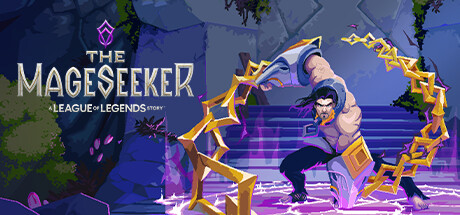
Yep—the 2020 reboot anime is officially licensed and widely available on Crunchyroll; it’s actually why games like The Mageseeker (featuring Sylas’ origin story) and Last Epoch lean into that same 'heroic coming-of-age + elemental spectacle' vibe. You’ll spot direct parallels: Sylas’ fiery resolve mirrors Dai’s growth arc, and Last Epoch’s skill-tree ‘Chronomancer’ class even echoes Avan’s time-bending spells during the final battle at the Demon King’s citadel.
How accurate is Runic Rampage as a Dragon Quest: The Adventure of Dai alternative?
Surprisingly spot-on for the *vibe*—not the lore—but the combat rhythm and progression pacing match closely: you level up fast, unlock flashy rune-enhanced attacks (like Dai’s Burst Flame), and tackle themed dungeons (Ice Cavern, Volcanic Forge) with co-op-friendly chaos. Player reviews call it 'Dai’s spirit in indie form,' especially when you’re juggling three elemental stances mid-air like Dai dodging Baran’s lightning strikes.
What’s the best game like Dragon Quest: The Adventure of Dai if I want that heroic, hopeful, 'underdog becomes legend' feeling?
The Mageseeker: A League of Legends Story™ nails it—Sylas starts as an outcast blacksmith’s apprentice just like young Dai, then unlocks explosive magitech powers while rallying allies against a corrupt empire (echoing Dai uniting humans, monsters, and dragons). That climactic 'broken chains → blazing ascension' moment? Pure Dai energy—and it’s got the same warm, hand-painted art and heartfelt dialogue that made fans cry during the final battle at the Demon King’s throne room.