
I May Be a Guild Receptionist, but I’ll Solo Any Boss to Clock Out on Time
Alina thought she had found the perfect job as a guild receptionist. It’s stable, safe, and has a super cute uniform. But this dream gig turns into an overtime nightmare whenever adventurers get stuck clearing a dungeon. Tired of the long nights, Alina starts taking down the bosses herself! She even earns the name Executioner for her impressive skills. Can she keep her identity a secret?
(Source: Crunchyroll)
📺Anime Details
📝Editorial Analysis
The fluorescent hum of the guild office—paper shuffling, ink smudging, the faint clink of a teacup set down just a little too hard—is suddenly drowned out by the distant, guttural roar of a dungeon boss. Alina doesn’t flinch. She adjusts her collar, smooths her skirt, and walks—not runs—down the stone stairwell, heels clicking like metronome ticks against the chaos. Her clipboard stays tucked under one arm. Her expression? Not fear. Not excitement. Just tired precision. She’s clocked in at 9 a.m. She needs to clock out at 5:00 p.m. Exactly. And that fire-breathing basilisk in B3? It’s holding up payroll.

This isn’t fantasy escapism—it’s fantasy bureaucracy. What makes I May Be a Guild Receptionist, but I’ll Solo Any Boss to Clock Out on Time vibrate with such singular energy is how deeply it roots mastery in monotony. Alina’s power isn’t flashy because she’s chosen destiny—it’s flashy because she’s optimized. Every parry, every spell detonation, every boss stagger is timed not for drama, but for efficiency. The world treats dungeons as perilous narrative crucibles; she treats them like quarterly audits. That dissonance—the quiet fury of competence weaponized against systemic inefficiency—makes you feel seen, especially if you’ve ever stared at a spreadsheet while your brain quietly rehearsed a perfect dodge-roll combo.
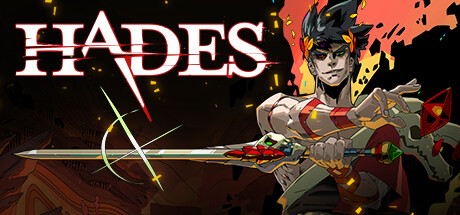
That emotional DNA—control, rhythm, relentless forward motion against absurd resistance—pulses strongest in games where combat isn’t just action, but procedure. Take Hades: “Defy the god of the dead as you hack and slash out of the Underworld…” That “out” is key. Like Alina descending those stairs, Zagreus doesn’t linger in the Styx—he exits. Each run is a calibrated sprint toward a fixed endpoint: escape. Player reviews admit being “so close to giving it a negative review”—but then something clicks: the loop, the muscle memory, the way failure isn’t defeat, just another shift logged. That’s Alina resetting her wristwatch after vaporizing a lich and sighing, “Okay. Who’s next?”
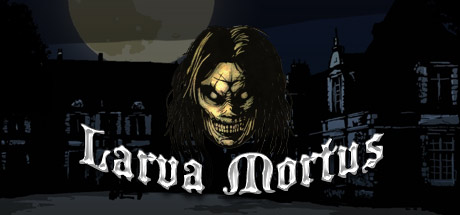
Then there’s Larva Mortus, described as a “fast-paced hack and slash top-down shooter” where you “hunt monsters… in a dark, ominous, and randomly generated atmosphere.” Note the verbs: hunt, generated, fast-paced. No grand speeches before the boss—just a mission, a weapon, and a clock ticking in your peripheral vision. A player calls it “fun gameplay loop and nice weapons…”—no lore deep dive, no emotional exposition. Just rhythm, repetition, and the quiet satisfaction of clearing a room cleanly, quickly, without overtime. Alina wouldn’t need cutscenes. She’d load in, assess threat level, swap to her ice-enchanted quill (yes, it’s a weapon), and get it done before her tea goes cold.
Even Arx Fatalis, with its “first-person RPG” grit and “post-apocalyptic fantasy world,” resonates—not in tone, but in texture. Its description praises “exploration [that] is truly e…” (the review cuts off, but the intent is clear: immersion through tactile, deliberate movement). Alina doesn’t glide through dungeons; she navigates them like floor plans—checking pressure plates, noting mana drain zones, calculating optimal pathing to minimize backtracking. Arx’s clunky, weighty controls, its reliance on real-time spell-drawing in the air? That’s not jank—it’s embodied procedure. Like Alina signing off a quest log with a flourish that doubles as a sealing rune.
Who lives for this? The player who pauses Hades mid-run to adjust their desk lamp. The anime watcher who rewinds Alina’s third-floor staircase walk—not for the swordplay, but for the way her hair doesn’t even move as she pivots to stab a goblin mid-sentence about his lunch break. The person who finds catharsis not in saving the world, but in finishing the report before the meeting. They don’t crave epic stakes—they crave agency within structure. They love the thrill of a perfectly timed dodge because it means they’ll make the 4:58 train. They understand that true power isn’t breaking the system—it’s bending it, just enough, so they can go home on time. That’s not laziness. That’s dignity. And it hums, steady and sharp, in every frame, every boss rush, every clipped “Next!” from behind the reception desk.
🎮32 Games That Match the Vibe
















Match Dimensions Explained
❓Frequently Asked Questions
Why is Hades listed as similar to I May Be a Guild Receptionist, but I’ll Solo Any Boss to Clock Out on Time?
Because both lean hard into snarky, character-driven banter layered over relentless action—like Zagreus trading quips with Nyx while chaining dash-attacks through waves of shades, mirroring how the receptionist deadpans bureaucratic complaints mid-boss-rush. The roguelike dungeon structure and 'one more run' loop in Hades (85 score, Action Spectacle + Roguelike & Dungeon) mirrors the game’s time-pressured, solo-power-fantasy pacing.
Is there a mobile or anime adaptation of I May Be a Guild Receptionist, but I’ll Solo Any Boss to Clock Out on Time?
No official mobile game or anime exists yet—but if you're craving that same vibe on the go, Larva Mortus (85 score, Roguelike & Dungeon + Action Spectacle) nails it: play as a supernatural exorcist agent blasting through procedurally generated hellscapes with snappy weapon swaps and zero patience for red tape, just like our overqualified receptionist clocking out early.
How does Sacred Gold compare to Arx Fatalis for dark fantasy fans who love guild-receptionist energy?
Sacred Gold (82 score, Dark Fantasy + Action Spectacle) gives you chaotic, janky crowd-control spectacle—imagine flinging fireballs at ogres while muttering about overtime pay—whereas Arx Fatalis (84 score, Dark Fantasy + Roguelike & Dungeon) leans into grim, immersive worldbuilding and spell-casting via *real-time gesture drawing*, like signing off a cursed contract with your mouse. Both are dark fantasy, but Sacred’s ‘full of jank’ charm feels closer to the receptionist’s gloriously unpolished efficiency.
What’s the best game like I May Be a Guild Receptionist for when I want fast-paced solo boss-slaying without multiplayer pressure?
Larva Mortus is your top pick—it’s pure, no-nonsense solo exorcism: dodge-roll through hordes of monsters in a top-down arena, swap between shotguns and holy grenades on the fly, and finish bosses before your coffee gets cold. With its 85 score in both Roguelike & Dungeon and Action Spectacle—and player praise for its 'fun gameplay loop and nice weapons'—it’s basically the receptionist’s after-work shift, distilled into one tight, satisfying run.