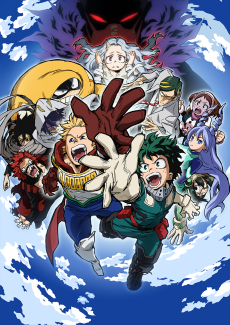
My Hero Academia Season 4
The villain world teeters on the brink of war now that All For One is out of the picture. Shigaraki of the League of Villains squares off with Overhaul of the yakuza, vying for total control of the shadows. Meanwhile, Deku gets tangled in another dangerous internship as he struggles to keep pace with his upperclassman—Mirio.
(Source: Crunchyroll)
📺Anime Details
📝Editorial Analysis
The air in the underground yakuza compound is thick—not just with dust and damp concrete, but with silence that hums. Shigaraki’s fingers twitch, not from nervousness, but from the raw, unfiltered voltage of a world cracking open. Overhaul stands across the room, sleeves rolled, gloves off—his quirk coiled like a spring, his posture calm, lethal, inevitable. No flashy explosions yet. Just two men who’ve remade themselves into weapons, circling in a space where every breath could be the last before the war for the shadows begins. That silence isn’t empty—it’s charged, brittle, trembling with the weight of what comes next.
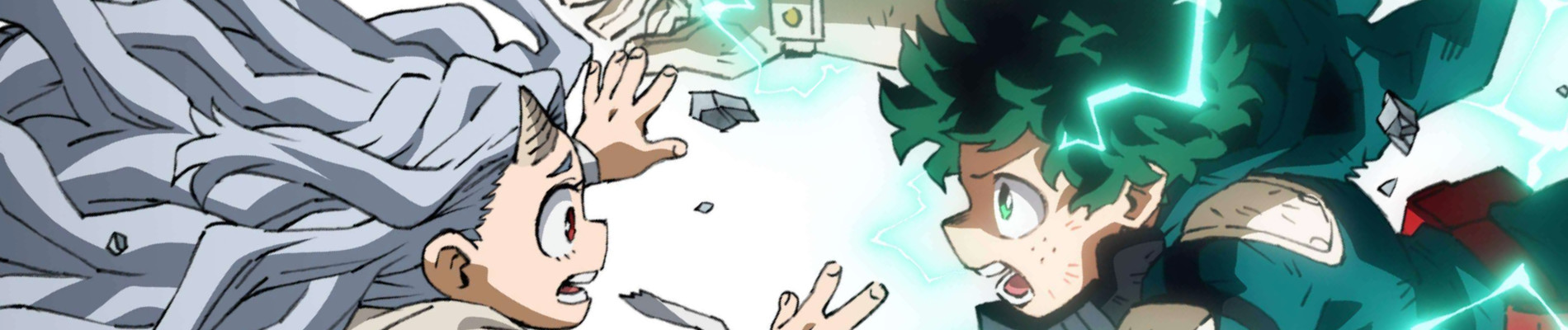
That’s the feeling My Hero Academia Season 4 lives inside: tectonic tension. Not just action, but the suffocating pressure of systems collapsing—hero society’s brittle order, villain hierarchies fracturing, even Deku’s body straining under Mirio’s impossible standard during that internship. It’s not about saving the world yet—it’s about standing in the fault line as it widens, watching institutions you thought were bedrock turn to gravel beneath your feet. The boarding school setting isn’t cozy—it’s a pressure cooker where teen idealism gets tested against real-world corruption, gang politics, and moral exhaustion. You don’t feel triumphant watching Deku push through another brutal training session—you feel awed, then worn, then terrified—because his growth isn’t clean; it’s scraped raw, bleeding, and deeply uncertain.
That same weight, that same noir-tinged calculation, pulses through Hitman: Codename 47. Its description nails it: “use stealth and tactical problem solving to enter, execute and exit your assignment with minimum attention and maximum effectiveness.” Sound familiar? Shigaraki doesn’t charge in—he studies, waits, exploits weakness, turns environments into weapons. Overhaul doesn’t brawl—he orchestrates, dissects, isolates. Like Agent 47, they operate in a world where power isn’t shouted—it’s withheld, then deployed with surgical precision. A player review calls it “jank… old… but playable” with the right guide—mirroring how Season 4’s emotional payoff isn’t slick or effortless. It’s earned through friction, through flawed execution, through learning the hard way what control really costs.
Then there’s Second Sight, whose description merges “atmospheric, psychological thriller narrative” with “paranormal psychic abilities” and “stealthy exploration.” Deku’s internship isn’t just physical—it’s psychological: Mirio’s presence isn’t just a mentor; he’s a mirror reflecting Deku’s limits, his fear of failure, his dawning awareness that heroism isn’t about power—it’s about perception, timing, reading intent. Like the protagonist of Second Sight, Deku learns to see beyond the surface: spotting tells, anticipating movement, sensing danger before it strikes. A player review says it’s “one of my favourite games… despite its age and wonky mechanics”—a perfect echo of how Season 4’s emotional resonance cuts deeper than polished animation. Its “wonky mechanics” are its honesty: the stumbles, the missteps, the quiet, devastating moments where a character’s eyes flicker—not with power, but with recognition.
And Rogue Trooper, set on “Nu Earth: a poisoned planet where endless war rages… a futile struggle on a hostile planet with no end in sight.” That’s the League of Villains’ reality—not cartoonish evil, but exhaustion, legacy, inherited trauma. Shigaraki isn’t chasing glory; he’s trying to survive a war he didn’t start but can’t escape. His fight with Overhaul isn’t about ideology—it’s about territory, about who gets to define the rules in the ruins. A player calls it a “good hidden gem… no bullshiet”—which fits how Season 4 strips away shounen gloss. There’s no grand speech before the clash—just two broken men stepping into the dark, knowing the cost, choosing to move anyway.
This pairing isn’t for the casual fan who wants easy wins or heroic certainty. It’s for the viewer who leans in when Deku’s knuckles split on concrete and feels that sting—not as pain, but as proof. It’s for the player who replays a Hitman mission three times not to get the perfect kill, but to understand the rhythm of a guard’s patrol, the weight of a silenced pistol, the moral gravity of choosing who lives or dies in silence. It’s for those who love stories where hope isn’t bright—it’s flickering, stubborn, forged in the neon-drenched gloom where loyalty and justice aren’t slogans, but choices made in the dark, one trembling, deliberate step at a time.
🎮21 Games That Match the Vibe




Match Dimensions Explained
❓Frequently Asked Questions
Why does Hitman 2: Silent Assassin feel like My Hero Academia Season 4’s 'U.A. School Festival' arc?
Because both pivot on high-stakes tension masked by vibrant, almost deceptive normalcy—like infiltrating a glittering festival while knowing betrayal is lurking. In Hitman 2, you’re the quiet professional navigating crowds and layered security just like Izuku analyzing villains mid-celebration; the Neon Noir aesthetic mirrors the arc’s contrast between cheerful lights and underlying dread, and your tactical patience (e.g., waiting for a guard shift before slipping into the VIP lounge) echoes Deku’s split-second, environment-aware heroics.
Is there a My Hero Academia Season 4 video game adaptation?
No—there’s no official MHA Season 4 game. The closest licensed titles are older mobile games like *My Hero Academia: The Strongest Hero*, which only covers up to Season 3. So if you’re craving that specific vibe—Endeavor’s pressure-cooker training, Hawks’ aerial agility, or the chilling precision of the villain battle at Jaku City—you’ll want tactical, character-driven stealth games like *Second Sight*, where psychic powers (like telekinesis or mind control) let you manipulate enemies with the same calculated flair as heroes using Quirks under extreme duress.
How does Desperados 2: Cooper's Revenge compare to Rogue Trooper for My Hero Academia Season 4 fans?
Desperados 2 leans into team-based, western-style coordination—think Kirishima + Sero’s combo takedowns—where timing and role synergy (e.g., distracting guards while your sniper picks off reinforcements) mirror U.A. class tactics. Rogue Trooper, meanwhile, is more like solo Endeavor energy: gritty, lone-wolf grit on a poisoned world (Nu Earth), with your bio-chipped squadmates ‘Gunnar’, ‘Helm’, and ‘Bagman’ echoing the weight of legacy and sacrifice seen in Enji Todoroki’s arc—both hit that 76-score Neon Noir/Tactical Warfare sweet spot, but Desperados is teamwork-first, Rogue Trooper is burdened-hero solitude.
What’s the best game like My Hero Academia Season 4 if I want that intense, morally gray ‘hero vs. system’ vibe?
Go straight to *Second Sight*—its protagonist, John Vattic, wakes up with psychic powers in a shadowy black-site facility, forced to uncover conspiracies while questioning who’s really the villain. That slow-burn psychological tension, layered flashbacks, and morally ambiguous choices (like using mind control to turn soldiers against each other) nail Season 4’s themes: Endeavor’s toxic legacy, Hawks’ compromised loyalty, and even the uneasy alliance with villains. Plus, its janky-but-charming mechanics and atmospheric storytelling make it feel like playing through a Quirk-fueled noir thriller.