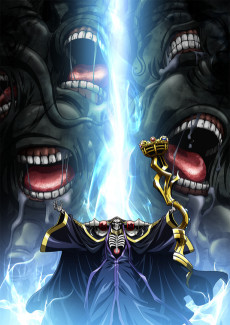
Overlord III
The third season of Overlord.
With his foundations now set in this new world, the first steps of Ains Ooal Gown's master plan apparent begin to come to fruition. The value of Carne village and especially the political value of his alter ego Momon are reaffirmed; the “hidden” genius of his actions is continuously met with shock and awe by Demiurge, Albedo, the rest of his guardians, and even Ains himself at his “great wisdom.” His attempts to act in a way befitting the ruler of Nazarick, continuing to further cement his guardian’s loyalty, push him ever further down the path of not-so-intentional world domination. Without human conscience due to being undead, he is motivated only to continue searching for other players from Yggdrasil and to gain power to better protect the children and home of him and his forty former companions. Lord Ains Ooal Gown maintains his mantle of Overlord and leads the Great Tomb of Nazarick unto the world stage, directly into a vicious power struggle between two great empires.
(Source: Anime News Network)
📺Anime Details
📝Editorial Analysis
The silence after the massacre at the Re-Estize arena isn’t filled with screams or weeping—it’s thick with the weight of calculation. Ains Ooal Gown stands motionless, bone fingers curled at his sides, watching as Demiurge kneels—not in submission, but in recognition. Not of power alone, but of architecture: how the slaughter wasn’t just violence, but a calibrated political instrument—designed to expose noble hypocrisy, fracture alliances, and elevate Momon from mercenary to myth—all without Ains ever raising his voice. That silence isn’t empty. It’s charged, humming with the cold precision of a mind treating human lives like variables in an equation no one else can even parse.

What makes Overlord III’s atmosphere so distinct isn’t its skeleton protagonist or its isekai premise—it’s the dissonance it sustains: a world drenched in medieval warmth—candlelit taverns, rustling silks, whispered prayers—while every meaningful interaction vibrates with the chill of absolute, unblinking control. You don’t feel awe for magic; you feel dread for its deployment. You don’t root for victory—you track the reverberation of each decision across guild charts, tax ledgers, and diplomatic memos. It’s not grimdark for shock value. It’s administrative horror: the realization that tyranny doesn’t always roar—it files reports, approves supply routes, and delegates assassination to a subordinate who enjoys optimizing body disposal logistics. The emotional core isn’t rage or sorrow. It’s uneasy fascination—watching genius operate in a moral vacuum where “good governance” and “systematic subjugation” share the same spreadsheet.
That’s why Assassin's Creed™: Director's Cut Edition resonates so deeply—not as a flashy action game, but as a political thriller rooted in tactical warfare and dark fantasy aesthetics. Its description calls it a redefinition of action through next-gen design—but what lingers isn’t the parkour. It’s the way Altaïr moves through Jerusalem like Ains moves through Re-Estize: observing guard rotations, identifying leverage points in faction rivalries, turning religious dogma into exploitable friction. A player review notes dated textures—but that very datedness mirrors Overlord III’s deliberate visual restraint: both prioritize environmental storytelling over spectacle, letting stone walls and parchment scrolls whisper the real stakes. The dread isn’t in the blade—it’s in the silence before the strike, the knowledge that every kill recalibrates a balance of power no one else sees coming.
Then there’s The Witcher 3: Wild Hunt, whose description positions Geralt not as a hero, but as a man tracking Ciri—the Child of Prophecy across a war-torn, monster-infested continent. That phrase—“war-torn, monster-infested”—isn’t flavor text. It’s the texture of Overlord III’s world: villages aren’t quaint backdrops; they’re fragile nodes in a collapsing feudal network, just as Carne Village is less a home and more a strategic keystone. A player review celebrates DLC announced 11 years later—proof of enduring narrative gravity. That same gravity pulses in Overlord III: every diplomatic exchange, every “benevolent” intervention by Momon, carries consequence that echoes beyond the episode—like Geralt’s choices rippling across Skellige or Novigrad long after he’s moved on. Both demand you hold emotional narrative and systemic consequence in the same breath.
And Dragon Age: Origins, with its description asking “What will be said about the hero who turned the tide against the darkspawn?”—that question isn’t rhetorical. It’s the engine of Overlord III’s entire third season. Ains doesn’t just win battles—he engineers how history will record them. A player review praises the pause attack mechanic, calling it “amazing… help a lot to strategist your tactic.” That’s the exact rhythm of Overlord III: time doesn’t flow linearly—it pauses at key inflection points (the arena, the council chamber, the throne room) so you can watch Ains weigh optics against logistics, mercy against deterrence, legacy against expediency. It’s not about reflexes. It’s about reading the board—where every noble, every soldier, every peasant is a piece whose loyalty, fear, or ignorance has been quantified and assigned value.
This pairing isn’t for fans of power fantasies or redemption arcs. It’s for the ones who get chills when a character cross-references census data with troop deployment maps. For players who replay dialogue trees not for romance options, but to trace how a single lie reshapes three provinces’ trade tariffs. For viewers who watch Ains adjust his gloves before signing a treaty—and feel more tension than any dragon fight could deliver. They’re the quiet strategists, the archive-dwellers, the ones who understand that the most terrifying magic isn’t fireballs or resurrection—it’s the ability to make the world bend to your spreadsheet, and leave everyone else wondering, long after the ink dries, whether they were ever truly in the story—or just part of the footnote.
🎮45 Games That Match the Vibe



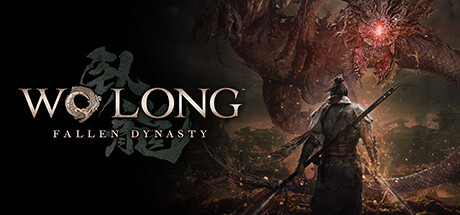
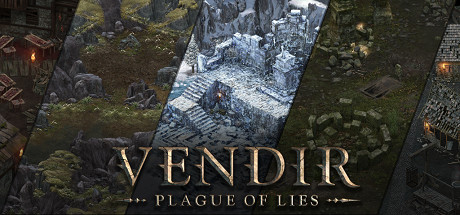
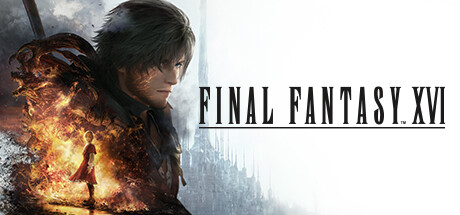

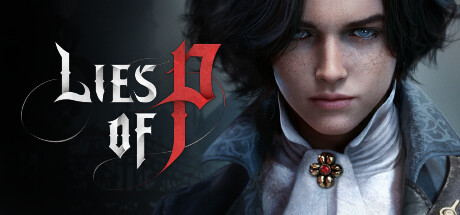













Match Dimensions Explained
❓Frequently Asked Questions
Why does Overlord III feel so similar to The Witcher 3 despite being a different genre?
It’s the shared DNA of morally grey choices with real consequences—like Geralt’s decision at the end of Chapter 2 in The Witcher 3 (81 score, Dark Fantasy/Emotional Narrative) that reshapes entire regions, or how Overlord III forces you to pick between saving a village or seizing its arcane vault. Both lean hard into Dark Fantasy worldbuilding where even 'heroic' acts leave bloodstains on your reputation.
Is there an anime or manga adaptation of Overlord III that explains the lore better?
No official anime or manga adaptation exists for Overlord III—but if you're craving that same layered political intrigue and grim tone, Assassin's Creed™: Director's Cut Edition (85 score, Political Thriller/Dark Fantasy) nails it instead: think Al Mualim’s betrayal echoing Overlord III’s council betrayals, or the Damascus rooftop chases mirroring the tense stealth sequences in Overlord III’s Shadowspire arc.
How does Dragon Age: Origins compare to Overlord III in terms of party control and tactical depth?
Dragon Age: Origins (81 score, Emotional Narrative/JRPG Narrative) gives you pause-and-command combat—exactly like Overlord III’s squad micromanagement during siege battles—where you can freeze time to position Alistair behind cover before triggering a shield bash, just like ordering your lieutenants to flank the Obsidian Golem in Overlord III’s Ashen Hollow fight. Players love that 'pause attack mechanic' for high-stakes strategy.
What’s the best game like Overlord III if I want dark fantasy + emotional weight but hate clunky combat?
Go straight to The Witcher: Enhanced Edition Director's Cut (81 score, Dark Fantasy/Emotional Narrative)—its streamlined swordplay and dialogue-driven tension (like the heartbreaking Yennefer vs. Triss choice at Loc Muinne) deliver Overlord III’s grim atmosphere without the janky hitboxes. One fan even said it ‘helps you realize why team Yenn and not team Tress is a thing’—that’s the kind of emotional gravity Overlord III fans crave.