
Revolutionary Girl Utena
Just after Utena's parents died, she was consoled by a prince who gave her a ring with a rose crest on it. Utena was so impressed by the Prince that she vowed to become one herself one day. A few years later, Utena is attending Ohtori Academy where she gives all the teachers headaches because she dresses in a boy's uniform so she can be like the prince she met long ago.
After Utena's friend is insulted by a member of the Student Council, Utena fights in a duel for her friend's honor. Utena's rose crest allows her to enter the dueling arena, where Utena wins the duel and becomes engaged to the Rose Bride. Unknowingly, Utena is pulled into a series of duels with other members of the Student Council for the possession of the Rose Bride. As she becomes fond of Anthy, the Rose Bride, she must fight to keep her friend safe and to discover the horrifying secret behind Ohtori Academy.
(Source: Anime News Network)
📺Anime Details
📝Editorial Analysis
The rose petals don’t fall—they hover, suspended midair like held breath, as Utena raises her sword beneath the glass sky of Ohtori Academy’s dueling arena. Her boy’s uniform is crisp, her voice raw with conviction, and the ring on her finger glints—not gold, but something older, heavier: a vow made in childhood grief, now weaponized into ritual. There’s no wind. No logic. Just that unbearable stillness before meaning collapses or crystallizes.
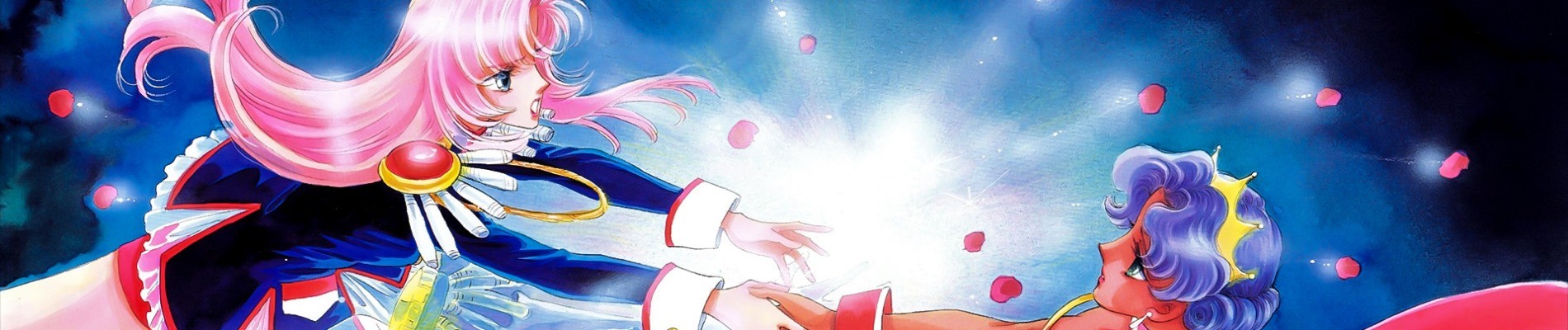
That stillness is the atmosphere—not mystery as puzzle, not fantasy as escape, but psychic pressure. Revolutionary Girl Utena makes you feel the weight of becoming: how identity isn’t chosen but forged in the furnace of others’ expectations, desire, and silence. It’s not about who you are—it’s about who you perform until the performance cracks open and reveals something trembling underneath. You think about time not as sequence but as layer: the child Utena clutching the prince’s ring, the teenage Utena dueling for someone else’s honor, the girl who doesn’t yet know her own name is already being rewritten by the academy’s architecture, its roses, its rules. It’s fairy tale stripped of comfort—where every gesture is charged, every glance a potential violation or salvation, every rose a wound disguised as ornament.
Prince of Persia (2008) shares this emotional DNA—not through plot, but through romance as spectacle and vulnerability. Its description calls it “an all-new epic journey” built on “Action Spectacle” and “Romance & Shoujo”—a pairing that sounds jarring until you remember Utena’s duels: balletic, theatrical, drenched in longing that never settles into safety. The player review notes it introduces “a new prince, new lands and a brand new story completely separate from the sands…”—that deliberate rupture echoes Utena’s own break from linear time and inherited myth. She doesn’t inherit a throne; she invades one. Like the Prince, she moves through spaces that shift underfoot—not because of magic, but because reality bends where desire and trauma meet.
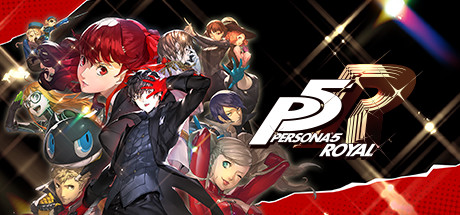
Persona 5 Royal resonates in its emotional narrative architecture. Its description highlights “build[ing] relations” while navigating “Tokyo” as both city and psyche—and that’s Ohtori Academy distilled: a hyperreal social ecosystem where every hallway conversation is a negotiation of power, intimacy, and self-erasure. The player review praises its “seamless transition between daily life…”—exactly how Utena stitches together classroom banter, rooftop confessions, and arena bloodshed into one breathing organism. Both refuse to quarantine the inner life from the outer world; your heartbreak changes the map. When Ann Takamaki confesses her shame or Makoto Niijima wrestles with duty, it lands with the same quiet devastation as Anthy’s smile holding back an ocean—or Utena’s fist shaking not from anger, but from the terror of finally feeling something real.
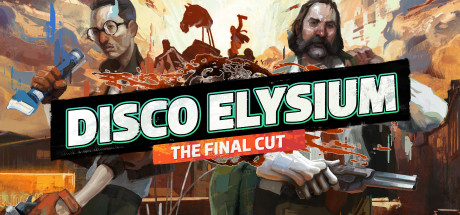
Disco Elysium - The Final Cut taps into the same philosophical vertigo, though through grit instead of gloss. Its description positions it as a “groundbreaking role playing game” where you carve a path across “a whole city”—and that city, like Ohtori, is less geography than ideology made manifest. The player review quotes: “Capital has the ability to subsume all critiques into itself. Even those who would critique capital end up reinforcing it instead.” That’s the core horror of Utena: the revolution is already co-opted, the prince is already compromised, the rose is already poisoned—and yet you still raise your sword. Not because victory is possible, but because refusal is the only remaining act of sovereignty. Both works make ideology visceral, not abstract: you taste the rust of systemic rot in Disco’s rain-slicked alleys just as you smell the cloying sweetness of Ohtori’s hothouse roses.
This pairing isn’t for fans of “strong female leads” as tropes—it’s for the ones who’ve ever worn someone else’s uniform to survive, who’ve memorized love like a script, who’ve stared at their reflection and wondered which face is the mask. It’s for people who understand that yuri isn’t just romance—it’s the terrifying, luminous risk of seeing yourself in another’s eyes and realizing you might not recognize what looks back. For those who know that the most revolutionary act isn’t winning the duel—it’s stepping into the arena knowing the rules are rigged, the roses are fake, and your heart is still beating, still beating, against the glass.
🎮28 Games That Match the Vibe







Match Dimensions Explained
❓Frequently Asked Questions
Why does Prince of Persia (2023) show up in 'Games Like Revolutionary Girl Utena' lists?
Because its core narrative hinges on theatrical, ritualized duels—like Utena’s Rose Duels—with symbolic stakes and shifting power dynamics between characters (e.g., the Prince vs. the Dahaka-echoing antagonist), plus heavy Romance & Shoujo and Comedy & Parody dimensions that mirror Utena’s genre-blending tone. Critics noted how its arena confrontations echo the stylized, emotionally charged swordplay of Ohtori Academy’s dueling arena—not just in visuals, but in how each fight advances character arcs and subverts expectations.
Is there a Disco Elysium anime or visual novel adaptation?
No—Disco Elysium is exclusively a critically acclaimed RPG with no official anime, manga, or visual novel adaptation. But fans often compare its layered political allegory, fragmented identity themes, and surreal romantic tension (like the fraught, philosophical rapport between Harry and Kim) to Utena’s deconstruction of gender and power—hence its inclusion in Utena-like lists under Romance & Shoujo *and* Political Thriller dimensions, despite being text-driven and grounded in noir realism.
How does Persona 5 Royal compare to The Sims 4 for Utena-style emotional storytelling?
Persona 5 Royal delivers tightly scripted, emotionally resonant arcs—like Ann’s trauma recovery or Makoto’s journey from self-sacrifice to self-worth—that unfold through structured social links and symbolic dungeons (e.g., the Jail of Pride), while The Sims 4 offers open-ended, player-driven romance and parody (think: absurd dating sims or gender-bending household stories) but lacks narrative depth without heavy modding. Both score high in Romance & Shoujo, but P5R’s Emotional Narrative dimension (79) gives it the thematic weight and cathartic crescendos Utena fans seek.
What’s the best game like Revolutionary Girl Utena if I want something dreamy, surreal, and full of symbolic transformation?
Go straight to Prince of Persia (2023)—its time-manipulation mechanics aren’t just gameplay gimmicks; they’re woven into the story’s metaphysics like Utena’s revolving staircases and rose motifs, especially in scenes where the Prince literally rewinds fate mid-duel to expose hidden truths. With its Romance & Shoujo + Action Spectacle + Comedy & Parody blend—and that 84 Metacritic score—it captures Utena’s balance of poetic spectacle, emotional vulnerability, and playful subversion better than any other title on the list.