
The Banished Court Magician Aims to Become the Strongest
📺Anime Details
📝Editorial Analysis
The first time he raises his hand—not to cast, but to stop—and the blood from his own wound arcs like ink across cracked marble, you realize this isn’t about redemption. It’s about weight. The air in that ruined throne room doesn’t just hang heavy; it settles, thick with the silence after a scream has been swallowed whole. His robes are torn at the shoulder, not from battle—but from the jagged edge of a royal decree carved into his skin by ceremonial blade. No music swells. No flashbacks soften the blow. Just breath, grit, and the low, wet sound of magic bleeding out of him like sap from a felled tree.
That moment crystallizes what makes The Banished Court Magician Aims to Become the Strongest vibrate with such unrelenting gravity: it treats power not as spectacle, but as consequence. Not every spell leaves glittering trails—some leave scars that don’t fade, some leave orphans who call you “father” before they learn your name was struck from the registry. The fantasy here isn’t escapist—it’s architectural. Every dungeon isn’t just a place to clear; it’s a repurposed wing of the old royal observatory, its walls still lined with half-erased star charts. Every swordplay sequence carries the fatigue of muscle memory forged under tutors who vanished overnight—not because they died, but because they were unwritten. This is coming-of-age as excavation: digging through layers of sanctioned history, bureaucratic erasure, and adult betrayal—not for answers, but for the right to name yourself again. The gore isn’t stylized; it’s textural—a reminder that magic, when stripped of courtly gloss, is raw physics and fragile biology. And adoption? It’s never warm. It’s quiet meals where the child watches you measure potion doses with trembling fingers, wondering if your hands will shake this time—or next.
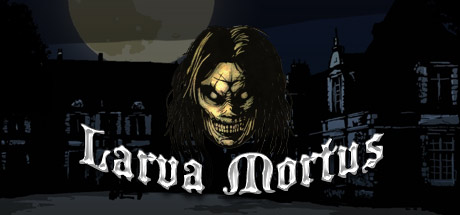
That same visceral, consequence-laden rhythm pulses through Larva Mortus, where exorcism isn’t ritual—it’s ballistics. You’re not chanting; you’re reloading mid-air, your weapon’s recoil echoing the protagonist’s first spell cast after banishment: precise, desperate, and loud enough to shatter stained glass. The player review nails it: “fun gameplay loop and nice weapons…”—but what makes it resonate isn’t the flash, it’s how the randomly generated dungeons force you to adapt without narrative scaffolding. Like the magician, you don’t get exposition before the next chamber—you get rubble, ambient dread, and the hum of something ancient waking up because you stepped wrong. No cutscene explains why the cultists wear masks stitched from court heraldry. You just fight them—and piece it together from the glyphs on their blades.
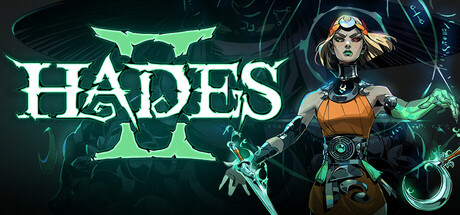
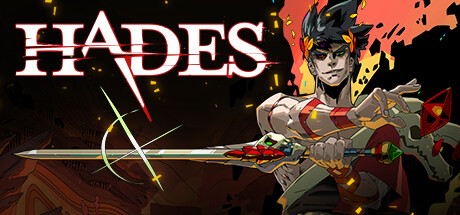
Then there’s Hades II, where every descent into the Underworld mirrors the magician’s return to places he was forbidden to enter—the old alchemy labs beneath the palace, now overrun with spectral scribes still transcribing laws that no longer exist. Its Dark Fantasy dimension isn’t just aesthetic; it’s ontological. Like the anime, it treats lineage as both curse and compass: you don’t inherit power—you inherit debt, and every successful escape attempt feels less like victory and more like negotiation with inherited trauma. The player reviews don’t mention story—they mention rhythm, weight, repetition with variation—exactly how the magician practices the same fire glyph 307 times, each iteration carrying the ghost of his adoptive father’s voice, then his executioner’s silence, then the child’s small, steady hand placed over his own.
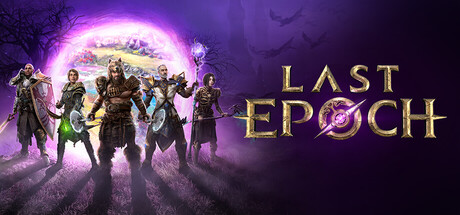
And Last Epoch? Its Roguelike & Dungeon structure doesn’t just offer replayability—it mirrors the anime’s core tension: mastery isn’t linear. You’ll master a lightning branch only to find your next dungeon floods with conductive brine, forcing you back into earth-based wards you’d abandoned months ago—just like the magician relearning healing sigils after using them to cauterize his own severed tendon. There’s no “optimal build.” Only adaptive survival, written in sweat, ash, and the slow, stubborn rewriting of self.
This pairing speaks directly to someone who’s sat through three seasons of “chosen one” tropes and felt nothing—but whose pulse spiked when a character quietly mended a broken teacup before mending a bone. Someone who plays games not to win, but to endure—who finds catharsis not in triumph, but in the exact second a skill finally clicks because it had to. They’re the ones who reread the same paragraph of lore twice—not for plot, but for the tremor in the narrator’s voice. They don’t want heroes. They want people who remember the cost of every spell, every swing, every yes—and every silence they swallowed instead.
🎮32 Games That Match the Vibe




Match Dimensions Explained
❓Frequently Asked Questions
Why does The Banished Court Magician Aims to Become the Strongest feel so similar to Hades II?
Because both lean hard into dark fantasy worldbuilding with morally ambiguous gods, time-loop narrative tension, and fast-paced action-spectacle combat—like Hades II’s Chronos fights where you dodge scythes mid-spellcast while upgrading your magic via the Underworld’s cyclical progression. The Banished Court’s ‘Arcane Ascension’ skill tree mirrors Hades II’s Boon system: stacking synergistic effects (e.g., Frostfire Glyph + Echo of the Hollow) feels just as satisfying as chaining Hermes boons into a lightning-dash combo.
Is there an anime or manga adaptation of The Banished Court Magician Aims to Become the Strongest?
No official anime or manga exists yet—just like Larva Mortus, which also has zero adaptations despite its strong cult following and vivid monster designs (think the Lurker Queen boss fight in Chapter 3’s cursed cathedral). Fans keep speculating, but right now the only canon is the game itself and its in-universe grimoire codex entries.
How does Dragon Nest compare to The Banished Court Magician Aims to Become the Strongest in terms of spellcasting depth?
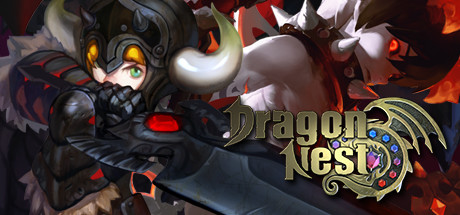
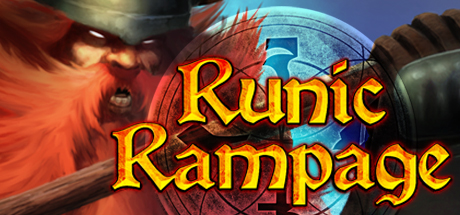
Dragon Nest’s spell system is flashy but shallow—its ‘Dragon Fury’ ultimate plays like a preset cinematic cutscene, whereas The Banished Court lets you manually weave glyphs mid-combo, like chaining ‘Void Sigil’ into ‘Soulbind Chain’ à la Last Epoch’s skill-crafting system. That said, Dragon Nest’s login crash (‘white screen you can’t click on lmfao’) means you won’t even get to test that flashy combat—unlike Runic Rampage, which boots reliably and offers deep elemental affinities for spell customization.
What’s the best game like The Banished Court Magician Aims to Become the Strongest if I want that grim, rain-soaked gothic vibe with heavy lore drops between fights?
Hades II nails it—its mist-choked Asphodel biome, dialogue-heavy encounters with figures like Chthonic and Melinoë, and environmental storytelling (like finding burnt pages from the First Grimoire near the Weirwood Grove) deliver exactly that brooding, lore-dense gothic atmosphere. Larva Mortus leans darker visually but skips narrative weight—you’re exorcising larvae in silence, not debating fate with a spectral archmage over tea in a crumbling observatory.