
The Beginning After the End
📺Anime Details
📝Editorial Analysis
The first time Arthur’s hand closes around the hilt of his sword—not in battle, but in quiet solitude, standing atop a windswept cliff overlooking a mist-laced valley where elven ruins bleed into ancient forest—you feel it: not triumph, not awe, but weight. The kind that settles behind your ribs when memory folds over itself, when every spell cast echoes with something older than this life, and every step forward drags the ghost of another world behind it.
That’s the atmosphere of The Beginning After the End: not just reincarnation as plot device, but reincarnation as texture. It’s in the way magic hums—not with bright spectacle, but with low, resonant gravity; in how war isn’t backdrop, but slow erosion of peace you’ve already mourned before the first arrow flies; in how cultivation feels less like power-up montage and more like tending a wound that never fully scars. This is fantasy steeped in melancholic exploration—not because the world is broken, but because it remembers being whole, and Arthur remembers more. His silence isn’t stoicism—it’s the pause before speech that might unravel time itself.
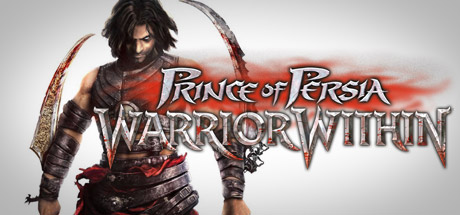
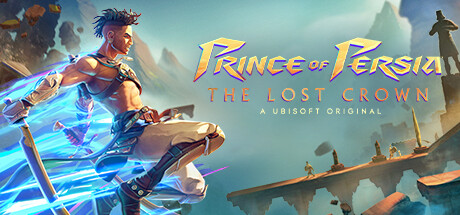
Which is why Prince of Persia: Warrior Within lands with such uncanny resonance. Its description names “the dark underworld” and “Dahaka, an immortal incarnation of Fate”—a relentless, time-bleeding pursuer who doesn’t just chase the Prince, but unmakes his past choices. That matches The Beginning After the End’s core tension: Arthur doesn’t just fight monsters—he fights the aftershocks of his former self’s legacy, the way power accrues memory, and how every victory risks echoing backward. A player writes, “Dahaka chase is still as goated as it was before”—that raw, visceral dread of inevitability? That’s Arthur walking into a battlefield knowing his own strength could fracture the timeline again. Both weaponize time not as tool, but as wound.
Then there’s Sacred Gold, whose description declares “A shadow of evil has fallen on the kingdom of Ancaria… a time to journey into the perilous world of SACRED.” Notice the phrasing—not “save the kingdom,” but “a time for champions”: solemn, ritualistic, heavy with inherited duty. Its player review admits “Full of jank, bugs and is not very stable…”—yet that instability mirrors The Beginning After the End’s tonal friction: CGI that sometimes stutters mid-spell, elf villages rendered with breathtaking detail one frame and oddly flat the next—not flaws, but texture. Like Arthur’s cultivation path, it’s uneven, human-made, haunted by the gap between aspiration and execution. The melancholy isn’t in perfection—it’s in the effort to rebuild something sacred amid visible seams.
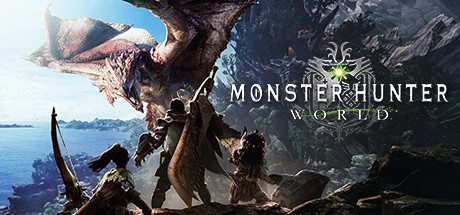
And Monster Hunter: World, with its “Dark Fantasy, Action Spectacle, Melancholic Exploration”—yes, the monsters are colossal, yes, the hunts are kinetic—but what lingers is the quiet after. The way you stand alone in the Coral Highlands at dusk, gear battered, journal half-filled, listening to wind through fossilized bone trees. That silence isn’t empty. It’s full of what came before, of ecosystems reshaped by calamity, of civilizations buried beneath mud and myth. Just like Arthur tracing elven glyphs no one alive can read—knowing their language is gone, but their sorrow isn’t. The game’s world breathes history the same way the anime’s world breathes consequence: every scar tells a story older than the hero holding the blade.
This pairing isn’t for fans of power fantasies or tidy resolutions. It’s for the ones who replay Prince of Persia: The Two Thrones not for the parkour, but for the moment the Prince stares at his reflection—and sees two faces blinking back. For players who tolerate Sacred Gold’s bugs because the weight of swinging a hammer against an orc feels like grief made physical. For viewers who watch Arthur kneel in rain-soaked earth not to summon lightning—but to remember how to breathe without forgetting who he was. These aren’t stories about becoming stronger. They’re about carrying what remains, quietly, relentlessly—through war, through magic, through time itself.
🎮18 Games That Match the Vibe

Match Dimensions Explained
❓Frequently Asked Questions
Why does Prince of Persia: Warrior Within feel like the closest game to The Beginning After the End’s vibe?
Because both lean hard into that brooding, time-bent dark fantasy where a traumatized hero fights relentless supernatural forces—like Dahaka hunting the Prince across crumbling ruins and shifting timelines, mirroring Arthur’s constant battle against fate, memory loss, and ancient curses. The gritty tone, morally grey stakes, and visceral swordplay (especially those brutal finishers in Warrior Within) hit the same emotional and mechanical notes as TBATE’s early arcs.
Is there a Monster Hunter: World adaptation of The Beginning After the End?
No official adaptation exists—but fans love how MH:World’s melancholic exploration of decaying ecosystems (like the Rotten Vale’s fungal wastelands) and its quiet, weighty character moments (e.g., the Handler’s soft-spoken lore drops or the Elder Dragon hunts’ solemn scale) mirror TBATE’s slower, world-weary chapters where Arthur reflects on loss while pushing forward. It’s not an adaptation, but it *feels* like stepping into that same atmospheric headspace.
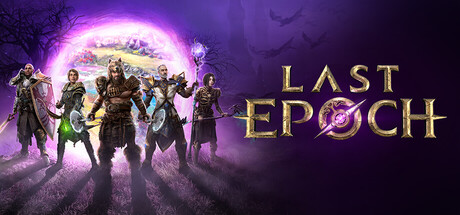
How does Sacred Gold compare to Last Epoch for someone who loves TBATE’s progression-heavy, lore-dense power fantasy?
Sacred Gold leans into janky, old-school charm with its sprawling Ancaria map and grimdark tone—think undead legions and cursed kings—but it’s unstable and clunky by modern standards. Last Epoch nails TBATE’s satisfying power fantasy better: its skill-tree ‘Epochs’ system mirrors Arthur’s layered cultivation stages, and its time-manipulating Echoes (like Chronos’ temporal rifts) directly echo TBATE’s core Time & Memory dimension, all wrapped in tight, responsive combat.
What’s the best game like The Beginning After the End if I want that lonely, reflective mood after a big battle?
Go straight to Monster Hunter: World—the silence after slaying an Elder Dragon, sitting beside your Palico under the aurora-lit cliffs of the Coral Highlands, or reading fragmented journal entries about fallen hunters? That’s pure TBATE post-climax melancholy. Even Sacred Gold delivers it differently: trudging through fog-choked forests past broken statues of forgotten gods, where every enemy drop feels like a whisper from a dying world.