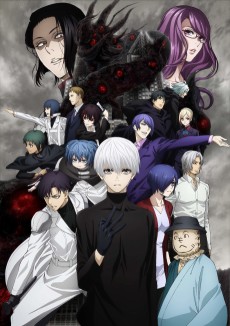
Tokyo Ghoul:re 2
📺Anime Details
📝Editorial Analysis
The rain in Tokyo Ghoul:re 2 doesn’t fall—it clings. It slicks the cracked asphalt of Shinjuku’s alleyways like congealed blood, catching the fractured glow of neon kanji flickering above a shuttered ramen stall where a man stands motionless, his left eye a hollow socket stitched shut with black thread, his right eye—golden, pulsing—tracking something no one else can see. His fingers twitch—not from cold, but from the slow, wet unfurling beneath his skin: ribs shifting, tendons re-knitting, a second jaw clicking into place behind his molars. He doesn’t scream. He breathes, and the air tastes like iron and burnt sugar.
That’s the feeling: not dread, exactly—but displacement. A body remembering violence it didn’t commit. A mind holding two names—Haise Sasaki and Ken Kaneki—like opposing magnets pressed together until the seam between them vibrates with static. This isn’t just psychological horror; it’s architectural horror—the city itself is a nervous system wired wrong, police stations doubling as morgues, subway tunnels humming with suppressed screams, every convenience store light casting shadows that don’t match the source. You don’t watch Tokyo Ghoul:re 2 to escape. You watch to feel the floor tilt—not once, but constantly—as memory fractures, time skips without warning, and identity bleeds across wounds that never close.
Which is why BioShock Infinite lands with such brutal precision. Its description names Booker DeWitt as “indebted… with his life on the line,” a man whose past is a debt he can’t repay—not in money, but in self. Like Kaneki, Booker carries ghosts that wear his face. The player review hints at unresolved grief—“the Bioshock Infinite we could have gotten”—mirroring how Tokyo Ghoul:re 2 forces you to sit with what was lost, not what’s won. Both refuse catharsis. Both weaponize Time & Memory not as plot devices, but as open wounds: Elizabeth’s tears aren’t sorrow—they’re temporal leakage. Kaneki’s dissociation isn’t breakdown—it’s survival architecture. And the shared tag Adult & Dark Seinen isn’t demographic fluff—it’s the quiet understanding that some truths aren’t revealed; they’re recovered, piece by jagged piece, in silence.
Then there’s Prince of Persia: Warrior Within, where the Prince is “hunted by Dahaka, an immortal incarnation of Fate.” That chase isn’t metaphorical—it’s physical, relentless, a blade scraping bone as time itself curdles around him. The player review calls the Dahaka pursuit “still as goated as it was before”—because it feels inevitable, not exciting. Like Kaneki’s transformations, the Prince’s mutations aren’t power-ups; they’re corruptions, each new scar a timestamp on a timeline he can’t outrun. The game’s Dark Fantasy isn’t about dragons—it’s about consequence made flesh, same as Tokyo Ghoul:re 2’s Body Horror & Occult: tendons snapping like piano wire, skin splitting to reveal older, hungrier layers underneath. Both treat the body as a crime scene—and the protagonist, the chief suspect.
And TimeShift™, where Dr. Krone’s “reckless act” births a “disturbing alternate reality.” Not a parallel world—a wrong turn, a single misstep in chronology that unravels everything. Its description doesn’t promise wonder—it warns of “frightening consequences.” The player review calls it a “4 hour game” that’s “a blast”—but only after “a little work to get it into a playable state.” That friction—between desire and dysfunction, between control and collapse—is Tokyo Ghoul:re 2’s rhythm. Kaneki doesn’t master his kagune; he negotiates with it, like Krone wrestling unstable chronal fields. Both exist in systems that reject coherence, where every victory smells faintly of decay.
This isn’t for fans of clean arcs or triumphant heroes. It’s for the ones who replay scenes not to win, but to witness the fracture: the way Haise’s hand trembles before he lifts a coffee cup—not from weakness, but from the sheer effort of holding one self together. The ones who pause games mid-chase to stare at textures—the grime on Dahaka’s blade, the rust bleeding through Krone’s chrono-gauntlet—because those details are the story. They know that gore isn’t spectacle here; it’s testimony. That time manipulation isn’t magic—it’s trauma echoing backward. That urban fantasy means subway platforms smell like wet concrete and formaldehyde, not magic dust. If you’ve ever stared at your reflection and wondered which version of you blinked first—if you trust atmosphere more than exposition, silence more than speeches—then Tokyo Ghoul:re 2, BioShock Infinite, Prince of Persia: Warrior Within, and TimeShift™ aren’t entertainment. They’re mirrors held up in a storm. And the glass is shattered, but still holding.
🎮20 Games That Match the Vibe
Match Dimensions Explained
❓Frequently Asked Questions
Why does Prince of Persia: Warrior Within feel so much like Tokyo Ghoul:re 2’s darker tone?
Because both lean hard into Body Horror & Occult and Time & Memory themes—Warrior Within’s Dahaka chase sequences mirror the visceral, guilt-ridden tension of Kaneki’s transformations, especially during those claustrophobic underground fights where your own body betrays you. The game’s gritty art direction, morally ambiguous choices, and constant sense of being hunted (like Kaneki hunted by CCG or Aogiri) hit that same Adult & Dark Seinen vibe—no wonder fans call the Dahaka pursuit 'goated' for its oppressive, inescapable dread.
Is there a Tokyo Ghoul:re 2 anime or game adaptation I can actually play right now?
No—there’s no official Tokyo Ghoul:re 2 game or anime sequel. But if you’re craving that exact blend of psychological weight, grotesque transformation mechanics, and time-fractured identity, Last Epoch nails it: its ‘Corruption’ system warps your character visually and mechanically (like Kaneki’s kagune evolution), while its lore-heavy quests echo the moral decay and fractured memories seen in :re 2’s V team arcs. It’s not an adaptation—but it *feels* like stepping into that world.
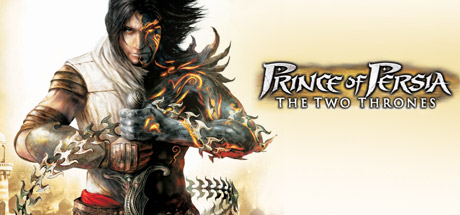
How does BioShock Infinite compare to Prince of Persia: The Two Thrones for Tokyo Ghoul:re 2 fans?
Both deliver Adult & Dark Seinen intensity, but in different ways: BioShock Infinite leans into layered time paradoxes and ideological horror (think the Labyrinth scene with Elizabeth’s multiverse trauma mirroring Kaneki’s dissociative breaks), while Two Thrones focuses on internal duality—the Prince’s split personality and physical corruption echo Kaneki’s struggle with his ghoul self. If you loved the psychological unraveling in :re 2’s S1 finale, go BioShock; if you craved the raw, sword-in-hand descent into darkness like Uta’s arc, Two Thrones hits harder—and yes, it still plays great at 60fps.
What’s the best game like Tokyo Ghoul:re 2 if I want that slow-burn, oppressive body horror + time distortion vibe?
TimeShift™ is your answer—it’s a tight, focused 4-hour rush where Dr. Krone weaponizes time manipulation to survive a warped alternate reality full of biomechanical monstrosities and decaying flesh (Body Horror & Occult, all the way). That moment when you rewind mid-fall to avoid a spiked pit? It mirrors Kaneki’s desperate, fragmented control over his kagune—clumsy, urgent, and deeply personal. Just check the community pages first; it needs a quick FPS lock to run smooth, but once it’s dialed in? Pure, distilled :re 2 energy.