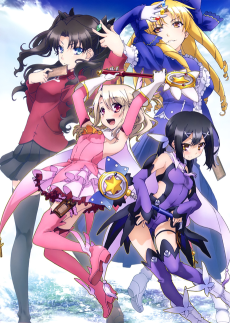
Fate/kaleid liner Prisma☆Illya
Illyasviel von Einzbern’s normal life is suddenly halted by the Kaleidostick Ruby, a magical wand on the run from her former master, who instantly decides that little Illya has all the right stuff to become the next great magical girl. However, Ruby’s previous owner Rin Tohsaka isn’t exactly thrilled to be de-wanded, especially since she’s just accepted an assignment to collect the seven legendary Class Cards. It seems the only solution is for Illya to take up the task and learn the ropes under Rin’s supervision. Meanwhile, a girl named Miyu has been chosen by the Kaleidostick Sapphire as HER new master, much to the irritation of Sapphire’s previous master, Rin’s arch rival Luviagelita Edelfelt! Exactly what kind of plan are the wands conjuring up?
(Source: Sentai Filmworks)
Note: The show streamed in advance on Niconico Live on July 6, 2013 in Japan. The regular TV broadcast started on July 13, 2013.
📺Anime Details
📝Editorial Analysis
The first time Illya transforms—ruby light flaring across her bedroom floor, socks kicked off, hair whipping up like spun sugar as the Kaleidostick sings—it’s not just magic. It’s the sudden, breathless rightness of a child’s hand finally fitting perfectly around the hilt of something ancient and humming with power. Her grin is too wide, her voice too bright, and for one suspended second, the weight of Einzbern bloodlines, Class Cards, and inherited war doesn’t exist—only this: glitter, velocity, and the dizzying thrill of becoming more than she was told she could be.
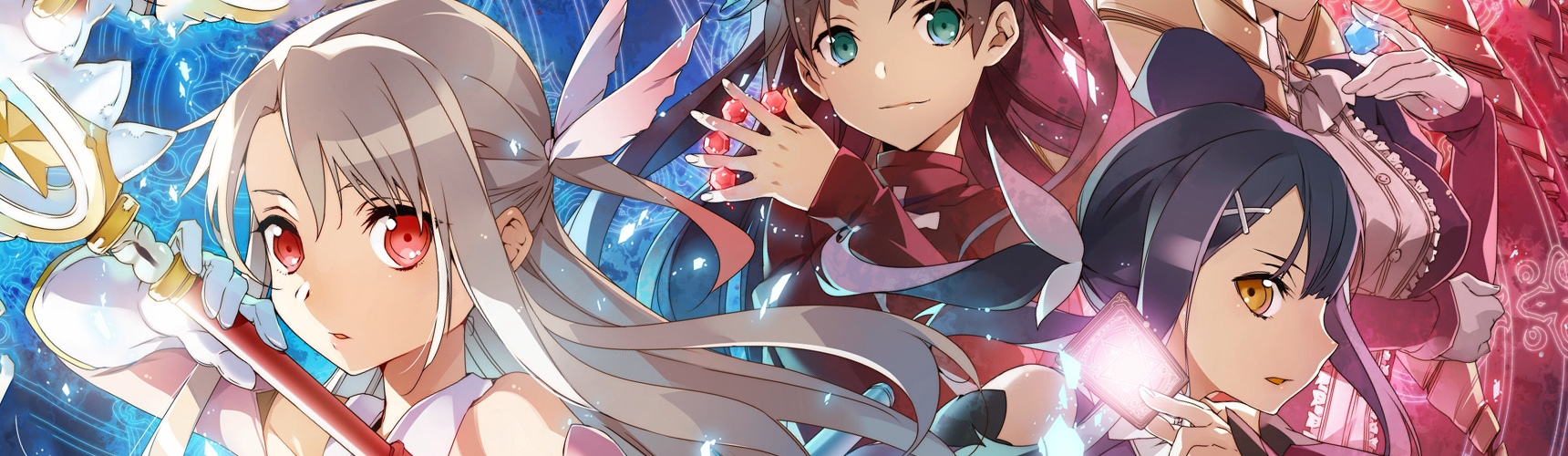
That feeling—the lightness beneath the lore—is what makes Fate/kaleid liner Prisma☆Illya vibrate differently from every other magical girl story. It’s not about sacrifice as solemn duty or trauma as origin; it’s about reclamation through play. The urban fantasy isn’t grimy alleyways and whispered curses—it’s sun-dappled school corridors where a Class Card’s summoning glitches into a slapstick chase through a pachinko parlor, where body-swapping isn’t psychological horror but a chance for Illya to finally understand Rin’s sharp tongue by wearing it like ill-fitting gloves. The ecchi isn’t leering—it’s absurd, affectionate, human: a skirt-flip mid-leap that lands in a pile of fallen cherry blossoms, not titillation, but release. This is healing disguised as chaos, slow life stitched into action sequences, shoujo tenderness folded into every henshin pose. It asks: what if saving the world felt like coming home?
That same emotional alchemy flickers in The Sims™ 4, not in its broken DLC economy or buggy updates—but in its core promise: Play with life and discover the possibilities. Like Illya rearranging her room after a battle, swapping out furniture just to see how light falls on new wallpaper, TS4 invites players to sculpt domesticity with the same joyful irreverence. A player complains the game “is no fun without dlc”—but Illya doesn’t need seven Class Cards to matter; her magic starts with Ruby choosing her in a sunlit hallway, no prerequisites, no gatekeeping. Both trust the small, the silly, the unscripted as sacred ground.
Then there’s Prince of Persia, whose description promises “an all-new epic journey” built by the studio behind The Sands of Time—a lineage Illya inherits too, not through blood, but through tone. That same blend of Healing & Slow Life, Romance & Shoujo, and Action Spectacle lives here: the Prince’s acrobatics aren’t just combat—they’re balletic, almost tender in their precision, like Illya’s twirl before firing a beam. A player calls it “the 3rd reboot… completely separate from the sands,” echoing how Prisma☆Illya stands apart from Fate/stay night’s gravity—not rejecting canon, but refracting it through a prism of pastel light and giggles. Both treat spectacle as intimacy: every flip, every spell, every spark is a confession of joy in motion.
And Prince of Persia: Warrior Within™, with its Time & Memory dimension, hits deeper. Its Dahaka chase isn’t just pursuit—it’s legacy breathing down your neck, the past refusing to stay buried. Illya’s dissociative identities aren’t pathology; they’re echoes—Einzbern conditioning, suppressed memories, the ghost of a war she didn’t choose. A player says replaying it “was a journey,” and that’s Illya’s arc too: not linear victory, but circling back, understanding, integrating. The Dahaka’s relentless presence mirrors how Illya’s own history keeps reappearing—not as enemy, but as unfinished business wrapped in glitter tape and strawberry milk.
This pairing sings loudest for the viewer who cries at a perfectly timed pancake breakfast scene and replays a boss fight until their fingers ache—not for mastery, but because the rhythm of the jump, the timing of the dodge, feels like breathing. For the player who builds a cottage garden in TS4 at 2 a.m., not to win, but because the way dew clings to virtual grass reminds them of childhood mornings. For the one who watches Illya hug Shirou after a battle, then boots up Warrior Within just to feel the wind whip past the Prince’s face again—alive, here, unbroken by the weight of what comes next. Not escapism. Reclamation.
🎮27 Games That Match the Vibe









Match Dimensions Explained
❓Frequently Asked Questions
Why does Prince of Persia keep showing up in 'games like Fate/kaleid liner Prisma☆Illya' lists?
Because both lean hard into magical girl-adjacent spectacle—think Illya’s kaleidoscopic spell effects and the Prince’s time-rewind sand powers—but with grounded, emotionally charged stakes. The 2024 Prince of Persia reboot even mirrors Illya’s tone: bright visuals, witty banter (like Illya and Miyu’s bickering vs. the Prince and Elika’s dynamic), and a focus on healing & slow life moments between action set pieces.
Is there a Fate/kaleid liner Prisma☆Illya visual novel or RPG adaptation?
No official game adaptation exists—but Loki and Rise of the Argonauts scratch that mythic, character-driven itch fans love in Prisma☆Illya. Loki lets you play as a Norse-inspired hero (think Illya channeling magical girl energy through folklore archetypes), while Rise of the Argonauts leans into emotional quests like Jason’s grief-fueled resurrection mission, echoing Illya’s blend of comedy, shoujo romance, and high-stakes mythic drama.
How does The Sims 4 compare to Prisma☆Illya for slice-of-life magic girl vibes?
TS4 nails the 'healing & slow life' + 'romance & shoujo' dimensions—if you ignore the DLC grind. You can recreate Illya’s cozy homelife (tea parties with Chloe, baking mishaps with Miyu) or stage over-the-top magical parodies using custom content. Just know: without mods or packs, it’s barebones—unlike Prisma☆Illya’s tight, joke-packed pacing, TS4 needs heavy personalization to hit that same warm, chaotic charm.
What’s the best Prisma☆Illya-like game if I want stylish action *and* mythological depth?
Go straight to Rise of the Argonauts—it’s got the mythological weight (Jason navigating Greek pantheon politics like Illya juggles Holy Grail lore) *and* the action spectacle (fluid sword combos, divine power-ups) that matches Illya’s battle choreography. Player reviews even call out how it ‘does ancient history right,’ much like Prisma☆Illya treats its Nasuverse mythology with reverence *and* playful irreverence—no glitches, no anticlimaxes, just solid, soulful spectacle.