
Shiki
During a fiercely hot summer in Sotoba, a peaceful and quiet village with a population of 1300 people, a series of bizarre deaths begin to occur. At the same time, a strange family moves into a long abandoned mansion in the region. After supposedly visiting this strange family, the fashionable Shimizu Megumi goes missing and the entire village goes out in search for her.
📺Anime Details
📝Editorial Analysis
The cicadas scream. Not the gentle hum of a summer afternoon, but a shrill, unrelenting shriek—like metal dragged across bone—that presses into your temples as the camera lingers on the cracked concrete path leading to the Oshiro mansion. A single drop of sweat slides down Natsuno’s temple. He doesn’t wipe it. He just stares at the gate, half-open, rust bleeding from its hinges, while the air smells faintly of damp earth and something older—something unburied. That stillness before the first death isn’t suspense. It’s dread wearing the face of routine.

What makes Shiki’s atmosphere unique isn’t its vampires—it’s the weight of community unraveling in real time. This isn’t gothic grandeur or romanticized immortality; it’s the slow, suffocating collapse of shared reality in a village where everyone knows each other’s laundry schedules and funeral customs. The horror lives in the silence after a neighbor stops answering the door—not because they’re dead, but because no one dares name what’s happening yet. You feel the exhaustion of moral compromise, the nausea of complicity, the quiet shame of choosing survival over truth. It makes you think about how easily empathy calcifies when fear gets rationed like rice in a drought. There’s no hero’s arc here—only fracture, resignation, and the terrible intimacy of watching people you recognize become strangers to themselves.
Hollow Knight resonates not because it has vampires, but because it shares that same emotional gravity of decay witnessed from within. Its ruined kingdom isn’t invaded—it erodes, quietly, generationally. Like Sotoba, Hallownest feels lived-in: moss creeps over murals of forgotten gods, benches hold the ghosts of conversations, and every corpse tells a story of someone who tried to hold the line until they couldn’t. The player review calls it “Lovely story”—and it is, but loveliness here is laced with sorrow, just like Shiki’s most tender moments (a mother humming while washing blood from her son’s shirt) are inseparable from the gore and tragedy. Both make you walk slowly—not because the game is slow, but because the world demands witness.
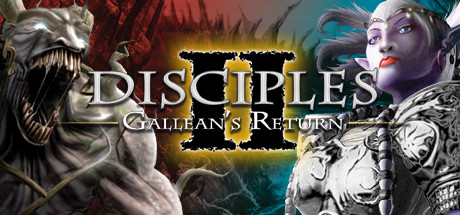
Disciples II: Gallean's Return, too, carries that same philosophical weight beneath its tactical grid. Its description names “JRPG Narrative” and “Dark Fantasy”, but the player review zeroes in on “Awesome atmosphere”—the kind built not through cutscenes, but through lingering over a battlefield where fallen allies lie beside enemy mages who once debated theology in the same tavern. Like Shiki, it refuses easy binaries: the light faction isn’t pure, the dark isn’t merely monstrous—and victory often tastes like ash. Its turn-based pacing forces reflection, not reaction. You don’t rush past the consequences; you calculate them, move a unit, and sit with the silence afterward—just as Shiki holds on a shot of villagers standing shoulder-to-shoulder, not in unity, but in mutual, trembling recognition of what they’ve all agreed not to say.
And then there’s Chains—yes, the match-3 game. Its description calls it “relaxing”, “arcade”, “physics-driven”, but the player review nails its hidden rhythm: “link 3 or more… clear enough till you can proceed.” That’s Sotoba’s entire emotional logic. Link the disappearances. Link the fever dreams. Link the sudden, unexplained absences. Clear enough connections to proceed—to hold a town meeting, to bury a body, to pretend the heat is the only thing making everyone irritable. It’s not about winning. It’s about the fragile, repetitive act of maintaining surface order while the foundation liquefies beneath you. The “Healing & Slow Life” dimension in its tags isn’t spa-day calm—it’s the numb, ritualistic pace of grief disguised as routine.
This pairing isn’t for fans of jump scares or power fantasies. It’s for the person who rewatched the scene where Sunako sits alone on the veranda at dawn—not because she’s terrifying, but because her stillness mirrors their own exhaustion after reading three obituaries in one week. It’s for the player who saves Hollow Knight’s journal entries like sacred texts, or who pauses Disciples II mid-battle to stare at the fog rolling over a ruined chapel, or who plays Chains not to win, but to feel the quiet click of alignment—the fleeting, human comfort of things clicking into place, even if only for three seconds. They love stories where horror isn’t outside the door—it’s the breath you hold before you open it.
🎮26 Games That Match the Vibe















Match Dimensions Explained
❓Frequently Asked Questions
Why does Hollow Knight keep coming up in 'games like Shiki' lists?
Because both lean hard into melancholic, atmospheric worldbuilding and emotionally layered storytelling—think Shiki’s quiet dread and Hollow Knight’s decaying Hallownest, where every ruined chapel and silent bug NPC echoes that same sense of faded grandeur and unresolved grief. Reviewers even call out Hollow Knight’s 'lovely story' and 'beautiful art style' as direct tonal matches to Shiki’s slow-burn emotional weight.
Is there an anime or manga adaptation of Chains?
Nope—Chains is purely a game, with no anime, manga, or official adaptations. It’s a self-contained match-3 experience built around physics-driven bubble linking (like connecting 3+ same-color orbs to clear stages), and its charm lies entirely in its tactile, meditative loop—not narrative expansion. One player nailed it: 'Reminds me of connect 4 in a nutshell.'
How does Disciples II: Gallean's Return compare to Hollow Knight for dark fantasy vibes?
Both nail the brooding, lore-dense dark fantasy feel—but Disciples II leans into tactical turn-based JRPG storytelling (think grim councils, cursed relics, and faction wars in a gothic empire), while Hollow Knight delivers it through environmental storytelling and haunting boss fights like the Hollow Knight itself. Fans say Disciples II has 'awesome atmosphere,' and its 76 score reflects how tightly it locks into that same somber, mythic tone.
What’s the best 'Games Like Shiki' pick if I want something calming but still emotionally resonant?
Chains is your answer—it’s explicitly tagged under 'Healing & Slow Life' and 'Emotional Narrative,' with simple chain-linking mechanics that create a soothing rhythm, like watching rain on a windowpane. Players describe it as 'relaxing' and 'simple' yet deeply satisfying, and its 83 score is the highest on the list—proof it lands that quiet, heartfelt vibe without needing cutscenes or dialogue.