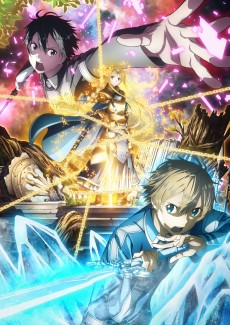
Sword Art Online: Alicization
Kirito awakens in a vast, fantastical forest filled with towering trees. In his search for clues to the truth of his surroundings, he encounters a young boy who seems to know him. He ought to be a simple NPC, but the depth of his emotions seem no different than a human. As they search for the boy's parents, Kirito finds a peculiar memory returning to him. A memory from his own childhood, of this boy and a girl, too, with golden hair, and a name he should have never forgotten - Alice.
(Source: Yen Press)
Note: The first episode aired with a runtime of ~48 minutes as opposed to the standard 24 minute long episode.
📺Anime Details
📝Editorial Analysis
The forest breathes. Not with wind, but with silence—a thick, golden-tinged hush broken only by Kirito’s footsteps on moss that feels too soft, too real, as if the air itself remembers him before he does. He kneels beside a boy who shouldn’t exist—not just as code, but as presence: trembling hands, a voice cracking on the name “Alice,” eyes wide with grief that hasn’t been scripted, only lived. That moment isn’t exposition. It’s vertigo. You feel the floor tilt—not because of spectacle, but because memory has just unspooled like a wound reopening in slow motion.
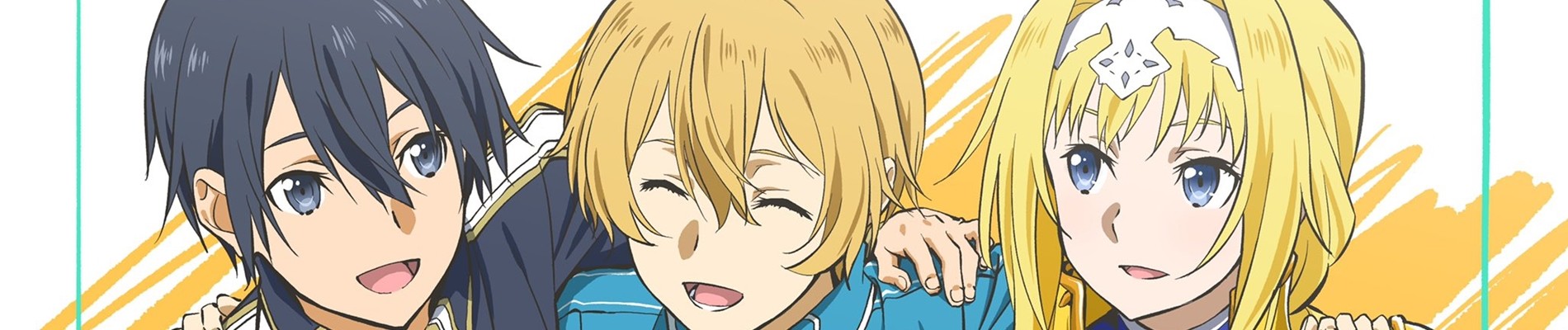
What makes Sword Art Online: Alicization ache so deeply isn’t its virtual world or swordplay—it’s how it weaponizes recognition. Not recognition of plot points, but of emotional grammar: the way a childhood memory surfaces not as nostalgia, but as betrayal; how time doesn’t pass here—it folds, trapping characters inside their own erased selves. This isn’t isekai as escape. It’s isekai as autopsy. Every towering tree, every whispered name, every pause before a confession lands like a held breath—heavy, unavoidable, intimate. You don’t watch Kirito search for Alice. You feel your own forgotten names rise in your throat.
That same weight lives in BioShock Infinite, where Booker DeWitt’s debt isn’t financial—it’s temporal and moral. The game’s core tension isn’t rescuing Elizabeth, but recognizing her across fractured realities, just as Kirito must recognize Alice not as a girl he once knew, but as a truth his mind buried under layers of artificial time. The player review nails it: “I know that some people are still bitter about the Bioshock Infinite we could have gotten.” That bitterness mirrors Alicization’s tragedy—not about what was, but what could have been, had memory not been edited, had identity not been quarantined. Both works make you question whether redemption is possible when your past has been rewritten by design, not accident.
Then there’s Prince of Persia: Warrior Within, where Dahaka isn’t chasing the Prince—he’s chasing consequence. The review calls the chase “goated,” but what lingers is its relentlessness: time isn’t a tool to rewind mistakes, but a predator that remembers everything you tried to outrun. Like Kirito’s fragmented recollections of the Underworld, the Prince’s scars aren’t visual—they’re rhythmic, embedded in the game’s pacing, in the way platforms crumble just as you leap, in the way Dahaka emerges from shadows you thought you’d left behind. Both stories treat time not as a line, but as a cage with doors that only open when you stop running—and start remembering wrongly, then truly.
And Prince of Persia: The Sands of Time, where the dagger doesn’t grant power—it exposes fragility. The review praises “tactical platforming” and “satisfying” challenge, but the real satisfaction comes from the undo: that one-second rewind isn’t convenience—it’s grief made mechanical. Every reset is a tiny act of denial, a refusal to accept consequence—until the final act, where undoing becomes impossible. That’s Alicization’s heartbreak in microcosm: Kirito doesn’t get to rewind his betrayal of Alice. He gets to relearn her—not as a memory, but as a person who endured what he erased. The dagger’s sand isn’t magic. It’s time’s sediment, piling up until it buries you—or reveals what was always there.
This pairing isn’t for fans of flashy battles or lore dumps. It’s for the person who replays a game not for mastery, but for that one hallway where the lighting shifts and suddenly, without warning, they’re twelve again—standing in their grandparents’ attic, holding a photo they swore they’d lost. It’s for the viewer who watches Kirito’s hand hover over Alice’s face—not to touch, but to confirm she’s real—and feels their own chest tighten, not at romance, but at the sheer risk of believing in continuity. These are stories for those who’ve ever caught themselves mid-sentence, paused, and thought: Wait—I said this before. Did I mean it then? Do I mean it now? They’re for people who don’t just play or watch—they recognize. And in that recognition, something fragile, vital, and unforgettable stirs.
🎮19 Games That Match the Vibe
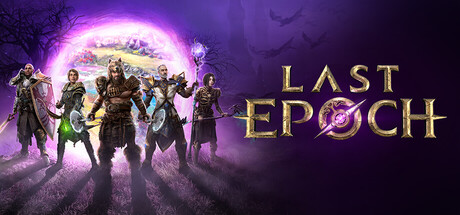
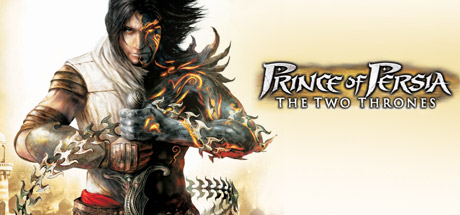
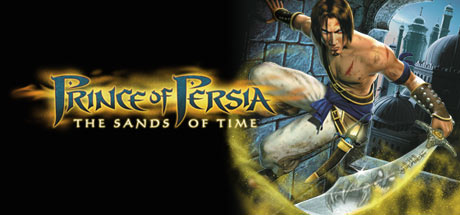
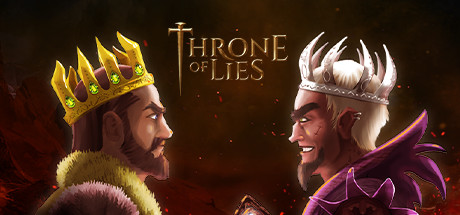





Match Dimensions Explained
❓Frequently Asked Questions
Why is Prince of Persia: Warrior Within recommended for Sword Art Online: Alicization fans?
Because both lean hard into dark, time-bent fantasy with relentless pursuit sequences—like Dahaka’s terrifying chase through crumbling ruins, which mirrors Kirito’s desperate escapes in the Underworld’s collapsing Cathedral. The gritty tone, morally ambiguous choices, and emphasis on time-manipulation combat (via the Sands powers) hit that same brooding, high-stakes vibe as Alicization’s later arcs.
Is there a Sword Art Online: Alicization game adaptation?
No—there’s no official standalone game based *only* on the Alicization arc. But Prince of Persia: The Sands of Time (83) and its sequels like Warrior Within (84) and The Two Thrones (83) are consistently recommended by fans as spiritual matches because they nail the core Alicization feel: memory-driven stakes, layered timelines, and swordplay where every parry and dodge matters in tense, arena-style duels.
How does BioShock Infinite compare to TimeShift for Alicization vibes?
BioShock Infinite leans into psychological weight and fractured reality—think Elizabeth opening tears to alternate worlds, echoing Alice’s consciousness splits—while TimeShift™ is pure kinetic time-warping action: freeze enemies mid-leap, rewind your own death, then slash through a dystopian cityscape like Kirito in the World End Tournament. If you want haunting narrative depth, go Infinite; if you want tactile, moment-to-moment time-control combat, TimeShift delivers.
What’s the best game like Alicization if I want that ‘lonely knight in a decaying sacred world’ mood?
Prince of Persia: Warrior Within™—hands down. You play the Prince hunted across a grim, rain-lashed underworld, haunted by Dahaka and your own past sins, just like Kirito wandering the ruined Cathedral or fighting alone in the Dark Territory. The oppressive atmosphere, crumbling architecture, and that constant sense of being watched? It’s the closest thing to stepping into Alicization’s most somber, introspective chapters.