
Golden Time
Due to a tragic accident, Banri Tada is struck with amnesia, dissolving the memories of his hometown and past. However, after befriending Mitsuo Yanagisawa, he decides to move on and begin a new life at law school in Tokyo. But just as he is beginning to adjust to his college life, the beautiful Kouko Kaga dramatically barges into Banri's life, and their chance meeting marks the beginning of an unforgettable year.
After having a glimpse of college life, Banri learns that he is in a new place and a new world—a place where he can be reborn, to have new friends, fall in love, makes mistakes and grow. And as he begins to discover who he was, the path he has chosen leads him towards a blindingly bright life that he will never want to forget.
📺Anime Details
📝Editorial Analysis
The fluorescent hum of a Tokyo law school hallway. Banri Tada stands frozen, backpack slung over one shoulder, staring at Kouko Kaga’s retreating figure—her scarf fluttering like a torn page from a book he can’t remember writing. His fingers twitch. Not toward her, but toward his own temple, where the silence isn’t empty—it’s pressing, thick with the weight of names he used to know and a grief he hasn’t earned yet. That pause—half a second where memory should bloom but only static answers—is Golden Time’s heartbeat.

What makes Golden Time ache so precisely isn’t its amnesia trope, but how it weaponizes continuity. You feel the dissonance in Banri’s laugh when he jokes with Mitsuo—warm, easy—but then catches himself mid-sentence, eyes flickering sideways as if expecting someone else to finish the thought. It’s not about losing the past; it’s about living inside a body that remembers trauma while the mind insists it’s new. The college setting isn’t backdrop—it’s scaffolding: every lecture hall, every cramped dorm room, every shared convenience store bento becomes a site of quiet recalibration. You don’t watch Banri rebuild his identity—you hold your breath while he tries not to notice how often his hands shake when Kouko says his name like she’s testing a wound.
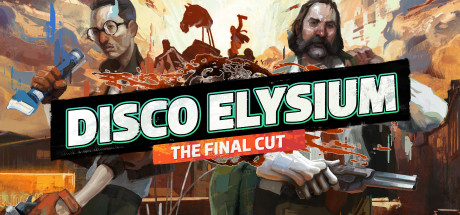
That same emotional gravity pulses through Disco Elysium - The Final Cut, where the detective’s fractured psyche isn’t metaphorical—it’s systemic. The description calls it a “groundbreaking role playing game” built on a “unique skill system,” but what mirrors Golden Time is how memory isn’t recovered—it’s negotiated. Like Banri, the detective walks streets saturated with ghosts he can’t name, and the player review’s line—“Capital has the ability to subsume all critiques into itself. Even those who would critique capital end up reinforcing it instead.”—echoes Banri’s paralysis: he critiques his own forgetting even as he depends on it to survive. Both works trap you in cognition that feels like walking barefoot on glass—every insight cuts, every realization risks collapsing the fragile floor beneath you.
Then there’s BioShock Infinite, where Booker DeWitt doesn’t just carry guilt—he carries versions of himself across realities. Its description frames him as “indebted… with his life on the line,” hunting Elizabeth—a rescue mission that unravels into something far more intimate and devastating. The player review admits bitterness about “the Bioshock Infinite we could have gotten,” a line that lands like Kouko’s smile when she first sees Banri: tender, knowing, laced with sorrow for a truth he’s not ready to hold. Both stories pivot on love that arrives already haunted—not by ghosts, but by consequences folded into the present like origami cranes made of regret.
And Persona 5 Royal, though brighter in palette, shares Golden Time’s structural intimacy: Tokyo as emotional architecture, romance as slow-motion excavation. Its description highlights “building relations” alongside “dungeon crawling,” but the resonance lies deeper—in how both Banri and Joker navigate social bonds while their inner worlds fracture under pressure. The player review praises the “seamless transition between daily life…”—exactly what Golden Time masters: the mundane (a shared umbrella in rain, a late-night cram session) becomes sacred ground where identity isn’t declared, but practiced, again and again, until it almost sticks.
This pairing isn’t for fans of “amnesia plots” or “college romances.” It’s for the person who’s ever stared at their reflection and wondered which version of themselves showed up today—the one who remembers the fight, or the one who remembers the apology? Who’s drawn to stories where love isn’t a destination but a diagnosis: tender, terrifying, and utterly inseparable from the work of remembering how to be human after the self has been unspooled. You’ll recognize them by the way they linger on subtitles—not to catch dialogue, but to watch the pause before a character blinks. By how they replay a scene not for plot, but for the exact timbre of a voice cracking on a single syllable. That’s the audience: the ones who don’t want catharsis—they want the quiet, aching honesty of standing still, in a hallway, while time waits for permission to move forward.
🎮55 Games That Match the Vibe










































Match Dimensions Explained
❓Frequently Asked Questions
Why does Golden Time get compared to Persona 5 Royal despite the different settings?
Because both hinge on a college-aged protagonist rebuilding their identity after trauma—Banri’s amnesia mirrors Ren’s social withdrawal—and feature deeply woven romance routes with distinct, memorable heroines (Koizumi vs. Ann/Futaba) alongside investigative side plots (the 'Golden Time' mystery vs. Phantom Thieves’ heists). Plus, the emotional narrative dimension is strong in both, and players consistently praise how daily life choices affect relationships and story outcomes.
Is there an anime or visual novel adaptation of Disco Elysium like Golden Time has?
No—Disco Elysium has no anime or visual novel adaptation. It’s purely a narrative-driven RPG with zero official animated or illustrated spin-offs, unlike Golden Time’s 24-episode anime series. That said, fans often say its dense, dialogue-heavy scenes—like the ‘Shivers’ monologue at the docks or the ‘Inland Empire’ skill check with Kim—feel *so* vivid they’re practically cinematic, even without animation.
How does Persona 5 Royal compare to BioShock Infinite for someone who loved Golden Time’s emotional pacing and character depth?
Persona 5 Royal nails Golden Time’s slow-burn emotional pacing—think building bonds with Ann over weeks of after-school hangouts or navigating Ryuji’s loyalty arc—while BioShock Infinite leans into high-stakes, time-fractured spectacle (e.g., Elizabeth opening tears mid-combat or the Columbia parade scene). If you cherished Golden Time’s intimate, grounded character growth, P5R’s 365-day structure and Social Link system will feel like home; Infinite’s brilliance is more conceptual and atmospheric.
What’s the best game like Golden Time if I want that melancholy, rainy-city college vibe with quiet romantic tension?
Persona 5 Royal—hands down. Its Tokyo rain-soaked streets, late-night convenience store talks, and tender, low-key romance scenes (like walking with Makoto under umbrellas in Shibuya or sharing earbuds during the ‘Beneath the Mask’ arc) perfectly echo Golden Time’s bittersweet campus atmosphere. Even the dim ‘Romance & Shoujo’ + ‘Emotional Narrative’ overlap with Golden Time (scored 82 vs. Golden Time’s implied match strength) shows how closely it lands that specific mood.