
Rascal Does Not Dream of Bunny Girl Senpai
There's a rumor about a mysterious phenomenon called "puberty syndrome." For example, Sakuta Azusagawa is a high school student who suddenly sees a bunny girl appear in front of him. The girl is actually a girl named Mai Sakurajima, who is Sakuta's upperclassman who is also a famous actress who has gone on hiatus from the entertainment industry. For some reason, the people around Mai cannot see her bunny-girl figure. Sakuta sets out to solve this mystery, and as he spends time with Mai, he learns her secret feelings. Other heroines who have "puberty syndrome" start to appear in front of Sakuta.
(Source: Anime News Network)
📺Anime Details
📝Editorial Analysis
The fluorescent hum of the school hallway. Sakuta Azusagawa turns, and there she is—Mai Sakurajima in full bunny-girl costume, ears twitching slightly under the harsh overhead lights. Not a fantasy cosplayer, not a hallucination he can dismiss. She’s there, breathing, real in her discomfort—and yet no one else blinks. A teacher walks straight through her space like air. A classmate texts obliviously two feet from her elbow. That silence isn’t empty. It’s thick, charged with the unbearable weight of being unseen—not just by others, but by time itself.
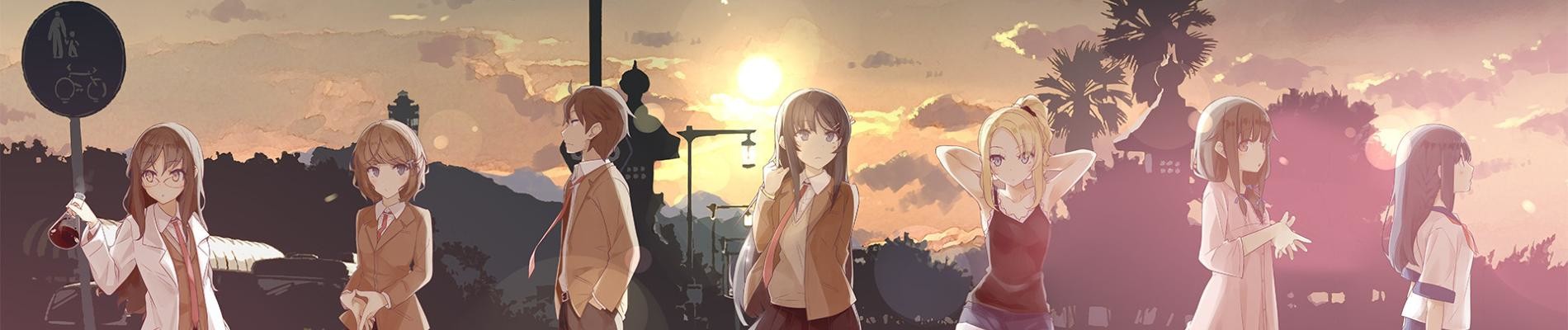
That’s the core ache of Rascal Does Not Dream of Bunny Girl Senpai: not mystery as puzzle-box spectacle, but mystery as emotional archaeology. It doesn’t ask what happened—it asks how much did it cost her to stay whole? The urban setting isn’t backdrop; it’s pressure—concrete, indifferent, humming with unspoken expectations. The “puberty syndrome” isn’t metaphor. It’s physiology made visible: dissociation wearing rabbit ears, memory fragmentation dressed in school uniforms, rehabilitation measured in shared convenience-store bentos and hesitant eye contact. You don’t feel suspense—you feel tenderness, edged with dread. Every quiet walk home, every pause before a confession, every time Mai’s voice cracks mid-sentence—it lands like a held breath you forgot you were holding. This isn’t about saving someone. It’s about witnessing them reassemble, piece by trembling piece.
Which is why BioShock Infinite resonates so sharply—not because of floating cities or vigors, but because of its time & memory dimension. Booker DeWitt doesn’t just chase Elizabeth across realities; he’s fleeing versions of himself that remember too much. Like Sakuta parsing Mai’s fractured timeline, Booker’s journey forces him to confront how memory isn’t stored—it’s reconstructed, often wrongly, always painfully. The player review nails it: “I know that some people are still bitter about the Bioshock Infinite we could have gotten.” That wistfulness—the sense of roads not taken, selves abandoned—is the same ache that lives in Sakuta’s hesitation before knocking on Mai’s door, or in the way he replays their first real conversation in his head, hunting for the moment the fracture began.
Then there’s Prince of Persia: The Sands of Time, where the Prince rewinds time not to win battles, but to undo mistakes—to catch a falling comrade, to avoid a fatal misstep. His dagger isn’t power—it’s penance. The player review calls it “tactical platforming… satisfying due to the locked directions, which helps. Yet still challenging.” That tension—between control and consequence, between precision and fragility—is pure Rascal Does Not Dream of Bunny Girl Senpai. Sakuta doesn’t rewind seconds, but he retraces emotional steps: rereading old messages, revisiting locations, rehearsing words he never said. Every choice feels weighted, irreversible—not because of magic, but because adolescence is irreversible. You only get one chance to say the right thing before the bell rings. One chance to hold the door open without looking away.
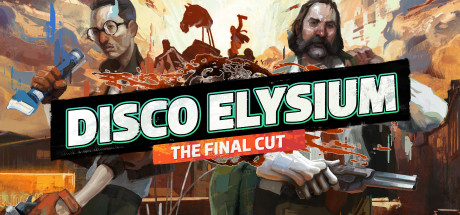
And Disco Elysium - The Final Cut, though tonally darker, shares that same mystery & detective DNA rooted in self-investigation. You’re not solving a murder—you’re solving yourself: amnesia as metaphor for self-erasure, skill checks as internal arguments, dialogue trees as fragmented identity. The player review quotes philosophy mid-thought—“Capital has the ability to subsume all critiques into itself”—not as exposition, but as lived exhaustion. That’s Mai’s exhaustion. That’s Sakuta’s quiet fury at systems (school, fame, expectation) that demand erasure as the price of belonging. Neither anime nor game offers clean answers. They offer evidence: a crumpled note, a half-remembered line of dialogue, a skill check that fails—not because you’re incompetent, but because the truth is too heavy to lift alone.
This pairing isn’t for fans of “whimsy” or “wish fulfillment.” It’s for the ones who flinch when a character says “I’m fine” and means “I haven’t broken yet.” For the viewer who watches Sakuta sit silently beside Mai on a park bench—not talking, just keeping time—and feels something loosen in their own chest. For the player who reloads a save not to win, but to try again to be kinder. These stories speak to those who know healing isn’t linear—it’s recursive, tender, stubborn, and always happening in public, even when no one else sees it.
🎮20 Games That Match the Vibe










Match Dimensions Explained
❓Frequently Asked Questions
Why is BioShock Infinite on lists of games like Rascal Does Not Dream of Bunny Girl Senpai?
Because both hinge on fractured time, unreliable memory, and psychological unraveling—Booker’s guilt-fueled identity collapse mirrors Sakuta’s struggle with Adolescence Syndrome’s reality distortions. The lighthouse reveal and Columbia’s cyclical tragedies echo the show’s layered reveals about Mai’s dissociation and the ‘Adolescence Syndrome’ phenomenon.
Is there a visual novel or game adaptation of Bunny Girl Senpai?
No official visual novel exists—but Prince of Persia: The Sands of Time (83) hits that same emotional core: a young protagonist navigating time paradoxes while protecting someone vulnerable (Farah/Kaileena), with quiet, introspective moments between high-stakes action—just like Sakuta’s tender, grounded scenes with Mai amid surreal plot twists.
How does Prince of Persia: Warrior Within compare to Disco Elysium for fans of Bunny Girl Senpai’s tone?
Warrior Within leans into brooding, visceral time-haunted tension—the Dahaka chase sequences feel like adrenaline-fueled manifestations of repressed trauma, similar to how Bunny Girl Senpai externalizes anxiety as physical phenomena. Disco Elysium trades action for internal monologue and existential dread, but both use their ‘Adult & Dark Seinen’ framing to explore guilt, identity, and emotional isolation in ways that resonate beyond surface-level plot.
What’s the best game like Bunny Girl Senpai if I want that bittersweet, emotionally raw vibe with time/memory themes?
Go straight to Prince of Persia: The Two Thrones (83)—its dual-personality mechanic (Prince vs. Dark Prince) mirrors Sakuta’s shifting role between observer, protector, and participant in others’ pain, especially during Kaileena’s tragic arc. The crumbling palace of Babylon and those quiet, rain-soaked dialogues after battle? Pure Bunny Girl Senpai melancholy—grounded, poetic, and heavy with consequence.