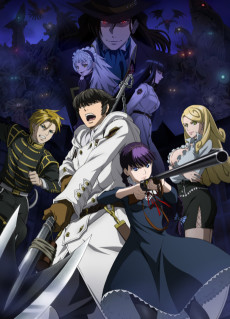
To the Abandoned Sacred Beasts
📺Anime Details
📝Editorial Analysis
Rain slicks the cobblestones of a ruined cathedral square—not gentle rain, but cold, iron-tinted drizzle that clings to torn uniforms and smears blood into rust-colored rivulets. A boy in a tattered military coat staggers forward, jaw clenched, rifle trembling—not from fear, but from the weight of holding fire while his own body begins to split open at the seams, bones cracking beneath skin as something ancient and furious stirs inside him. No triumphant roar. No heroic stance. Just breath hitching, knuckles white, eyes wide with the quiet horror of becoming what he was trained to kill.
That’s the heart of To the Abandoned Sacred Beasts: not spectacle for its own sake, but the erosion—of identity, of loyalty, of the very line between soldier and monster. It doesn’t ask what you are—it asks what you’re willing to unmake to survive a war that treats humanity like faulty hardware. The atmosphere isn’t grimdark for style; it’s exhausted. You feel the grit in your teeth from marching through ash-choked trenches, the metallic tang of gunpowder fused with something older—musky, feral, alive in the wrong way. This is tragedy worn like a second uniform: stiff, stained, impossible to shed. It makes you think about complicity—not just who pulls the trigger, but who designed the rifle, who named the beast, who decided some lives were already forfeit before the first bullet flew.
Kingdom Come: Deliverance II resonates because its Dark Fantasy isn’t conjured from spells or dragons—it’s carved from mud, frostbite, and the slow, grinding weight of consequence. Tactical Warfare here means choosing whether to loot a dying man’s boots knowing you’ll freeze without them—and later seeing that same man’s widow begging in a village you failed to protect. Like To the Abandoned Sacred Beasts, it refuses catharsis. Victory feels hollow when survival demands moral compromise so intimate it leaves calluses on your conscience. The emotional narrative isn’t told in monologues—it’s in the tremor of a hand reloading under fire, in the silence after a comrade’s name is crossed off a roster. That weariness, that refusal to let you look away from cost—that’s the shared pulse.
Assassin's Creed™: Director's Cut Edition lands with similar gravity—not in its dated textures (as one player notes, “some of the models and textures are quite dated but no issues with me”), but in how its Tactical Warfare forces you into the rhythm of restraint. You don’t sprint toward glory—you crouch in alley shadows, count guards, wait. Every leap from a minaret carries the risk of shattering bone; every blade strike echoes with the permanence of death. Like the anime’s soldiers, Altaïr isn’t empowered—he’s burdened: by creed, by failure, by the sheer physical toll of being human in a world demanding superhuman control. The Dark Fantasy isn’t supernatural—it’s the distortion of history into something mythic because it’s so brutally, intimately real. Both works treat violence not as release, but as residue—sticky, inescapable, staining everything it touches.
REMNANT II® mirrors the anime’s visceral dissonance: Kaiju-scale threats colliding with fragile, tactically vulnerable humans. Its Dark Fantasy thrives in decay—not ornate ruins, but collapsed bunkers reeking of ozone and rot, where every boss fight feels less like conquest and more like desperate, bloody negotiation with extinction. You don’t level up to outclass terror—you learn to dodge it, to read its breath, to survive three seconds longer than last time. That same ragged, breathless tension lives in To the Abandoned Sacred Beasts’ transformation sequences: not power-ups, but unravelings. The gore isn’t shock—it’s documentation. Flesh tearing, joints popping, teeth elongating—not for spectacle, but to remind you this body is failing, betraying, remembering.
This pairing isn’t for fans of clean arcs or easy redemption. It’s for the ones who linger on the final frame of a battle—not the victor’s pose, but the way their hand shakes as they wipe blood from their brow, not sure whose it is. For players who replay a mission just to see if they can spare one civilian this time—even if it costs them the objective. For viewers who flinch not at the werewolf’s snarl, but at the quiet moment after, when the boy stares at his own clawed hand and whispers his mother’s name like a prayer he no longer believes in. They understand that the most devastating wounds aren’t the ones that bleed—they’re the ones that hurt to remember.
🎮27 Games That Match the Vibe




Match Dimensions Explained
❓Frequently Asked Questions
Why does Kingdom Come: Deliverance II feel so much like To the Abandoned Sacred Beasts despite having no monsters or magic?
It’s all in the emotional weight and grounded brutality—like when you watch Kaelen break down after failing to save a village elder, Kingdom Come: Deliverance II mirrors that same raw, consequence-heavy storytelling. The tactical warfare dimension means every sword parry, stamina management, and environmental cover choice echoes the tense, life-or-death pacing of Sacred Beasts’ duels—no flashy powers, just skill, consequence, and quiet devastation.
Is there an anime or manga adaptation of To the Abandoned Sacred Beasts that’s worth watching?
No official anime or manga adaptation exists—just the original light novel series (12 volumes, complete) and its manga spin-off, which ends before the final arc. Fans often pivot to Black Myth: Wukong for mythic weight and visual grandeur, since its Sun Wukong fights—especially the crumbling celestial palace battle—deliver that same blend of tragic divinity and visceral spectacle fans crave.
How does REMNANT II compare to Wo Long: Fallen Dynasty for someone who loved the oppressive atmosphere and slow-burn dread of To the Abandoned Sacred Beasts?
REMNANT II leans harder into psychological unease—think the Hollow Marsh’s whispering fog and the way the Root boss fight forces you to confront fragmented memories, just like Sacred Beasts’ flashbacks to the ruined sanctum. Wo Long trades that dread for blistering action spectacle (e.g., deflecting 20+ projectiles mid-air in the Demon King’s throne room), but both share Tactical Warfare DNA—stamina meters, deliberate dodges, and enemies that punish recklessness like the Hollowed Knights in Chapter 7.
What’s the best game like To the Abandoned Sacred Beasts if I want that heavy, melancholic vibe with morally gray characters and quiet moments between battles?
Kingdom Come: Deliverance II is your top pick—it nails the melancholy through scenes like Henry kneeling beside his fallen mentor in Rattay’s snow-draped graveyard, where dialogue choices actually fracture relationships over days. Its Dark Fantasy + Emotional Narrative combo (scored 75) outpaces Assassin’s Creed™ Director’s Cut Edition, which, while atmospheric, lacks that layered character decay—Henry’s guilt feels as real as Kaelen’s, and every decision reshapes the world like Sacred Beasts’ branching aftermaths.