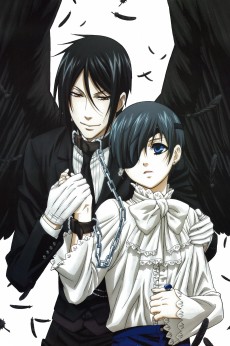
Black Butler
In Victorian-era Europe, a young boy loses everything he once held near and dear to a vicious plot. In his moment of death, he strikes a deal with a demon: his soul, in exchange for revenge. Ciel Phantomhive is now the head of the Phantomhive corporation, handling all business affairs as well as the underground work for the Queen of England. His new partner is a demon butler, Sebastian Michaelis, whose powers as a butler is only surpassed by his strength as a demon.
The story follows the two along with their other servants, as they work to unravel the plot behind Ciel's parents' murder, and the horrendous tragedies that befell Ciel in the month directly after.
📺Anime Details
📝Editorial Analysis
The scent of burnt sugar and blood hangs in the air—not as a metaphor, but as a physical weight. Ciel Phantomhive sits perfectly still at his desk, inkwell untouched, while Sebastian Michaelis pours tea with a hand that doesn’t tremble, even as the steam curls upward like a question no one dares ask aloud: How much of this boy is still human? That silence—tense, ornate, thick with unspoken oaths—is where Black Butler lives.

It’s not the Victorian setting that chills you. It’s the precision of the horror—the way cruelty wears gloves and quotes poetry before it breaks your bones. This isn’t gothic spectacle; it’s psychological containment. Every bow, every folded napkin, every perfectly timed pause is a restraint holding back something ravenous. You feel dread, yes—but also recognition: the way power disguises itself as service, how trauma calcifies into protocol, how revenge hollows out its wielder long before the final contract is signed. It makes you think about complicity—not just Ciel’s bargain, but yours, as you watch him command a demon like a teacup, all while your pulse stays steady, your breath shallow, your moral compass slowly tilting—not toward good or evil, but toward inevitability.
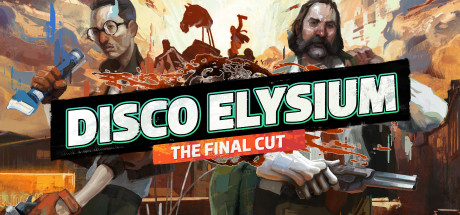
That emotional DNA pulses strongest in Disco Elysium - The Final Cut, where the city of Revachol is a decaying aristocrat draped in neon and guilt, and every dialogue choice feels like another layer of polish on a coffin lid. Its description calls it “a groundbreaking role playing game” where you carve a path across a city—and like Ciel, you’re not solving crimes so much as excavating the rot beneath institutions that call themselves lawful. A player review nails it: “Capital has the ability to subsume all critiques into itself. Even those who would critique capital end up reinforcing it instead.” That’s Ciel’s entire arc—not rebellion, but absorption. He doesn’t overthrow the system; he becomes its most elegant, obedient blade. Both works trap you in systems too vast to dismantle, forcing you to wield their logic—even as it erodes you.
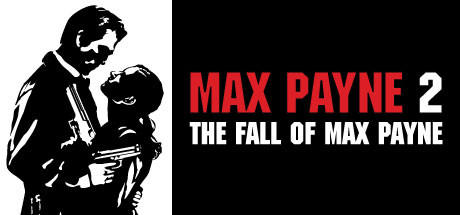
Then there’s Max Payne 2: The Fall of Max Payne, described as “a violent, film-noir love story… dark, tragic and intense.” Its player review calls it “a stellar sequel… successfully improving on many of the original's key mechanics.” That refinement mirrors Sebastian’s performance—every bullet-dodging flourish, every quip mid-gunfire, is control perfected to the point of artifice. Max, like Ciel, is a man operating under a binding vow—his grief is contractual, his violence ritualized. Both are anti-heroes whose pain is weaponized, whose love stories are elegies dressed as affairs, and whose world refuses catharsis. When Max clears a room full of enemies, it’s not triumph—it’s exhaustion wearing a tuxedo. You feel the weight of competence, the loneliness of being the only one who remembers what the rules used to mean.
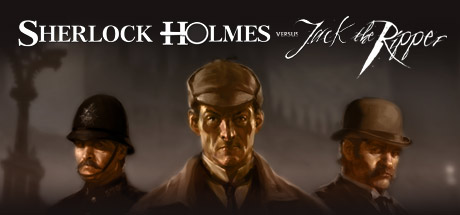
And though Sherlock Holmes versus Jack the Ripper leans harder into procedural dread than psychological corrosion, its description positions Holmes “standing against the most horrifying investigation of the series”—a man of reason confronting a void that mocks reason itself. Like Ciel, Holmes must descend into darkness not to conquer it, but to map its contours without losing his own shape. A player review mentions struggling with older Frogwares titles—“technically unable to work on my pc”—which ironically echoes Black Butler’s own tension between flawless surface and unstable foundation: everything looks operatic, controlled, historically grounded—until the floor drops and you realize the history was always a stage set.
This pairing isn’t for fans of tidy justice or clean victories. It’s for the ones who linger on the last frame of a scene where a character smiles just a half-second too long. For readers who underline sentences about systemic decay and whisper them aloud. For players who reload saves not to win—but to watch the same tragedy unfold from a slightly different angle, searching for the crack in the porcelain where the real person might still be breathing. They don’t want heroes. They want witnesses—to power, to loss, to the terrible, glittering cost of holding a knife just so.
🎮33 Games That Match the Vibe










Match Dimensions Explained
❓Frequently Asked Questions
Why is Disco Elysium recommended for Black Butler fans despite having no anime or Victorian setting?
Because both lean hard into gothic emotional intensity, morally gray aristocratic intrigue, and layered dialogue where every conversation feels like a duel—think Ciel’s icy negotiations with Sebastian mirrored in Detective Harrier’s internal monologues about guilt and power. The skill-check system even echoes Black Butler’s thematic tension between control and chaos, especially in scenes like the ‘Inland Empire’ quest where your choices fracture identity just like Ciel’s contracts do.
Is there a Black Butler video game adaptation I can actually play right now?
No official Black Butler game exists—not on Steam, consoles, or mobile. The closest you’ll get are fan-made visual novels (unofficial, unsupported), but none match the tone or fidelity of the anime. Instead, games like Sherlock Holmes versus Jack the Ripper deliver that same Victorian detective gravitas, with fog-drenched London streets, period-accurate deduction mechanics, and a brooding, high-stakes investigation vibe straight out of Phantomhive Manor’s darkest cases.
Max Payne 2 vs. Sherlock Holmes versus Jack the Ripper—which is better for someone who loves Black Butler’s tragic romance and slow-burn mystery?
Go with Max Payne 2: The Fall of Max Payne—it nails the doomed, poetic love story (Max & Mona) with the same fatalistic elegance as Ciel and Sebastian, complete with noir voiceover monologues that ache like episode 14’s ‘Contract’. Sherlock Holmes leans more into procedural puzzle-solving than emotional intimacy, and while its atmosphere is thick with dread, it lacks that intimate, twisted bond at the core of Black Butler’s best moments.
What’s the best game like Black Butler if I want that moody, elegant, emotionally devastating gothic vibe?
Disco Elysium — The Final Cut is your top pick: it’s dripping with gothic weight, political melancholy, and razor-sharp dialogue that lands like a Sebastian quip—dry, devastating, and layered with subtext. Scenes like confronting the ‘Circus of Values’ or navigating the ruins of Martinaise echo Phantomhive’s blend of opulence and decay, and the entire city of Revachol feels like a living, breathing extension of Ciel’s haunted psyche.