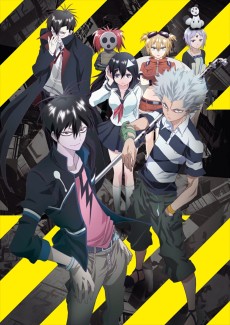
Blood Lad
Staz is the vampire boss of a section of the demon world, but he has little interest in human blood. He's more infatuated with Japanese culture. When he learns that Yanagi Fuyumi, a Japanese teenage girl, accidentally wanders into the demon city, he jumps to the occasion. However, while Staz deals with an intruder on his turf, the oblivious Fuyumi is killed by a monster and becomes a wandering ghost. The disappointed Staz vows to her that he will find a way to bring Fuyumi back to life.
📺Anime Details
📝Editorial Analysis
The neon-slicked alley behind the demon district’s ramen stall—where Staz crouches, fangs bared but hands trembling, holding Fuyumi’s fading ghost-light in his palms like something too fragile to name. Her hair still smells faintly of cherry blossom shampoo. His voice cracks—not with rage or power, but helplessness, raw and unvarnished. That moment isn’t about stakes or spectacle. It’s about a vampire boss who’d rather rewatch Sailor Moon than drain a soul, kneeling in grime because love feels like a glitch in his own biology.

What makes Blood Lad’s atmosphere singular isn’t its genre salad—it’s the dissonance. A world built on gothic hierarchy and body-horror logic (demonic mutations, spectral decay, visceral transformations) that refuses to take itself seriously—yet somehow lands every emotional beat with startling sincerity. You laugh when Staz tries to cosplay as a shinigami using duct tape and a plastic scythe… then your throat tightens when he spends three episodes painstakingly reconstructing Fuyumi’s favorite manga volume from memory, pages smudged with his own blood-ink. It’s warmth in the rot, devotion in the absurd, grief wrapped in otaku clutter. Not parody of emotion—but parody alongside it, like two friends crying while arguing over Blu-ray box sets.
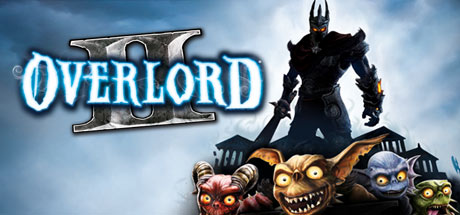
That exact tonal alchemy flickers in Overlord™ and its expansion Overlord™: Raising Hell, where dark fantasy scaffolding supports relentless, self-aware comedy. The description promises players can “be evil (or really evil)” in a “seriously warped fantasy world”—but the player reviews don’t just praise chaos; they highlight character-driven humor (“the story the humor”) and moral elasticity that never erases consequence. Like Staz choosing to resurrect Fuyumi not through brute force, but by navigating bureaucratic underworld politics, bureaucratic necromancy, and his own crippling social anxiety—the Overlord’s power is undercut by pettiness, loyalty, and surprisingly tender attachments to minions. Both treat evil as a system, not a personality trait—and treat love, loyalty, or obsession as equally irrational, equally valid, forces within that system.
Then there’s Postal III, where the description declares: “Good or Insane? The choice is yours.” Its player review admits, “It’s postal, so everything is weird”—a line that could double as Blood Lad’s thesis. Both weaponize tonal whiplash: grotesque violence sits shoulder-to-shoulder with deadpan absurdity (Fuyumi’s ghost trying to use a vending machine; the Postal Dude negotiating immigration paperwork with a pitbull named Champ). The shared dimension isn’t just Comedy & Parody—it’s the refusal to sanitize trauma with tone. Fuyumi’s death isn’t tragic despite the comedy; it’s tragic because the world treats mortality like a minor UI bug. Same with Postal III’s apocalyptic emigration arc—horror isn’t muted by jokes; it’s framed by them, making the underlying disorientation more palpable.
None of this matches Heretic or HeXen II, despite their high scores and overlapping Dark Fantasy, Body Horror & Occult tags. Their descriptions center vengeance, cosmic evil, and apocalyptic dread—solitary, mythic, grim. Player reviews reinforce that: one calls out “a much slower focus on gameplay,” another notes grinding and level design woes. They’re steeped in solemnity, not silliness-as-shield. Blood Lad doesn’t want you to feel small before ancient powers—it wants you to snort-laugh at a vampire attempting CPR on a ghost while muttering anime catchphrases. That distinction matters. The emotional DNA isn’t in the monsters—it’s in how the protagonist relates to them: as inconveniences, as fashion statements, as obstacles to holding hands.
This pairing sings for the viewer who rewatches the cafeteria scene where Staz nervously offers Fuyumi a melon soda—then immediately chugs his own to hide his blush—and feels that flutter and the sting of knowing she’ll vanish by episode five. For the player who grins when the Overlord names his first tower “Fuyumi Memorial Spire” in a secret save file, then pauses mid-battle to check if his imp butler remembered her favorite snack. For anyone who’s ever loved something so hard it short-circuited their sense of proportion—and found comfort not in grand gestures, but in small, stubborn, ridiculous acts of care, whispered into the static between life and afterlife.
🎮28 Games That Match the Vibe















Match Dimensions Explained
❓Frequently Asked Questions
Why is Heretic: Shadow of the Serpent Riders recommended for Blood Lad fans?
Because both lean hard into that deliciously twisted blend of dark fantasy and body horror—think Blood Lad’s grotesque vampire transformations and occult rituals mirrored in Heretic’s Sidhe elf protagonist battling the Serpent Riders’ flesh-warping magic. The game’s oppressive gothic atmosphere, cursed artifacts like the Silver Dagger, and visceral enemy designs (like the writhing, multi-limbed Gargoyles) hit the same tonal sweet spot as Staz’s chaotic, gore-tinged world.
Is there an anime or manga adaptation of Overlord that captures the same vibe as Blood Lad?
No—Overlord’s anime is serious, grimdark high fantasy, totally unlike Blood Lad’s raunchy, self-aware comedy and shonen energy. But if you love Blood Lad’s mix of demonic hijinks and over-the-top parody, play Overlord™ or Raising Hell instead: they let you cackle while commanding hordes of goblin minions, betray allies for loot, and watch your Overlord avatar’s horns grow longer with each evil choice—just like Staz leveling up his ‘coolness’ by failing spectacularly at being a proper vampire.
How does Postal III compare to Blood Lad in terms of humor and tone?
Postal III nails the same unhinged, fourth-wall-shattering absurdity—imagine Blood Lad’s gag-driven chaos dialed up to 11 with the Postal Dude’s manic monologues, Champ the pitbull’s deadpan side-eye, and surreal cutscenes like getting chased by a sentient taco truck. It’s not just parody; it’s *committed* nonsense, just like how Blood Lad mocks vampire tropes while loving them—and both games weaponize their own ridiculousness as core gameplay fuel.
What’s the best game like Blood Lad if I want something fast-paced, dark-fantasy, and packed with occult weirdness?
Go straight to Heretic: Shadow of the Serpent Riders—the remaster runs smooth, and its spell-slinging combat (think Frost Shards freezing enemies mid-leap, then shattering them) matches Blood Lad’s kinetic energy. You’ll fight cultists chanting in guttural tongues inside blood-stained temples, uncover lore about the Serpent Riders’ flesh-altering rites, and feel that same delicious ‘cursed but cool’ energy Staz radiates every time he accidentally turns himself into a squirrel.